Designing Center Pivots Around the Weight of Water in Remote Brazil
- Published
- Author
- Designcenter Solid Edge
- Reads
- 343
Bauer's Brazilian engineering team designs center pivots project by project, using Solid Edge simulation to check structural loads before field testing.
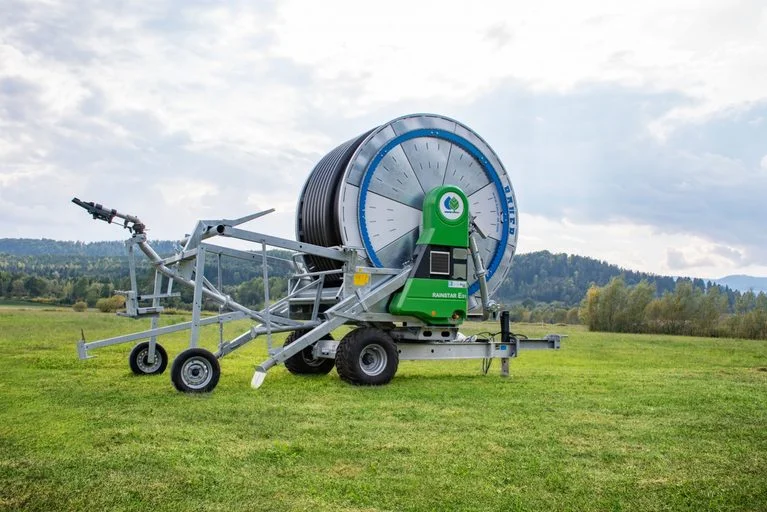
Brazil still has land and water, but the room to expand planted area is shrinking. Lucas Oboli, engineering general manager at Bauer in Brazil, sees the math clearly. "One day, the space for growing more crops will be gone," he says. "The only way for you to produce more within the same land is to improve your productivity." In his view, irrigation is the quickest, easiest and cheapest way to do that right now.
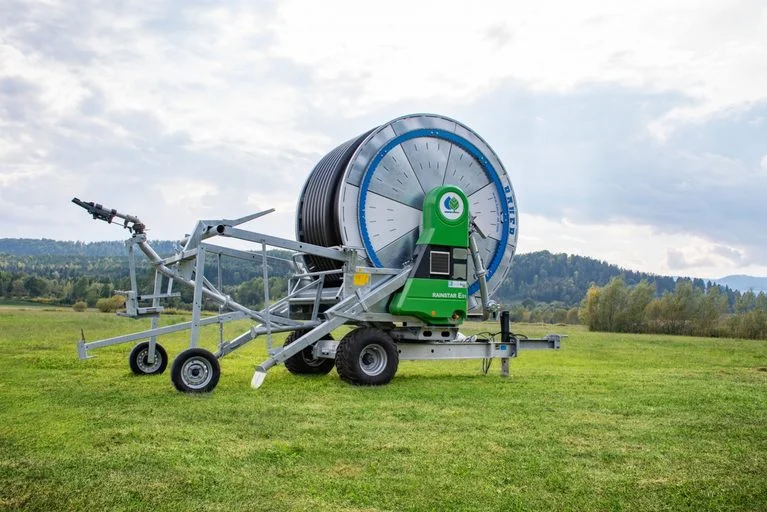
That pressure is one reason Bauer set up operations in Brazil. The company is headquartered in Voitsberg, Austria, and has been manufacturing for 95 years. It supplies irrigation and slurry equipment to customers in more than 100 countries, and its systems irrigate approximately 2.5 million hectares worldwide. The Brazilian branch is the only site outside Austria with its own irrigation engineering department, and Oboli leads it.
Engineering each system for its field
Bauer's international catalogue includes a range of standard irrigation products, and Brazilian growers use many of them. As efficiency requirements get more specific, though, most of the work moves toward custom engineering. "Most of our products for irrigation here are engineered," Oboli explains. "Even though we have a specific portfolio for center pivots, those center pivots are still designed for each irrigation project, for each customer."
The split is practical. The product engineering team defines the components. Application engineers decide how to combine them for a particular field, and they coordinate with Bauer's dealer network to get each system running. Hose reel machines such as the Rainstar series remain standard products. Center pivots in Brazil and across Latin America, by contrast, are configured for specific projects.
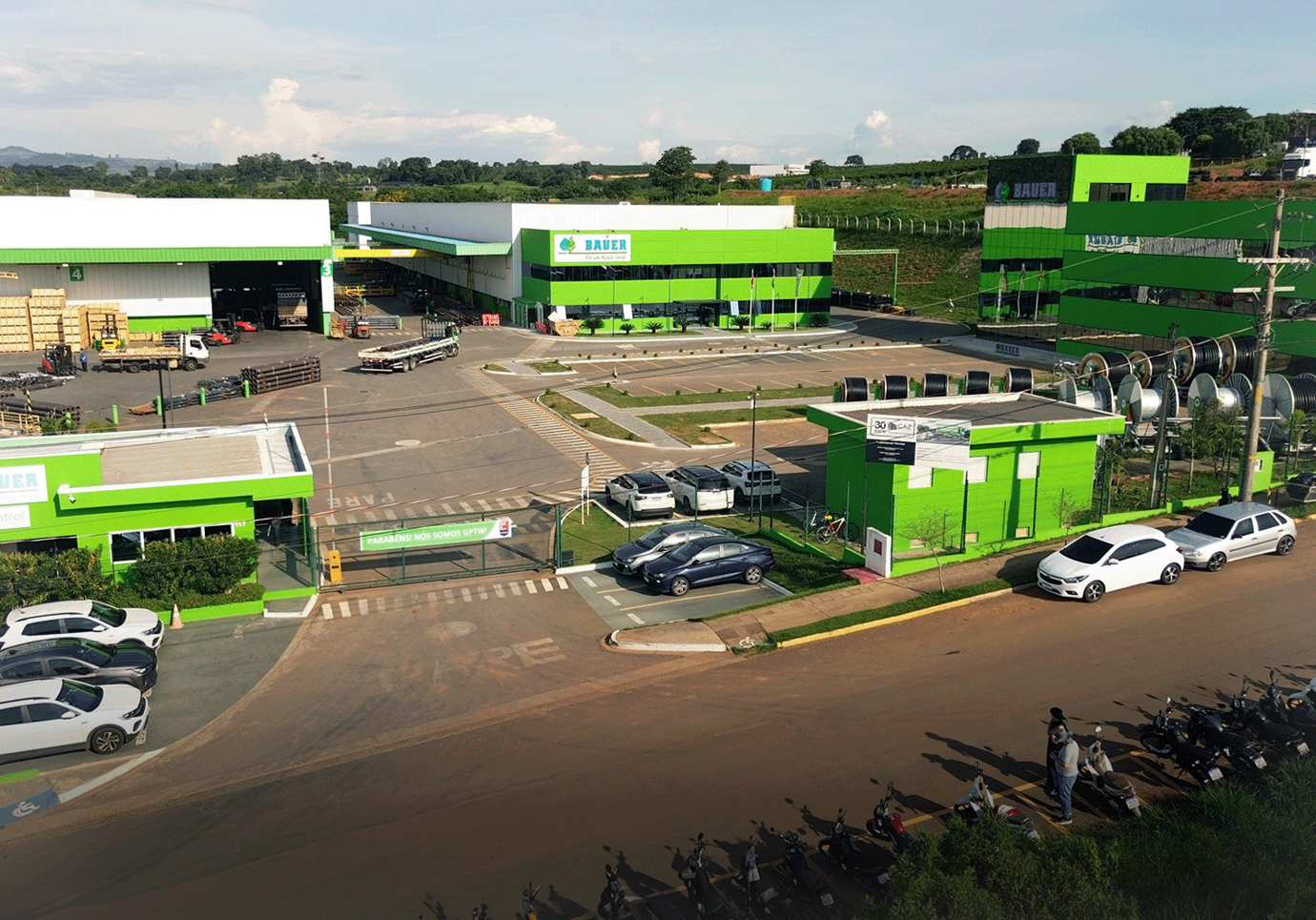
Oboli treats a center pivot as a construction project rather than a piece of equipment. Each installation is planned around the customer's location, crops, field conditions and pumping capacity. The proposal also has to show the return on the investment, not just the purchase price. Some machines reach 800 meters and ship in disassembled sections, so dealers assemble and commission them on site and make the necessary connections. When a farm lacks supporting infrastructure such as channels, reservoirs or pumping facilities, Bauer can take on that portion of the job too.
"We don't want to sell just the products. We want to build the project," Oboli says. "It's really turnkey."
Financing is often the hardest part. Agricultural credit in Brazil has become harder to secure over the past several years, which makes the core question for Bauer a practical one: "being able to supply the technology they would like to use at the price they are able to pay." Oboli also notes that the machines themselves are conceptually simple. The engineering challenge is improving them without giving up quality. "They are really simple machines. But how do you improve it, while keeping the same quality level?"
The structural problem: water adds weight fast
Large irrigation machines carry significant mechanical loads, and those loads jump once the pipework is full. Bauer's mechanical engineers use Designcenter Solid Edge to develop designs and run structural simulations, for new machines and for changes to existing ones. Water weight is a central input in those models. "Once you put water on those machines, its weight goes up by 30 percent in each span," Oboli says.
That extra mass lands on a structure that has to keep moving across farmland. Each span is carried by drive towers that travel through the field, which puts stress on joints, connections, chassis components and drive mechanisms. Those parts drive the machine's day-to-day operation, so they have to handle the loads they see in service.
Alignment adds another layer. A center pivot doesn't move as one rigid body. It advances one tower at a time, and alignment units measure the angle at each joint and command the individual towers to keep the spans in position. Bauer has designed an alignment arrangement with a lever mounted directly above the swivel point of the flexible joint, which keeps pipe torsion from skewing the measurement. Engineers develop and test that arrangement in software, including how it behaves on uneven ground.
"It's not always plain," Oboli says. "There is a lot of irregular terrain, so the machine gets all torqued on itself."
Simulation matters most here because a physical prototype of an 800-meter machine is expensive to build and expensive to get wrong. Running the design virtually lets engineers find likely problems before anything goes to the field.
Leandro Certorio, who manages IT at Bauer in Brazil, describes the workflow. "We prepare everything in Designcenter Solid Edge, create the different kinds of spans of the pivot, and test and simulate. And after this, when everything goes okay, then we go to testing in the field." His group is responsible for the safety-related checks and for providing the software and systems field teams rely on.
Linking mechanical, electrical and firmware teams
Bauer has used Siemens software for more than five years. The adoption started at the Austrian headquarters and later spread to the Brazilian operation. Teams on both sides work with a mix of cloud-based and local licenses.
For Oboli, the main reason to stay with Solid Edge is how well it supports collaboration across disciplines. "Siemens software is able to communicate with the other teams, as well. It's not hard to integrate the firmware within the hardware, within the electrical systems, within the mechanical machines." He describes those integration paths as a significant shift in how Bauer works. He's also candid that the team uses the tools in a fairly straightforward way. "We really use the simple tools," he says.
What matters on the ground is that mechanical, electrical and firmware engineers can work on the same product without adding friction. Information has to move between groups, and geometry has to transfer between systems without losing detail.
Where differentiation is heading
Bauer has grown its share of the Brazilian market, but Oboli doesn't think steelwork and pivot geometry will set the company apart for long. "Anyone is able to achieve good steel work, and design good pivots," he says. "The difference is that we can holistically integrate different technologies into the same portfolio."
That push began with automation, which cut down how often farmers have to travel between pivots to carry out field operations. The next step was remote monitoring and control that works where connectivity is limited, a common constraint across rural Brazil. Bauer's mobile and web platforms let growers watch and adjust their systems from a distance.
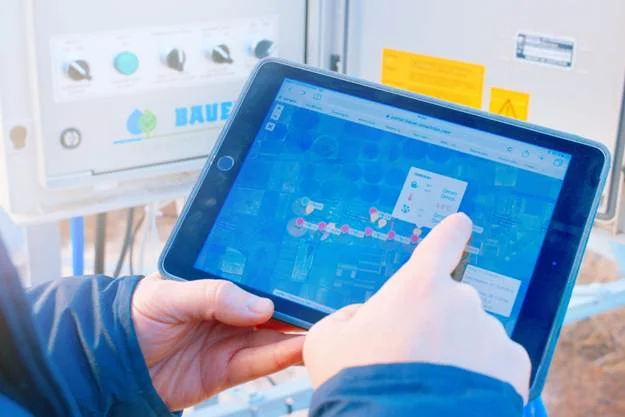
The current focus is getting more out of the operating data these systems produce. Predictive maintenance, variable-rate irrigation and applying water only where it's needed are all on the list. My read is that this is where the engineering gets interesting: more than 60 percent of items on Bauer's product roadmap involve new technologies and features rather than new mechanical designs.
Oboli says what keeps him engaged is the problem set, not the job title. "The day that we don't have any challenges in engineering here, I think, will mark the day I will be less motivated." He also points to the value of work with direct real-world stakes. "There are so many more urgent matters in the world where we could be of more help."
For Bauer, that means taking a machine that is conceptually simple and making it measurably better, one field at a time, without sacrificing reliability.