UGREEN HomeAgent HA100: NAS, Camera Recorder and Local AI on One Platform
- Published
- Author
- Michael Klements
- Reads
- 327
UGREEN's HA100 combines a NAS, camera recorder and local AI assistant on an RK3588 board. It drew 28W at idle in testing, but the software still has ground to cover.
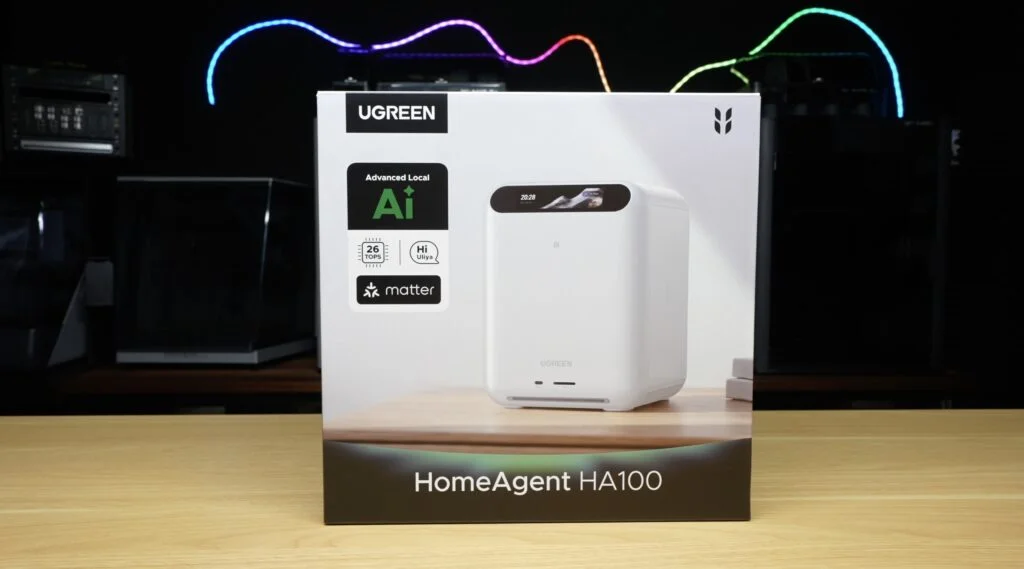
Calling the UGREEN HomeAgent HA100 a NAS undersells it. The box is a personal cloud server, a smart home hub, a camera recorder and a local AI assistant, all in one chassis. Its headline claim is that it can recognise people and objects in your photos, manage smart home and security cameras, and answer questions about what's happening around the house without sending anything to a cloud AI service. That's an ambitious combination, and it's worth looking at how the pieces fit together and where the compromises sit.
Ports, Layout and Build
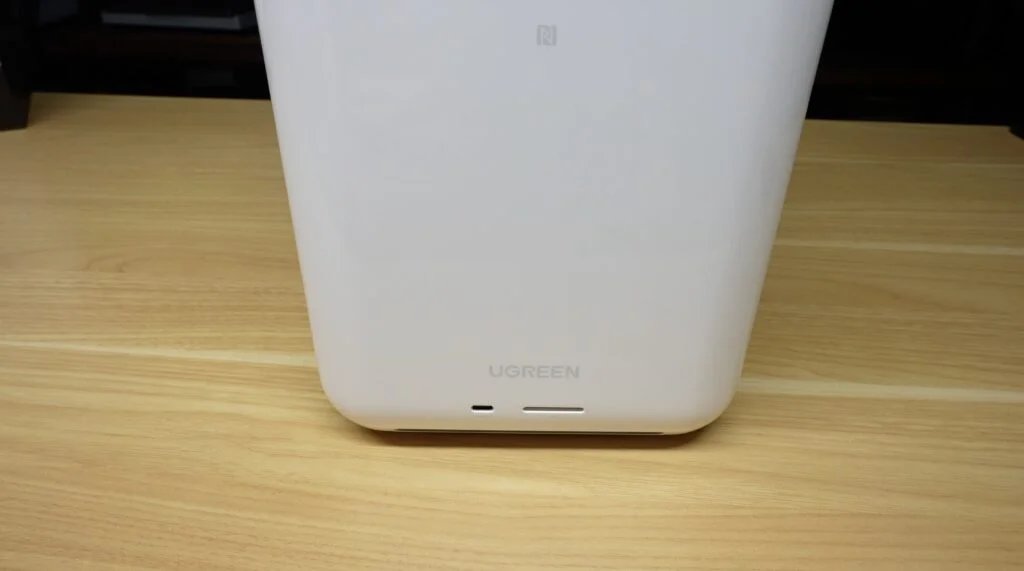
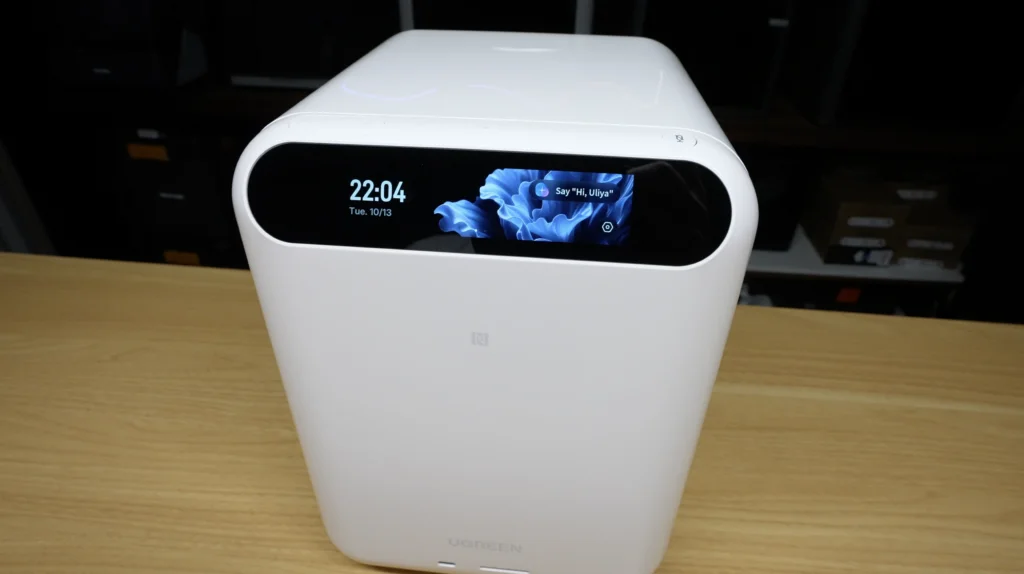
The front panel is dominated by a 3.93-inch colour TFT touchscreen, which UGREEN has set into a black bar. Above it sits a four-microphone array, with volume buttons on the left and a microphone isolator button on the right. At the bottom are a USB-C port and a full-size SD card reader.
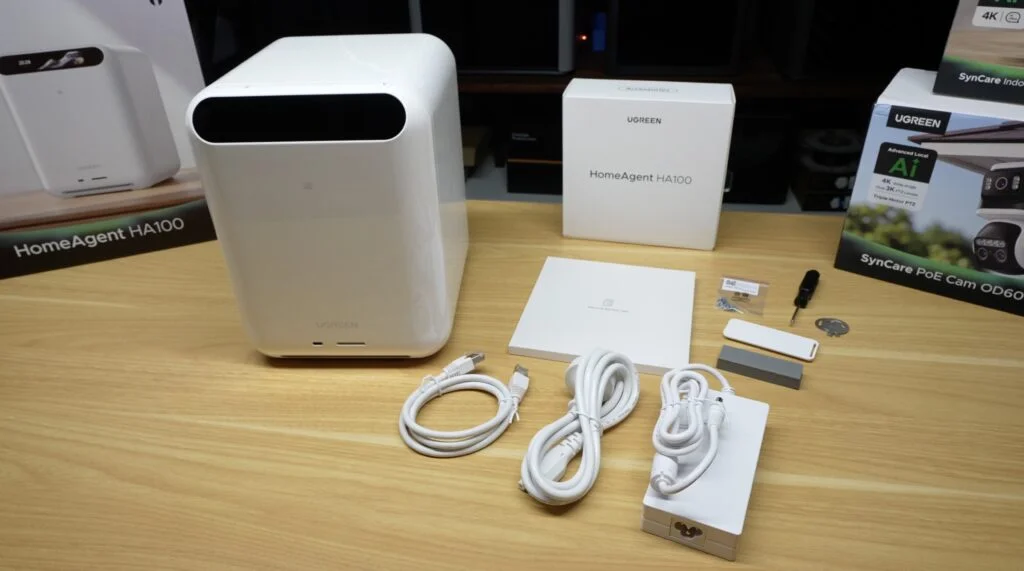
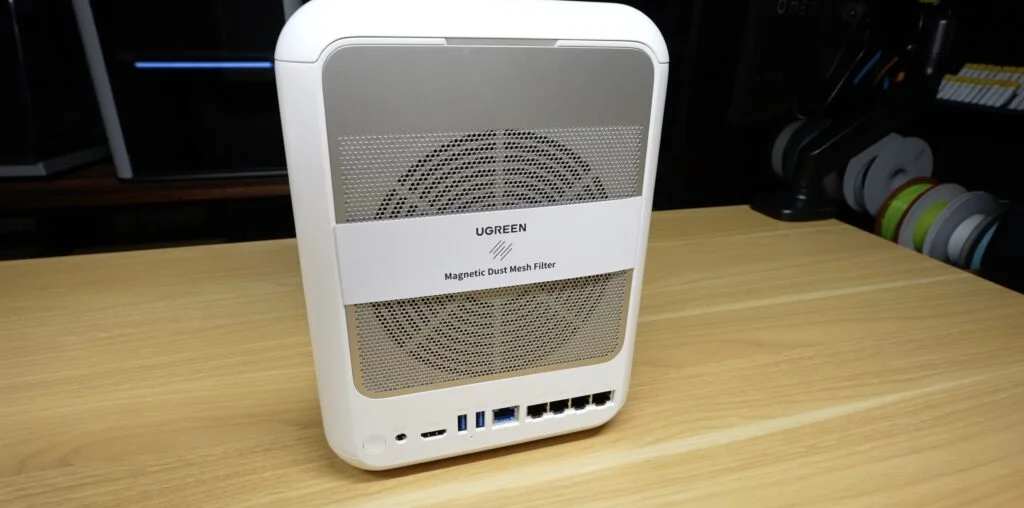
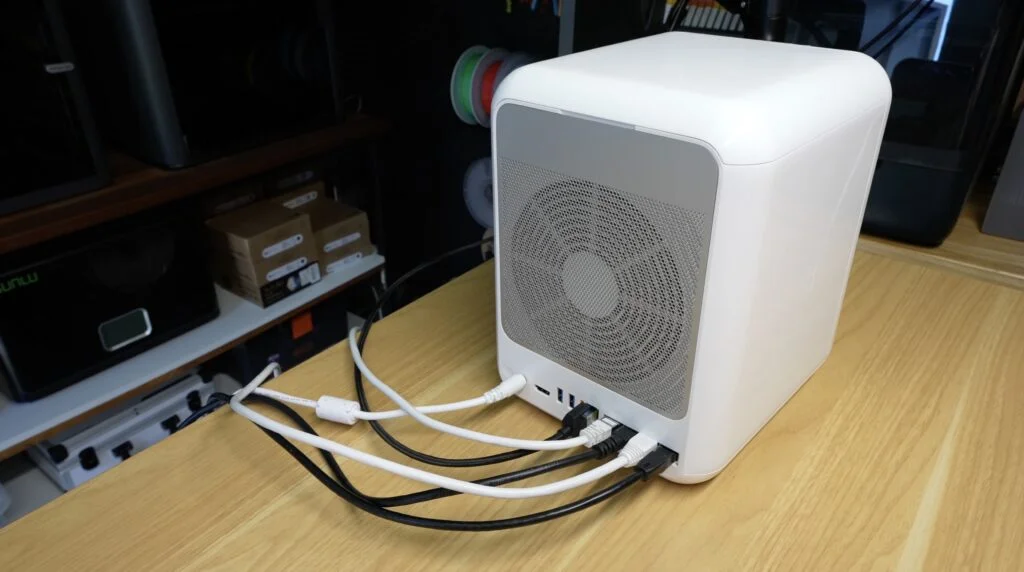
The rear is where the networking story lives. Working left to right, you get the power button, a 20V DC input, an HDMI port, two USB 3.0 Type-A ports, a 2.5G network port and four 100Mbps PoE ports aimed at surveillance cameras. A removable magnetic dust filter covers a 140mm fan. Taken together, that's five network cables leaving the back of the unit, which matters later.
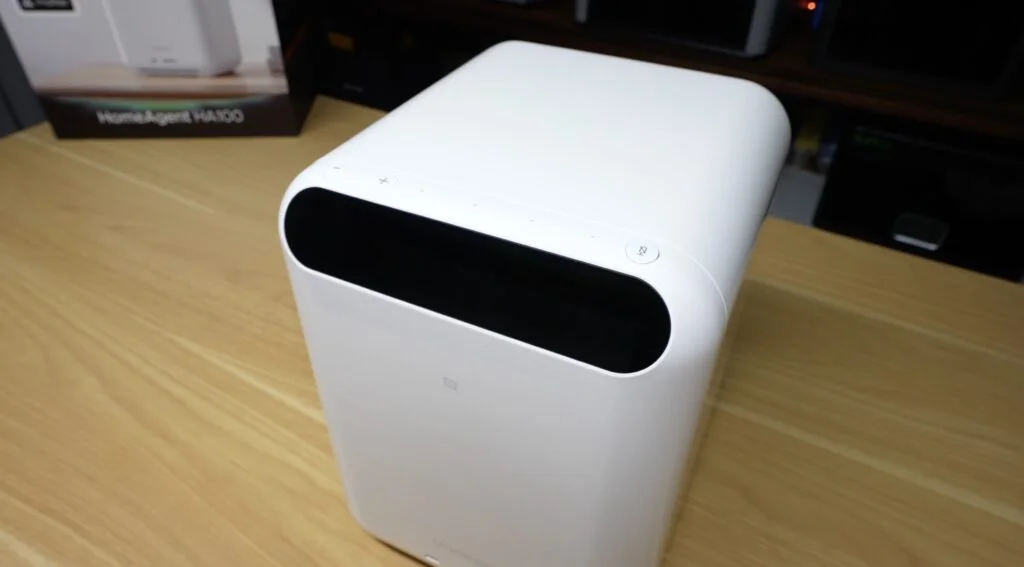
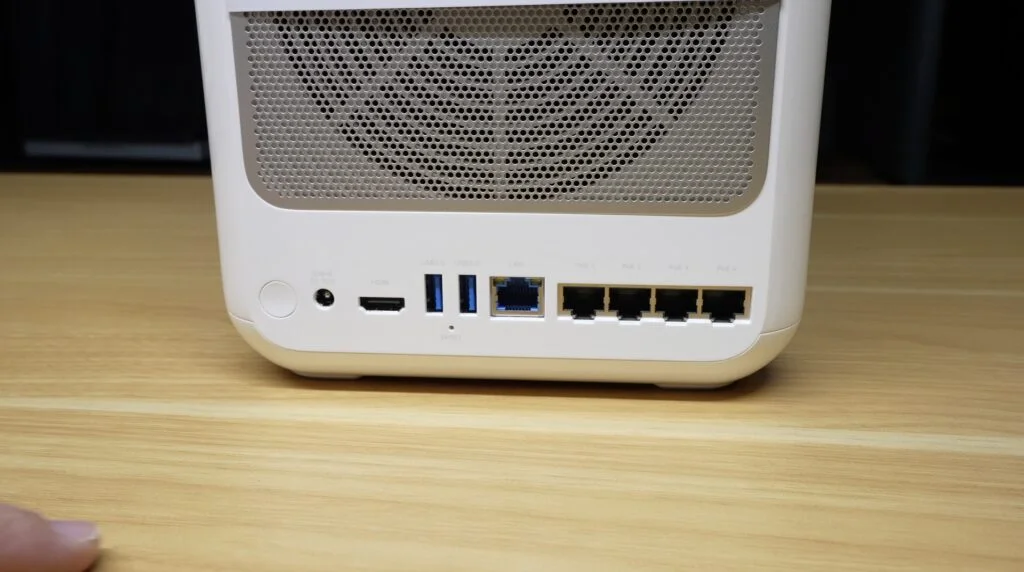
The shiny white exterior feels solid. The cover plate is reinforced on the inside and has rubber strips on its mating faces. Whether the finish holds up to daily handling in a living room is another question, and one only long-term use will answer.
Hardware Under the Lid
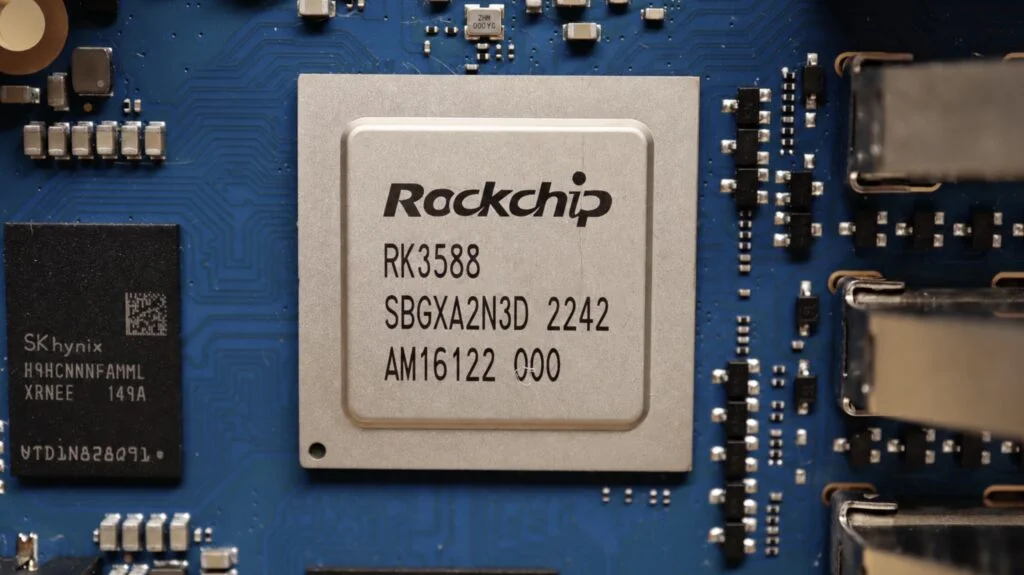
At the core is an eight-core ARM-based Rockchip RK3588. It's a chip that has shown good performance per watt in single-board computer designs, and that carries over here. The SoC pairs with an ARM Mali G610 GPU, an integrated NPU rated at up to 6 TOPS, 16GB of LPDDR5 RAM and 64GB of eMMC storage for the operating system.
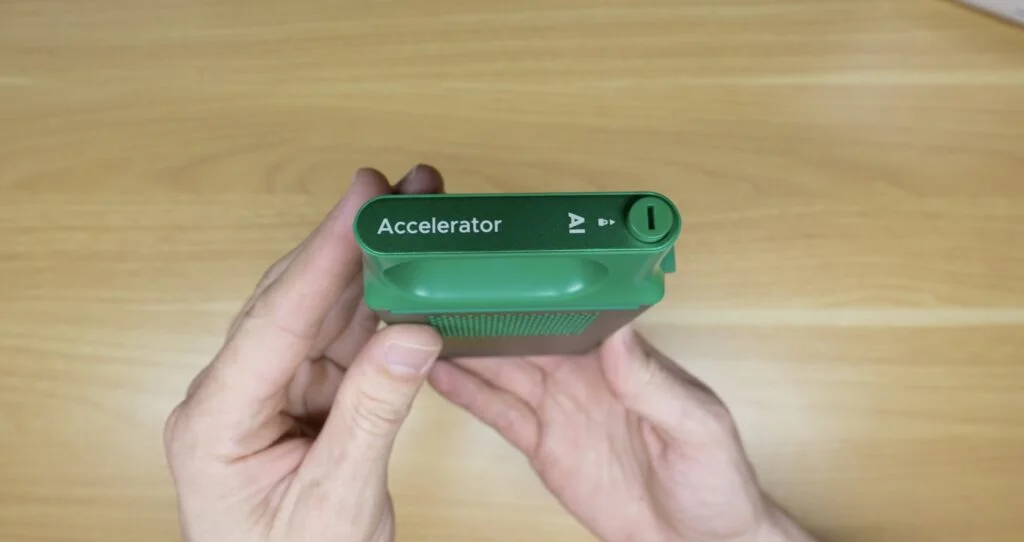
The more interesting addition is a separate AI co-processor. UGREEN's accelerator is an RK1828 with 5GB of its own RAM, mounted in a package with what appears to be a PCIe connection. The company quotes 26 TOPS of total AI performance for the system, with 20 TOPS coming from the accelerator and 6 TOPS from the NPU. Those figures are UGREEN's claims and haven't been independently verified here. Still, a NAS that ships with a dedicated AI accelerator is unusual, and it's the reason the local AI features are practical rather than token.
The accelerator sits beside the drive bays, and it looks removable. That suggests a future upgrade path or alternative models, though UGREEN hasn't confirmed either.

Storage Bays and Drive Installation
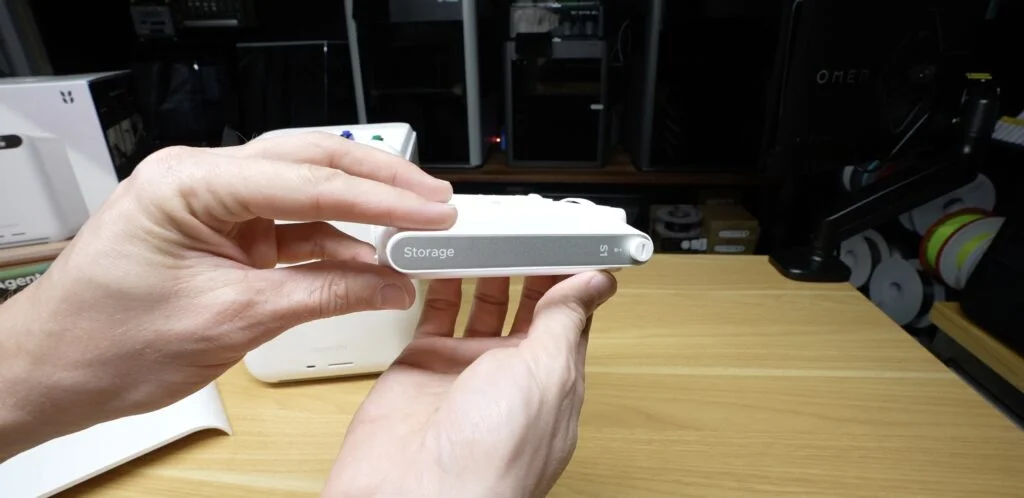
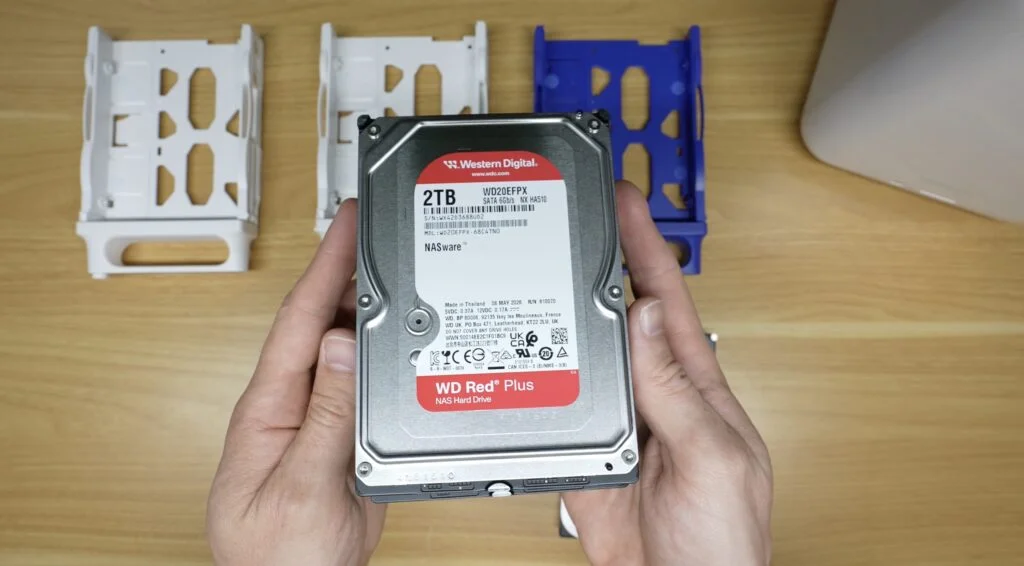
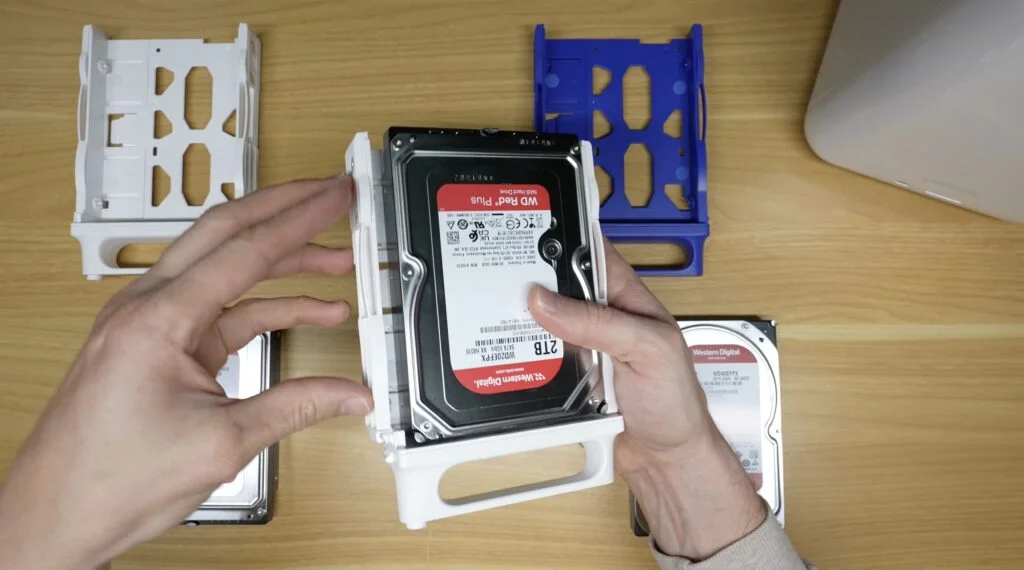
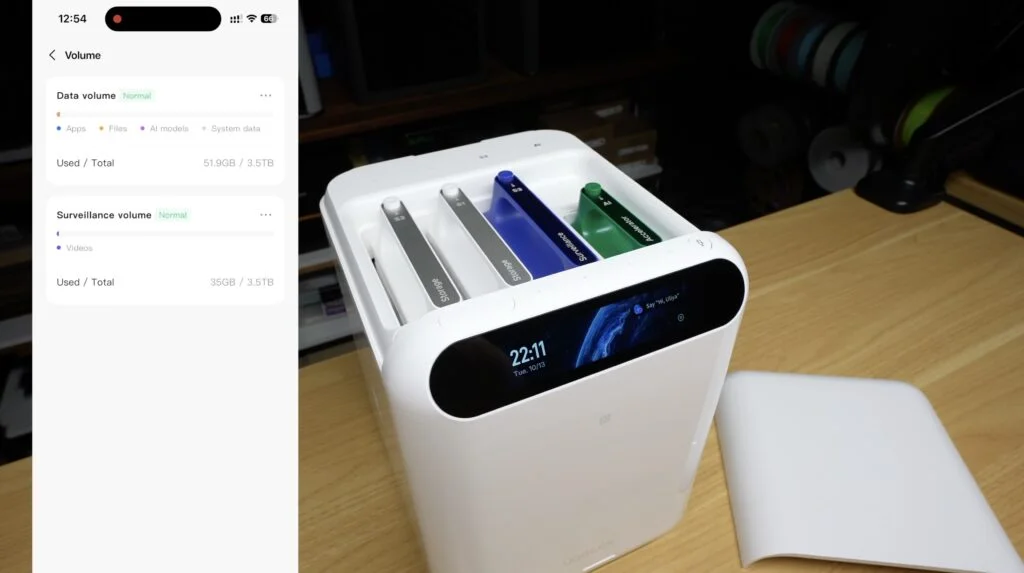
Lift the magnetic top cover and the drives are revealed. There are two 3.5-inch general storage bays and a separate bay for surveillance storage, all using SATA 3.0 connections. Each tray has a single lockable eject button, mounting holes for 2.5-inch drives and tool-free installation for 3.5-inch drives. The rubberised guides on the trays stop metal and plastic from rubbing and banging, and the trays click home with a firm seat.
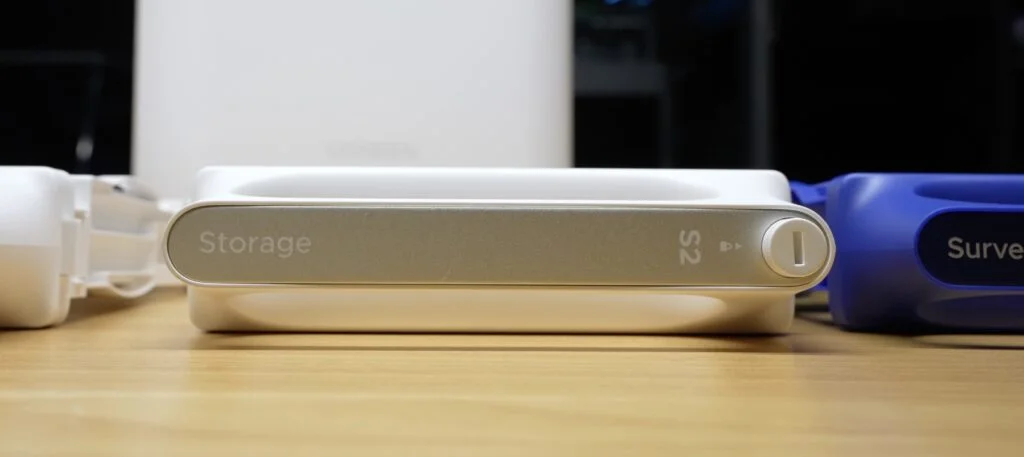
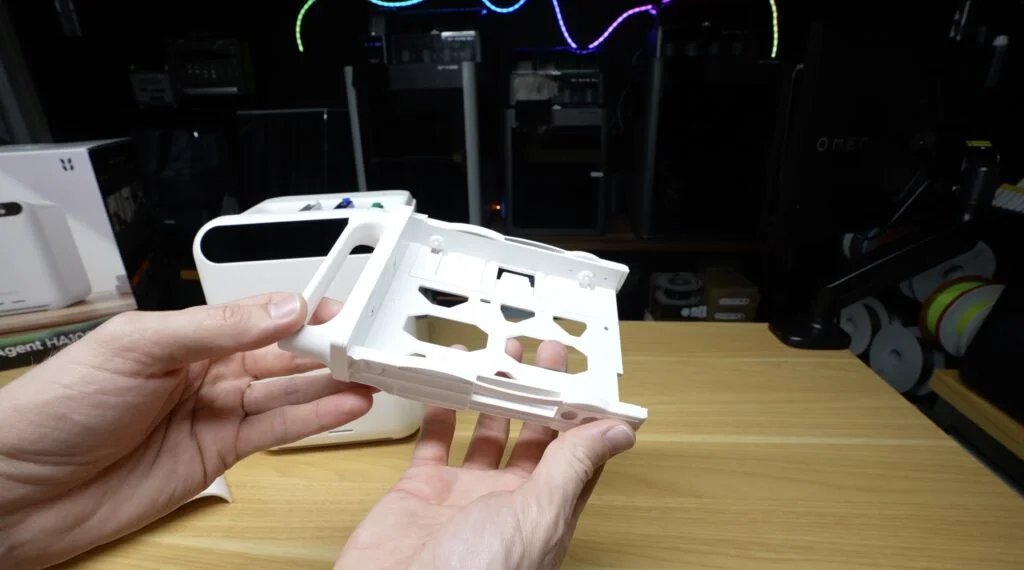
Installing drives is simple. Pull the tray out, seat the drive against the retainers and push the tray back in. Two keys are included, and they lock all three drive trays and the accelerator by disabling the release buttons. That's a sensible touch for a device that might sit in a shared room.
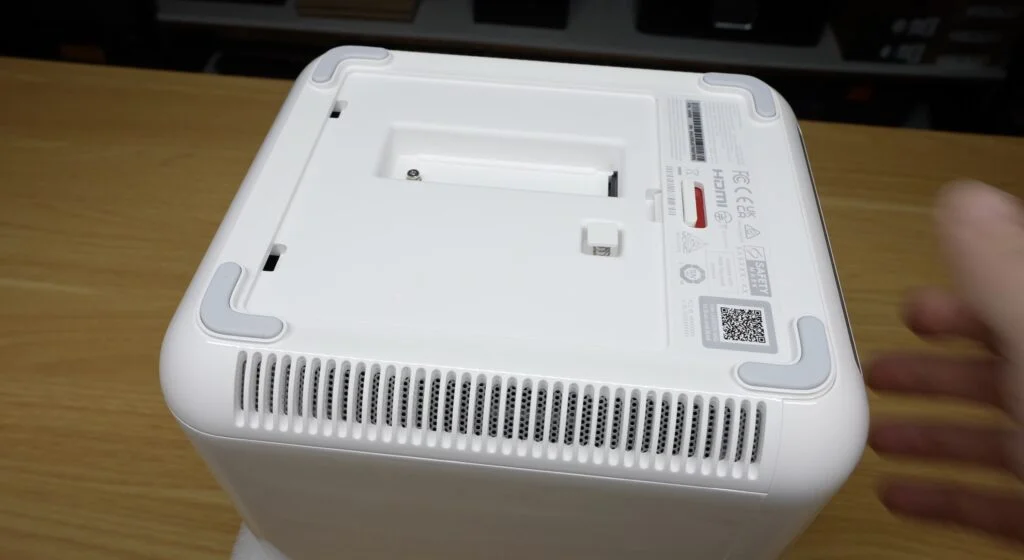
The underside has another removable cover hiding an NVMe slot. It's a PCIe 3.0 x1 interface, and UGREEN includes a large thermal pad for the drive in the accessory box. Setup is handled through RAID 0 or RAID 1 selection during the first boot process.

NAS Performance
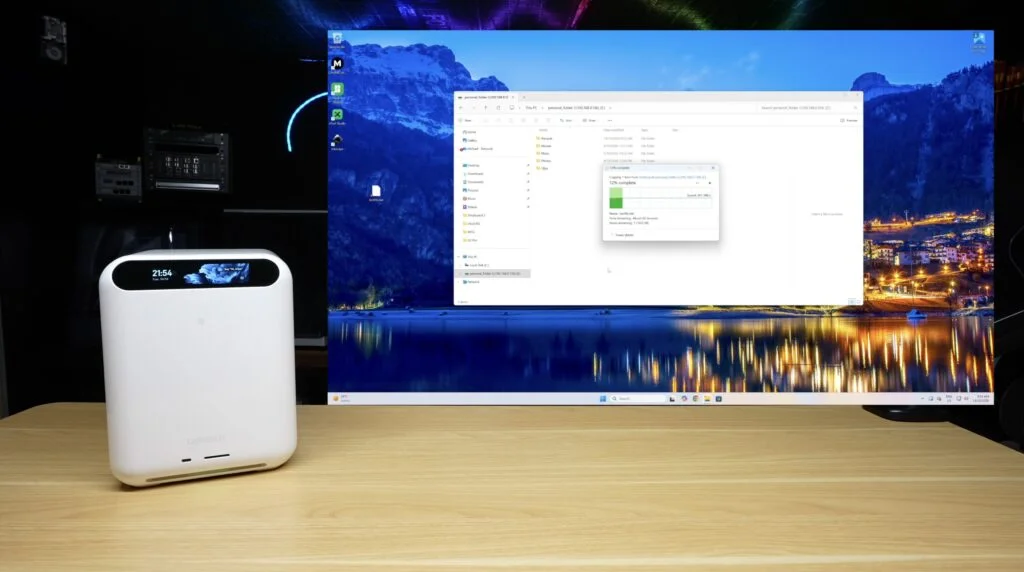
For file-server duty, the HA100 was tested with SMB sharing to a PC on the same network, also linked at 2.5G. Two file sizes were used: 16GB and 1GB.
Writing the 16GB file started at around 270MB/s. Once system RAM filled, throughput settled at roughly 180MB/s. Reads held steady at around 190MB/s. The 1GB file wrote at 270MB/s for its full length, and reads again sat near 190MB/s.
Those numbers are what you'd expect from a 2.5G link with mechanical drives in a RAID configuration. The NAS side is competent, and the rest of the feature set depends on it being solid. Read speeds are the more consistent figure here, and they don't change with file size.
Media Apps: Music, Theatre and Photos
The bundled media apps do what their names suggest. Music is a straightforward player that organises your library by artist and album and supports playlists. Theatre scans your media folders and builds a catalogue of movies and shows with artwork, descriptions and cast lists. It can also transcode media to lower bitrates, which helps when streaming to weaker devices or over slower links.

The Photos app is where the local AI work shows up most clearly. Its interface resembles a typical cloud photo service, with images ordered by date. Object recognition runs on the device to categorise shots and flag similar or duplicate images. Other on-device features include people recognition and text extraction from images. Semantic search lets you find pictures by describing what they contain, which is the feature most likely to change how people use a home photo library.


Local AI Models and Control
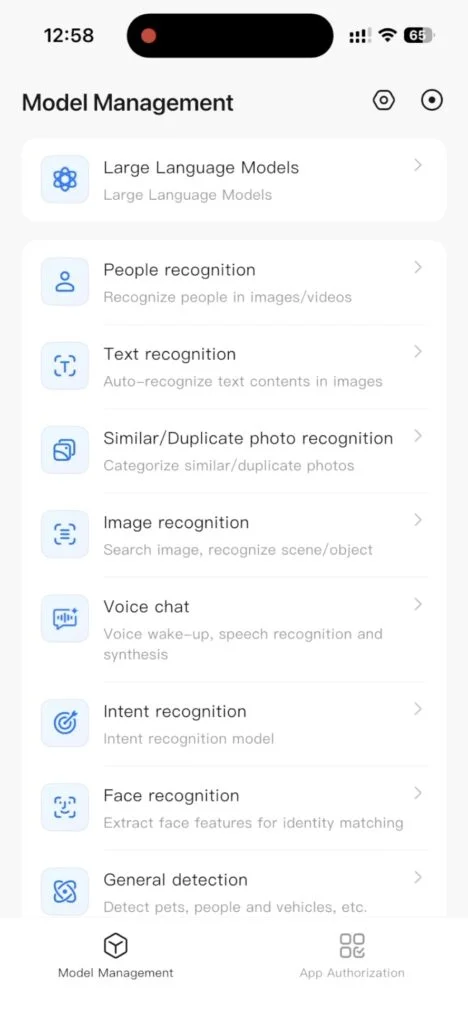
The HA100 ships with Qwen3.5 4B as its default model. UGREEN's interface suggests that other local models can be selected later. Cloud models can also be used when a task needs more capability. That's a practical option, though it cuts against the local-only pitch. Anyone who cares about keeping data on the device should check which apps and models are sending requests outside the network.

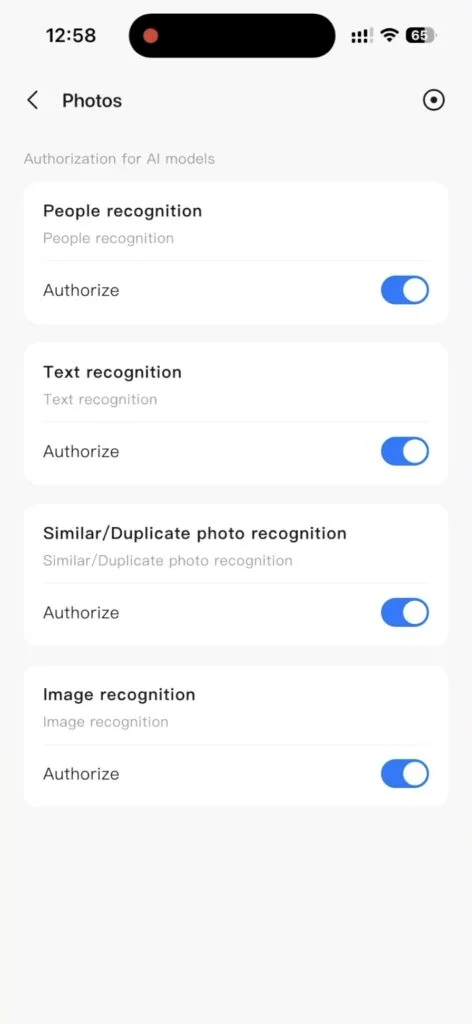
The most useful control is the per-app toggle. You can decide which apps may use AI features at all, and which models each app is allowed to call. For a device that is recording video and listening through microphones, that granularity is a good design choice. It gives the owner a way to limit where the AI is active.
Cameras and Surveillance
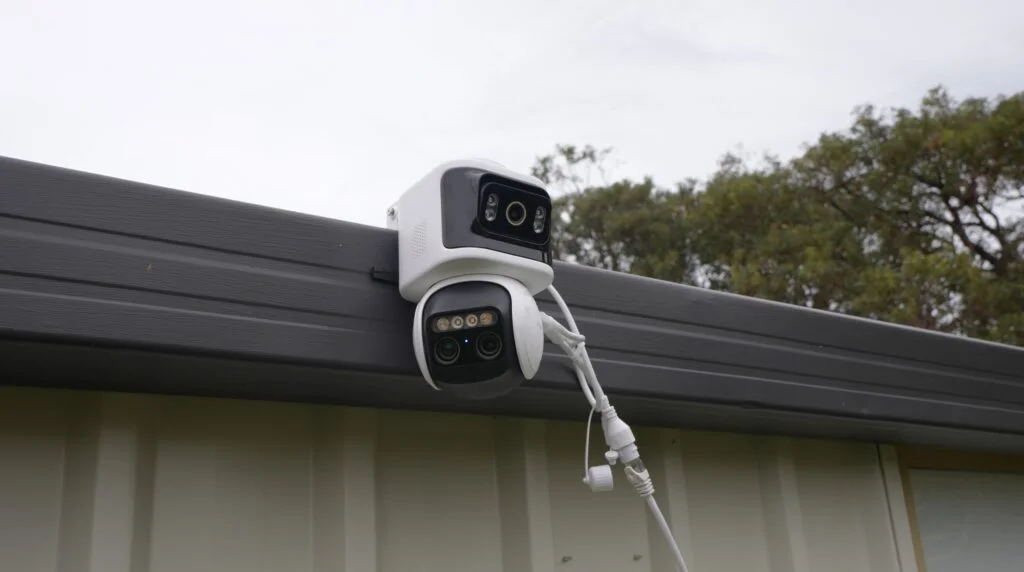
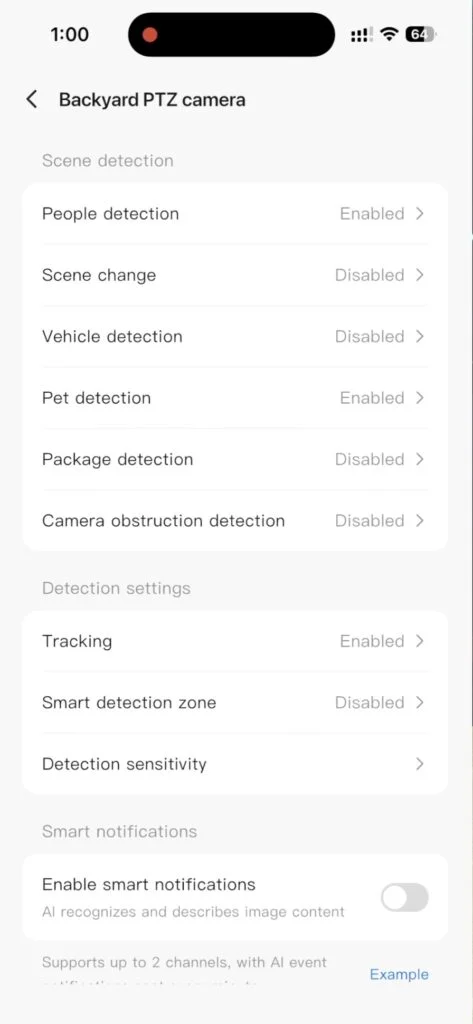
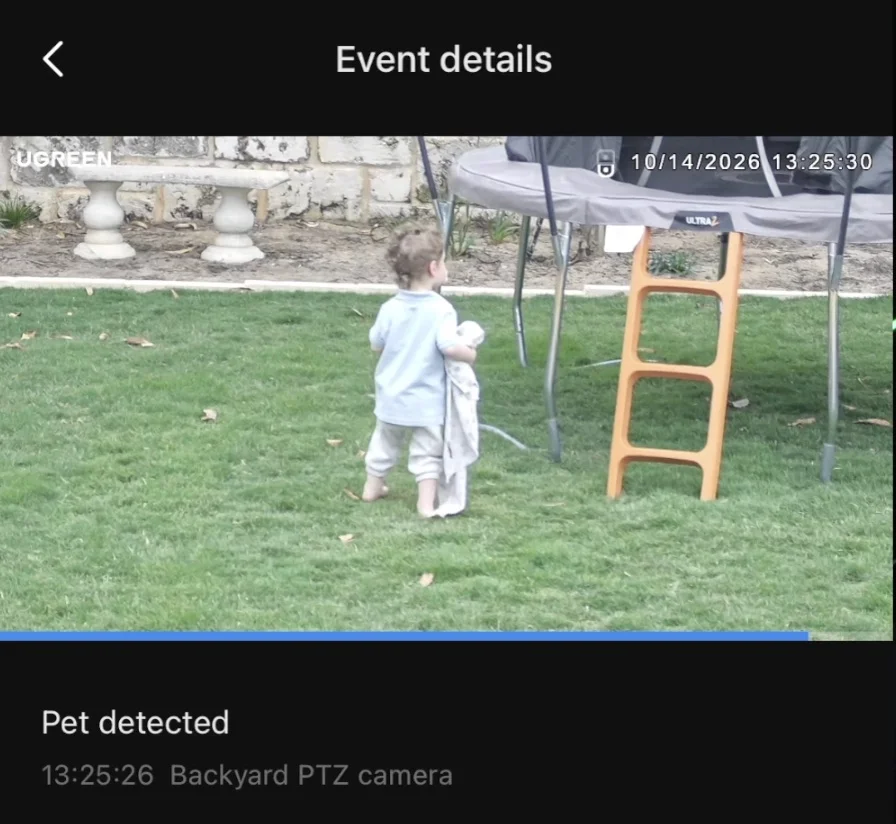
The four PoE ports are what separate the HA100 from a typical NAS with a surveillance add-on. UGREEN has announced three camera models to pair with them, and the test setup used an indoor camera and an outdoor camera that runs on PoE. Those cameras work much like other smart home models, but detection features are selectable per camera, and the AI runs locally.
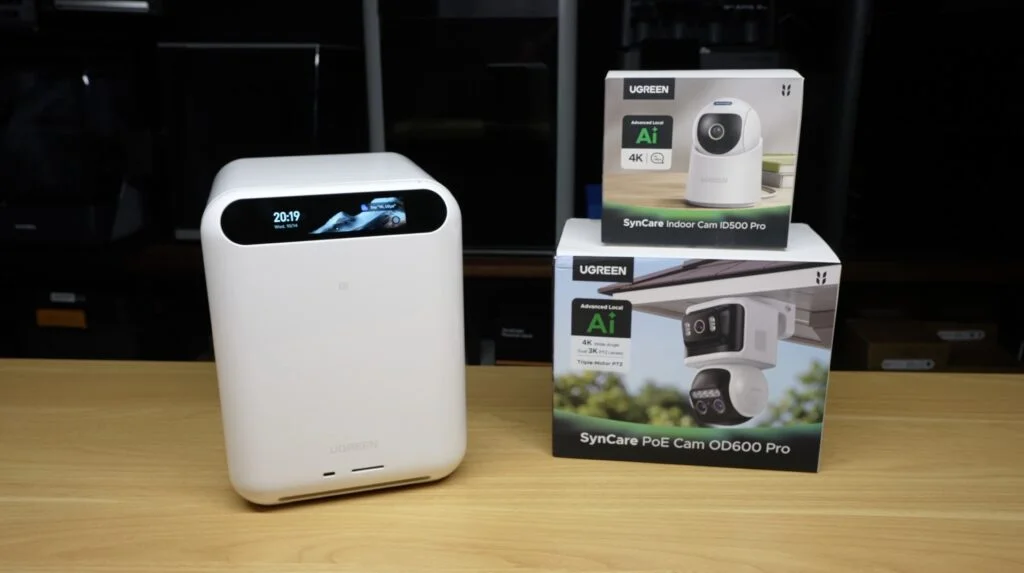
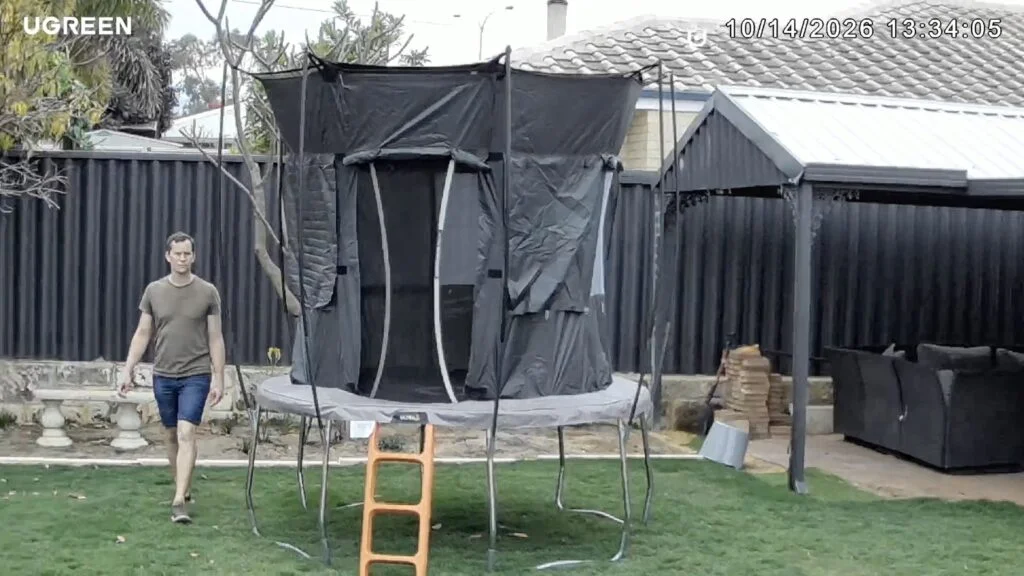
In testing, detection was generally reliable, with occasional misclassifications. In one case a person was identified as a dog. Because the processing happens on the device, alerts arrived quickly. The outdoor camera's automatic subject tracking stood out. It kept a moving person in frame even when they passed behind objects. It's a capability that reads as impressive on a spec sheet and feels somewhat unnerving in person.
Smart Home Hub and Voice Assistant
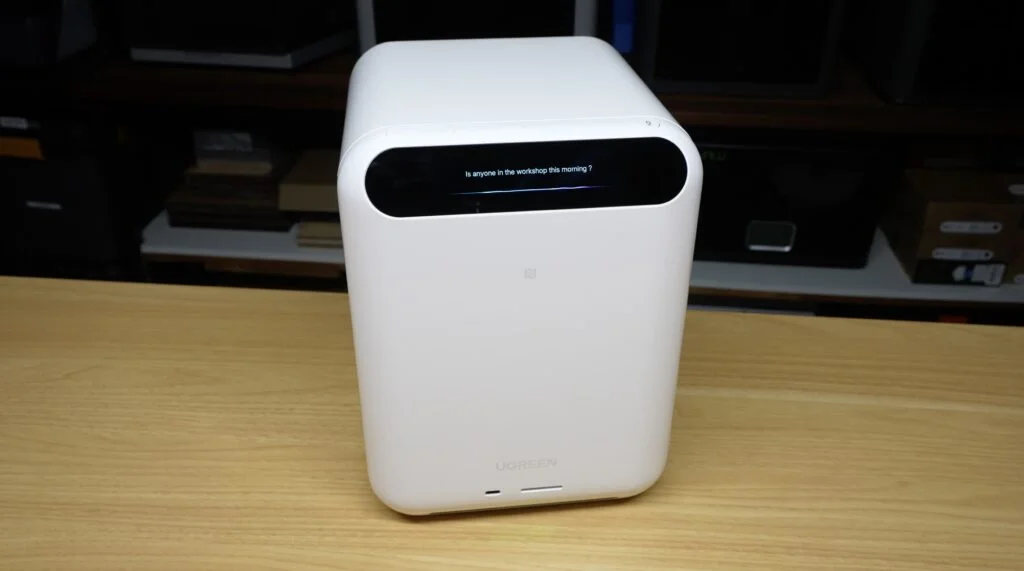
The HA100 can also act as a smart home hub and talk to connected devices directly. The voice assistant is currently best configured for controlling those devices, and both can be managed from the UGREEN app. Importantly, the hub works alongside existing smart home setups, so devices don't need to be paired exclusively with the HomeAgent.
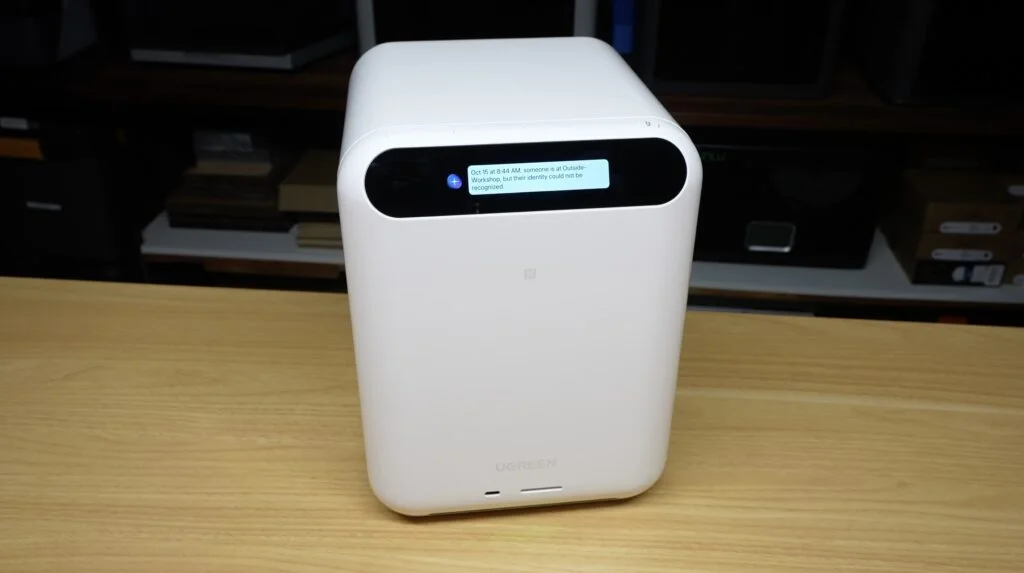
The offline claim was tested directly. With the network cable unplugged, the assistant still answered questions. That's the clearest evidence that the core voice and AI functions run on the device itself, though features that rely on connected smart devices obviously need the network.
Power and Noise
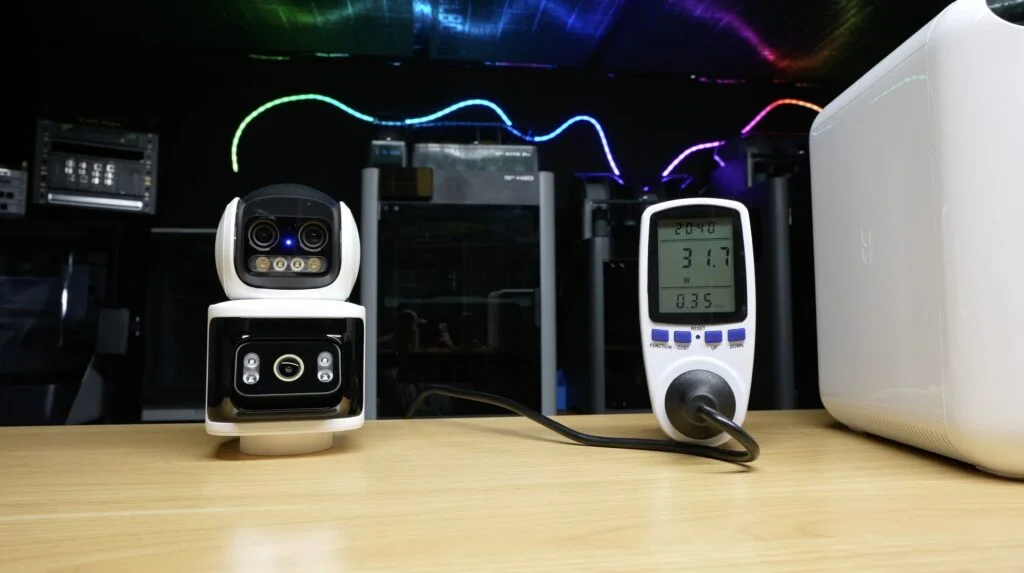
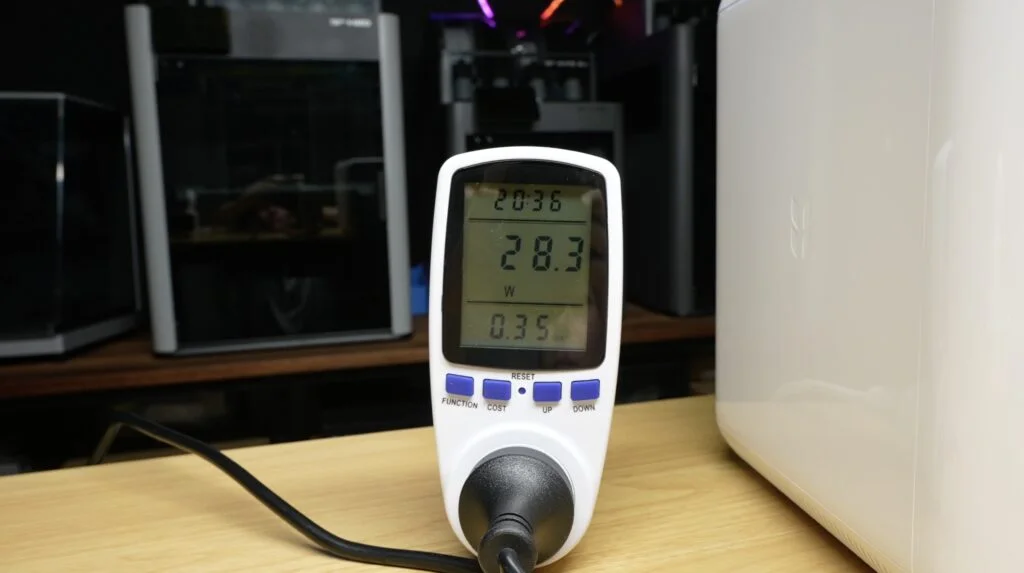
With all drives spun up, the HA100 drew around 28W at idle and 33W under load. Powering one of the OD600 cameras through its PoE port added roughly 4–5W, depending on what the camera was doing. Power draw will vary with the drives fitted and the number of PoE devices attached, but for a box handling storage, AI and surveillance, those figures are low. The 20V, 180W power adapter has plenty of headroom.
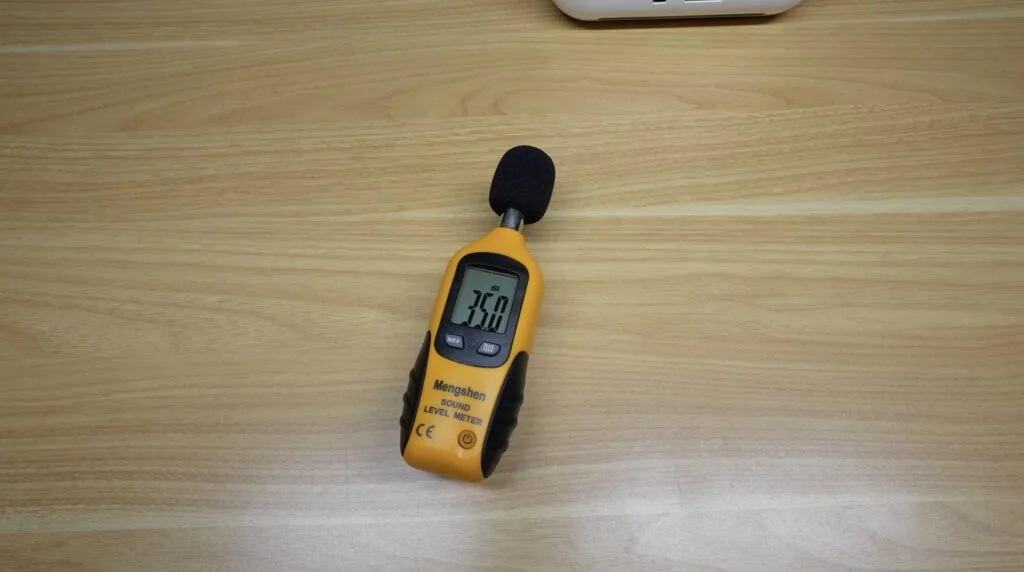
Acoustically, the drive trays' rubber damping keeps mechanical noise down. The measured level was 35 decibels, which was essentially the ambient level in the test room. In practice, the drives are hard to hear.
Pricing and Availability
UGREEN offers three HomeAgent models with different hardware and pricing. The consumer-level HA100 is listed at $799 at its super early bird price, with an MSRP of $1,599. That early price includes a free indoor camera. The HA100 Pro and the MA100 are more expensive and more powerful, and UGREEN appears to be aiming them at heavier local AI workloads and small businesses.
At $799, the hardware makes a strong case. At the $1,599 MSRP, the software has to do more of the work to justify the cost as a true all-in-one smart home system. The HA100 is planned to launch via Kickstarter in November, according to the source material, and it is currently available for pre-order through UGREEN's own channels.
Where It Falls Short
The main criticism is that the HA100 may try to do too much in one box. It is a capable product with a lot of technology packed inside, but a spinning-disk enclosure with five network cables trailing out of the back is an awkward fit for a living room, where voice features are most useful. UGREEN appears to have anticipated this, with a dedicated smart speaker for the voice assistant that can sit on the same network and look less out of place.
Since this is a pre-release product, some features are still in development and some bugs are likely. The current software is more limited than UGREEN's conventional NAS software, and almost everything is accessed through the mobile app. Given UGREEN's established NAS lineup, that's probably a temporary gap, but buyers should treat the current feature set as a snapshot.
My Read on the HA100
The hardware is the strongest part of the HA100. The RK3588 platform, a dedicated accelerator, a 2.5G port, four PoE camera ports and tool-free bays add up to a compact, efficient device. Its fundamental idea of keeping recording, recognition and voice control on the local network is sound, and the per-app AI controls are a thoughtful design choice.
Whether the HomeAgent becomes a truly useful all-in-one smart home system will depend on software maturity and on how well UGREEN supports smart home devices from other brands. Those two factors will decide if the HA100 is a clever gadget or a dependable part of the house. Watch the software updates and the third-party compatibility list before committing to the full price.