Ada Computer Science Extends to Ages 11–19 in UK Frontier Tech Push
- Published
- Author
- Dan Fisher
- Reads
- 924
Ada Computer Science now covers ages 11 to 19 under the UK's TechFirst schools strand, adding free content on six frontier technologies.
Most countries trying to build a future tech workforce hit the same wall early on. Students who don't meet AI, quantum or semiconductors until university have already decided, often without realising it, that those subjects aren't for them. The UK's TechFirst initiative is betting that the fix starts in secondary school, and the change that matters most for teachers is what's now sitting inside the Ada Computer Science platform.
What TechFirst is trying to do
TechFirst is the UK government's £187 million tech skills initiative, run through the Department for Digital, Culture, Media and Sport (DCMS). It isn't aimed at one stage of the pipeline. It covers students still in school, university researchers and people changing careers, which is a more useful framing than most skills programmes manage. Schools get the earliest and arguably the hardest job, because that's where attitudes to technical subjects tend to set.
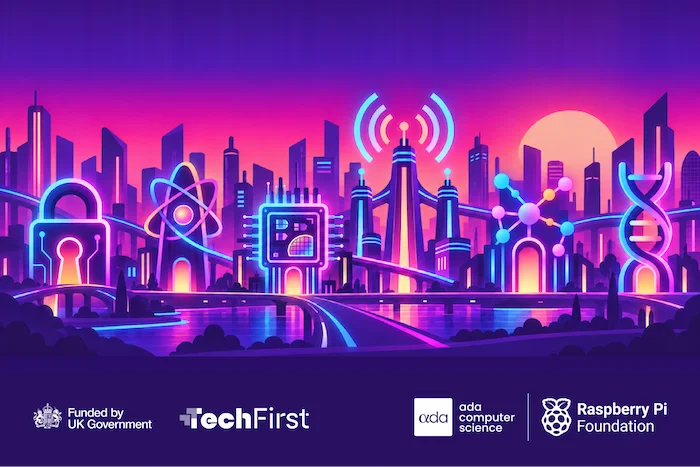
The programme names six frontier technologies as its focus: cybersecurity, artificial intelligence, quantum computing, engineering biology, semiconductors, and advanced connectivity technologies. Those six are a useful checklist for anyone designing a curriculum, because they cut across disciplines. Semiconductors pull in physics and materials science. Engineering biology is as much chemistry and biology as computing. Quantum computing needs maths that many 14-year-olds haven't yet been introduced to. A schools strategy that tries to cover all six has to decide early how much of each reaches a 12-year-old.
TechFirst is backed by major tech employers, which shapes what the content is meant to lead to. The stated aim is pathways into the sector, not just awareness, and that distinction matters for how the materials are written.
Ada Computer Science moves down to age 11
Ada Computer Science sits at the centre of TechFirst's schools strand. It's a free computing education platform built with the University of Cambridge, and it's now being expanded with DCMS funding. The headline change is the age range. For the first time, Ada CS covers ages 11 to 19. New teaching and learning materials for 11- to 14-year-olds sit alongside the existing content for 14- to 19-year-olds, so a student can start in Year 7 and follow a single resource through to the end of secondary education.
That continuity is the part I'd pay closest attention to. Curriculum resources often change platform or quality at the point a pupil moves from key stage three to GCSE, and the result is that students re-learn basics or lose momentum. A single platform that carries the same conceptual thread from age 11 gives teachers a way to build a longer sequence without stitching together three sources.
The team behind the platform says the new frontier technologies materials, like all of its teaching and learning resources, will remain free to teachers and students. That's a meaningful detail for a schools audience. Free resources reduce the procurement friction that stops many departments from trying new material, particularly those with tight budgets and no dedicated computing lead.
Hands-on activity beyond the classroom
The platform isn't the only part of the scheme. DCMS is also funding Regional Delivery Partners to bring hands-on technology activities into secondary schools across the UK. The aim is practical experience and a concrete sense of where a tech career could go, which is harder to get from a screen than from a workshop or a visiting session. Regional delivery matters here because the strongest programmes in this space tend to rely on local employers and universities who can make the work feel tangible, and a national platform on its own rarely does that.
The stated rationale goes beyond economics. The announcement frames understanding frontier technologies as something that gives young people agency in a world where technology plays a larger role in their daily lives. That's a broader argument than workforce supply, and it helps explain why the content is aimed at 11-year-olds rather than only at students heading for tech degrees.
What's coming in phases
Content will be added in phases rather than in one release. The planned additions include:
- Learning content on artificial intelligence, cybersecurity, quantum computing, engineering biology, semiconductors, and advanced connectivity technologies
- Learning content designed specifically for 11- to 14-year-olds, covering a wide range of computing topics and building digital literacy
- Interactive student challenges and self-paced projects
- Careers content, including real-life case studies
- Links to workshops, events, and activities run by Regional Delivery Partners
Of these, the careers case studies and the links to regional activities are the ones most likely to change how students see themselves. Abstract content on quantum or engineering biology is difficult to make relatable at 12. A named person doing a job that uses those ideas is far easier to remember. The interactive challenges and self-paced projects will matter for a different reason: they determine whether the material works in a lesson where the teacher has limited time to prepare, or whether it needs heavy adaptation.
Getting started
If you teach or study in the UK, the first TechFirst content release is available on the Ada Computer Science website. Creating a free account is the way to hear about new content and features as they arrive, which will matter given that the rollout is phased. For heads of computing, the sensible first step is to look at the 11- to 14 materials against the existing key stage three scheme of work and see where they fit. The phased structure means the platform will look different in a year, so it's worth checking what's live now rather than planning around the full list above.