Blythe Masters Named Next Chair of Raspberry Pi Foundation Trustees
- Published
- Author
- Philip Colligan, CBE
- Reads
- 932
Fintech veteran Blythe Masters will chair the Raspberry Pi Foundation's Board of Trustees from the end of March 2027, succeeding Sir John Lazar.
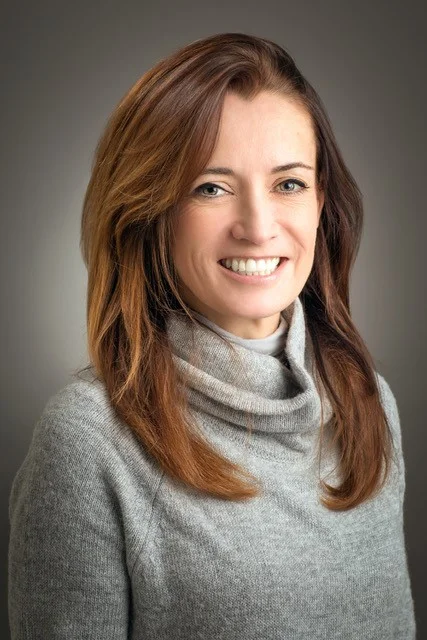
The Raspberry Pi Foundation has named Blythe Masters as the next Chair of its Board of Trustees, with her taking over at the end of March 2027. For a charity whose work sits between computing education and the spread of AI skills, the choice of chair says something about where the Foundation thinks its governance needs to go. The Foundation frames its mission as enabling all young people to realise their full potential through computing and AI, and it says that mission feels more urgent now than it has before.
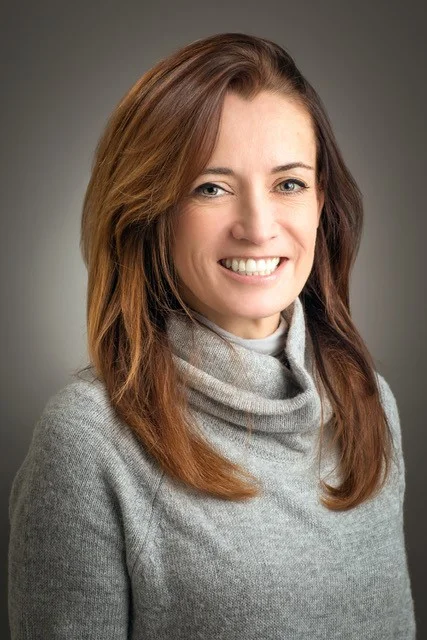
A career built in finance and fintech
Masters is best known in global financial services. She graduated from Trinity College, University of Cambridge, where she was also a Senior Scholar, and then spent nearly three decades at JPMorgan. Her roles there took her onto the bank's Executive Committee and included Chief Financial Officer of the Investment Bank and Head of Global Commodities. That's a long run inside one of the largest and most process-heavy institutions in the sector, and it gives her a practical view of how complex organisations manage risk, reporting and people at scale.
After leaving JPMorgan in 2014, she became CEO of Digital Asset and later a Founding Partner at Motive Partners, a fintech-focused investment firm. Most recently she was Group CEO of FNZ, the global wealth technology platform and a Motive Partners portfolio company. Here's the thing: her recent career has been less about banking as such and more about the software platforms that sit underneath it. That's a different kind of technical literacy, and it's one that maps reasonably well onto a foundation whose work is built on software, hardware and curriculum.
Governance experience across boards
Masters currently chairs JPMorgan Securities plc and sits as a non-executive director on the board of SymphonyAI. Her earlier board seats include A.P. Moeller Maersk, Credit Suisse, Santander Consumer USA, Forge and GCM Grosvenor. Serving on boards of that range means she has sat on both sides of the table in very different regulatory and commercial settings, and a non-executive role demands that you question management without running the day-to-day operation yourself.
Her nonprofit record is at least as relevant to this appointment. She has been co-chair of the Global Fund for Women, vice chair of ID2020, chair of the New York City chapter of Susan G. Komen Breast Cancer Foundation and chair of the Hyperledger Foundation, alongside numerous other trustee roles. Chairing an open-source foundation such as Hyperledger means working with a community of contributors who don't report to you, which is a useful parallel for a charity that depends on educators, volunteers and partner organisations around the world.
Succeeding Sir John Lazar
Masters takes over from Sir John Lazar, who has led the Board of Trustees since 2020. The Foundation credits his tenure with supporting hundreds of thousands of educators and tens of millions of students worldwide in building the skills, knowledge and mindsets to shape their world through computing and AI. Those are large numbers, and they describe a reach that is easy to lose track of when people talk about the Foundation mainly as the maker of a low-cost single-board computer.
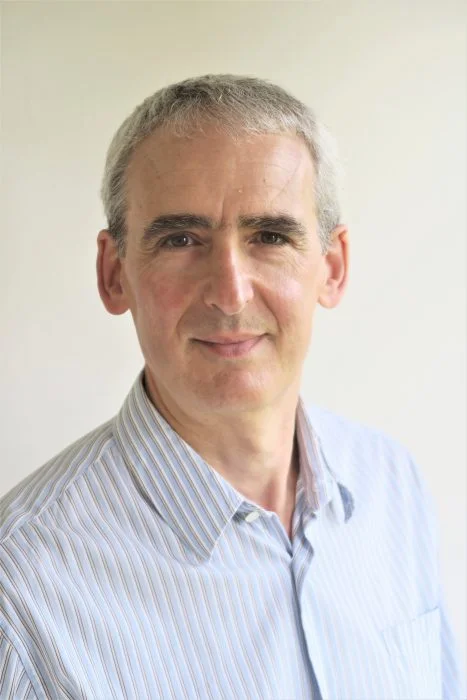
The Foundation's statement describes Sir John's contribution in warm terms and says the Chair who will work with Masters has learned a great deal from him. John will remain on the board through the transition and handover, which is a sensible arrangement for a role where continuity of relationships with staff and trustees matters as much as the formal transfer of authority. Handovers of this kind often run most smoothly when the outgoing chair stays visible for a period, rather than leaving the incoming one to learn the job from papers alone.
What a charity board actually does
The Foundation is a registered charity, and its Board of Trustees is responsible for making sure its resources are used effectively to advance its charitable goals. That's the core legal and fiduciary job, and it's distinct from running programmes. Trustees set direction, oversee finances and hold the executive team to account, but they don't deliver the education work themselves.
The Foundation says it has an exceptionally strong and diverse group of trustees drawn from a wide range of backgrounds. Trustees generally serve two three-year terms and are volunteers who give their time and expertise without remuneration. That unpaid model is common across the charity sector, and it means chairs are recruited for judgement and willingness to commit time as much as for any single skill set. It also means the pool of people who can afford to do the job is narrower than it might look from the outside, which is one reason foundations tend to lean on professionals from industry for board seats.
Readers who want to see who else sits on the board can consult the full list of Trustees and Members on the Foundation's website.
What to watch
Masters doesn't take up the role until the end of March 2027, so the practical effects are some way off. Still, the appointment is worth tracking for a few reasons. The first is whether the board's emphasis shifts toward the AI side of the Foundation's mission, given Masters' background in fintech platforms and her current work on the SymphonyAI board. The second is how the Foundation balances its educator-facing reach with the commercial and hardware work that funds much of it. And the third is simply how a charity with a global footprint manages a leadership change while the outgoing chair is still in the room. Those are the questions I'd be asking as the handover approaches.