Electric Drives: Components, Control Types, Trade-Offs and Applications
- Published
- Author
- Komal Ganvir
- Reads
- 583
Electric drives pair motors with power electronics and control systems to match speed, torque and motion to loads across industrial and everyday equipment.
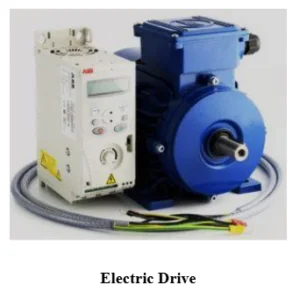
Electric drives make a motor’s output fit the job. A drive combines an electric motor with power conversion and control, allowing the system to regulate speed, torque and direction as a load or process requires. That flexibility is why drives appear in equipment ranging from household appliances to factory machinery and electric transport.
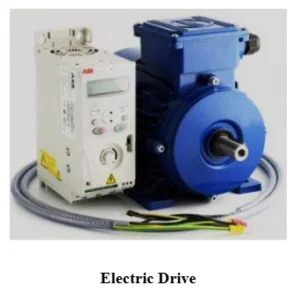
The control approach depends on the motion being demanded. Inverter drives typically vary motor speed and torque. Servo drives add precise control of position, as well as speed and torque, making them useful where machinery must follow more exact or complex motion commands. Modern electronic controllers and software manage these functions.
From power supply to mechanical load
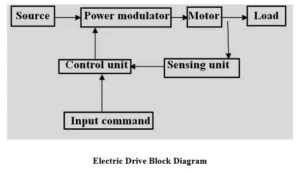
A typical drive connects a power source to a power modulator, which feeds an electric motor. The motor turns the mechanical load, while a control unit interprets commands and directs the modulator. Sensors can report operating conditions such as motor speed and current back to the controller. This feedback supports closed-loop control and helps the system detect abnormal operation.
The power modulator is the interface between the supply and motor. It adjusts the electrical power delivered to the motor to meet load demands, and can convert power from one form to another—for example, DC to AC when an AC motor requires it. It can also limit excessive current during starting or temporary operating conditions, and select between operating modes such as motoring and braking.
The controller turns a requested speed, torque or direction into signals for the power modulator. It also contributes to protection by helping keep operation within safe limits. The sensing unit supplies measurements used for control and monitoring; its role is especially relevant in closed-loop systems.
Choosing the motor and converter starts with the load. Pumps, fans, conveyors and machine tools impose different operating demands, and the system also has to suit the available power supply. Motor selection depends on factors including required power, speed, torque, performance, cost and operating conditions.
Ways to classify a drive
Drive categories describe different design choices, and a single system can fit several categories at once. By motor count, a group drive uses one motor to serve several machines through a shared mechanical arrangement. An individual drive gives each machine its own motor. A multi-motor drive assigns two or more motors to different parts of one machine or process.
Power supply provides another distinction. AC drives use alternating-current motors and are common in industrial settings; DC drives use direct-current motors and are applied where controlled speed and torque are needed. Drives can also be constant-speed, operating at nearly fixed speed under normal conditions, or variable-speed, where speed can be adjusted to the application.
Control requirements offer a further classification. Constant-torque drives are designed to maintain approximately constant torque across the required speed range. Constant-power drives aim to keep power approximately constant over a specified range. These terms describe the intended operating profile, which helps guide selection for a particular load.
Trade-offs in operation
Electric drives cover a broad range of power, speed and torque ratings, and provide adjustable speed and torque. Electric braking can add control over motor operation. Semiconductor converters have also made variable-speed operation of AC motors easier and more efficient. Because the motor’s output can be matched to the task, the same general drive architecture suits domestic and industrial equipment.
There are practical limits. A drive depends on an electrical supply, so a supply failure can halt the system unless backup arrangements are available. Installation can have a high initial cost, and performance and dynamic response depend on the motor, controller and power converter chosen. Some systems produce electrical or mechanical noise; protection and control equipment can add complexity and cost. Drives need no fuel storage or routine refuelling, and produce no direct exhaust emissions while operating.
Where electric drives are used
In transport, drives propel electric trains, buses, trams, trolleybuses and battery-powered vehicles such as cars and scooters. In industry, they run production equipment, textile machinery and machine tools. Pumps and fans use them to control water movement, ventilation and air-conditioning operation.
Robotic arms and automated machines use drives to control movement and positioning. Conveyors, cranes, hoists and other lifting equipment rely on them for material handling. Household products—including washing machines, refrigerators and mixers—also use electric motors controlled as part of a drive system.
The engineering value lies in coordinating the supply, converter, motor, controller, sensors and load as one system. The right combination gives the machine the motion its process requires; the useful next step in selecting a drive is to define that load and its operating profile.