Startup Pilots, RaaS Contracts and Funding Lessons from RoboBusiness 2026
- Published
- Author
- Hannah Shapiro
- Reads
- 336
MassRobotics ran a two-part bootcamp at RoboBusiness 2026 covering IP, funding, RaaS contracts, and how startups and corporate teams turn pilots into partnerships.
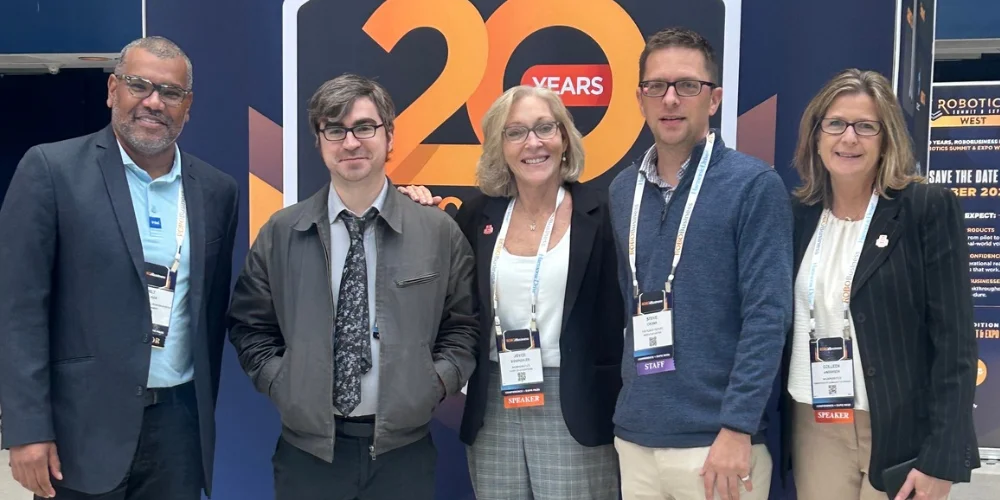
Twenty years is a long run for any trade show, and RoboBusiness reached that mark this year in Santa Clara on October 20–21. What stood out to me from the MassRobotics side was how much of the programming focused on the unglamorous decisions that decide whether a robotics company survives its first few years. Contracts, funding structure and the mechanics of working with a large customer tend to get less stage time than new actuators or humanoid demos. This year they got a lot of it.
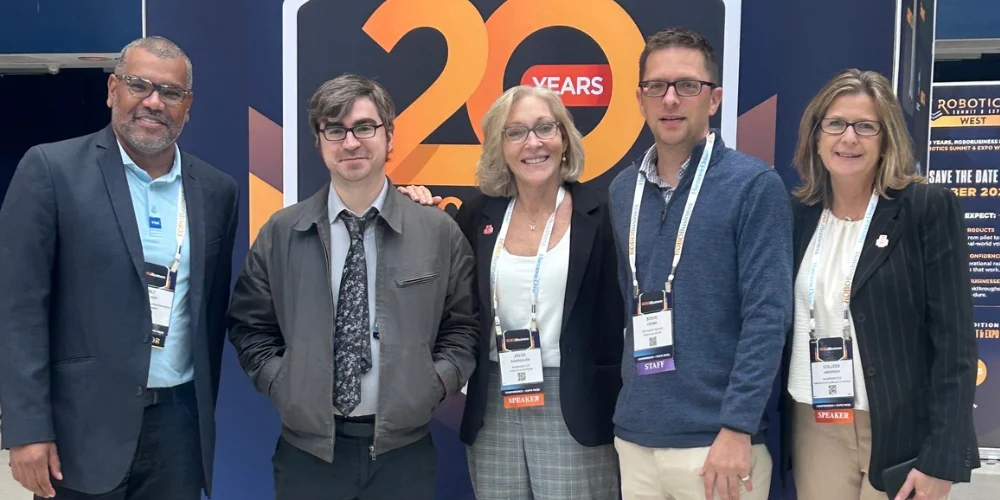
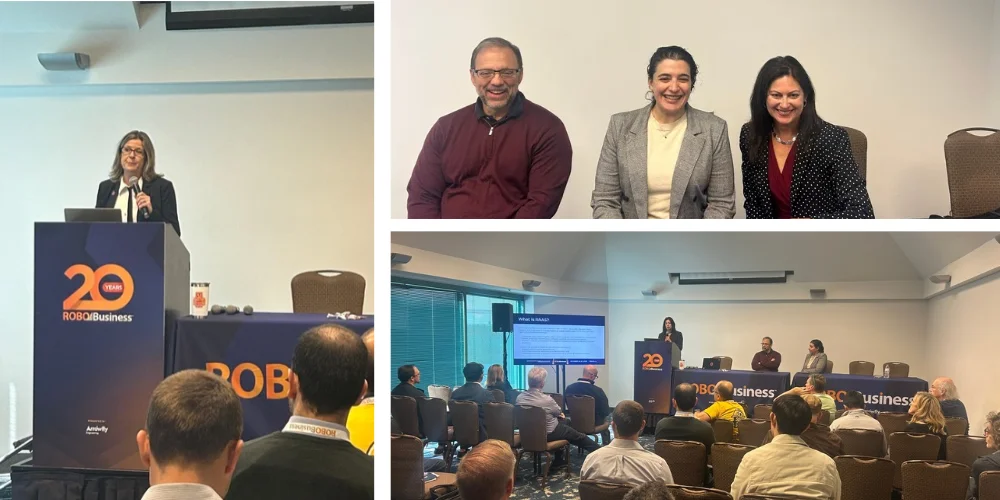
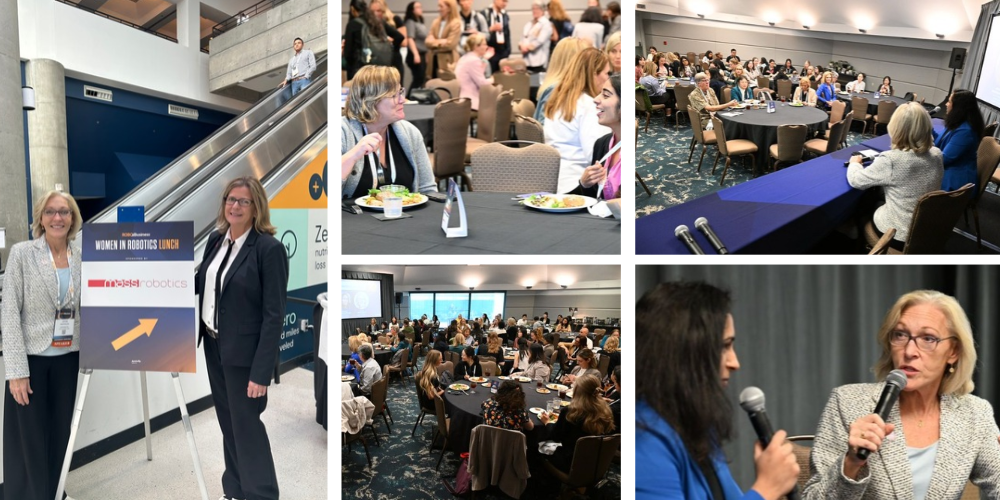
MassRobotics served as strategic partner for the event. Its team ran the annual two-part Robotics Startup Bootcamp and hosted the Women in Robotics Luncheon. Colleen Anderson, Director of Community and Events at MassRobotics, led Part 1 on fundamentals. Joyce Sidopoulos, Chief of Operations, led Part 2 on corporate relationships and also hosted the luncheon.
Part 1: The basics, and the mistakes that are cheapest to avoid early
Part 1 covered the issues that tend to make or break early-stage hardware companies. The agenda listed three topics: intellectual property and trademark considerations, how to fund a startup, and Robotics-as-a-Service (RaaS) agreements and how to structure them.
The IP and funding topics will be familiar to anyone who has tried to raise a seed round for a machine that doesn't exist yet. The RaaS item is the one I'd flag for hardware teams. In a RaaS model, the customer typically pays a recurring fee for robots that the vendor owns, operates and maintains, rather than buying the hardware outright. That shifts uptime risk, support obligations, data rights and renewal terms into the contract itself, and it changes how a company forecasts revenue and cash. Teams in this position often discover that a contract template written for software needs substantial rework once a physical fleet is involved.
Anderson led the discussion alongside three attorneys from Foley Hoag: John Lanza, Jennifer Audeh and Brooke Fritz, Tech Transaction Partner. The session drew on the firm's legal and transactional experience. The point of having lawyers on the panel was practical. Decisions on IP assignment, contract structure and financing terms are far easier to get right at the start than to renegotiate after a first customer or investor has signed.
Part 2: Pilots, proofs of concept and the corporate side of the table
Partnering with a large corporation can speed up a startup's growth considerably. It can also consume a small team's time and runway if the pilot has no clear path to a production deal. Part 2 was built around that tension, with each side of the relationship getting its own focus:
- The startup perspective: securing, structuring and executing pilot programs and proofs of concept (POCs)
- The corporate perspective: how large enterprises evaluate, onboard and work with emerging startups
- Collaboration best practices: bridging the gap between startup speed and corporate process so both sides get value
Sidopoulos moderated the discussion with Ben Waters, CEO and co-founder of WiBotic, and Colm Prendergast, Senior Director and Head of the Emerging Tech Hub at Analog Devices. Having a startup founder and a corporate innovation leader in the same conversation is useful because they tend to measure a pilot differently. A founder often needs a reference customer and a revenue signal. A corporate team needs a defined test, a security and procurement path it can get through, and an internal sponsor who will still be there after the demo. A pilot that satisfies one side and confuses the other rarely turns into a contract.
Here's the thing I keep coming back to: a POC is only as good as its exit criteria. Writing down what success looks like, who signs off, and what happens next before the hardware ships tends to separate pilots that convert from ones that quietly expire. That's a general pattern across industrial technology sales, but it reads as especially sharp in robotics, where integration work and on-site validation can eat months.
Women in Robotics Luncheon
MassRobotics sponsored the Women in Robotics Luncheon, a one-hour session meant to give robotics professionals room for real conversation and mentorship rather than a typical conference networking hour. The highlight was a fireside chat between Joyce Sidopoulos, Co-Founder and Chief of Operations at MassRobotics, and Bhavana Chandrashekhar, Senior Manager of Applied Science at Amazon Robotics.
The luncheon was designed to help attendees form new connections, deepen existing relationships and push for greater female representation in robotics leadership. MassRobotics describes that goal as central to its mission, and the format suggests it sees networking and mentorship as the practical route to it.
The community on the show floor
Several MassRobotics sponsors exhibited, including Harmonic Drive, Novanta and Advanced Motion Controls. For anyone who designs motion systems, those three names alone make a case for walking the floor: gearing, motion control and precision drive hardware are where many robot projects are won or lost on the bench.
Residents also had a visible presence. Haply, a MassRobotics resident, showed its technology at a booth. Contactile, an Australian company based at MassRobotics through ARM Hub, presented in the startup pavilion. Placing early-stage companies next to established suppliers and integrators is the kind of exposure the organization says it works to create, and for smaller teams it's often the fastest way to find a first customer or supplier introduction.

What to take from it
If you're building or buying robotic systems, the most useful takeaway from this year's bootcamp is that the contract and the pilot plan deserve the same engineering rigour as the hardware. Pin down IP ownership, the revenue model (especially if RaaS is on the table), and the success criteria for any pilot before the first unit leaves the bench. Those are the decisions that are cheap now and expensive later.
Thanks to the RoboBusiness team for twenty years of bringing this community together, and to the speakers from Foley Hoag, WiBotic, Analog Devices and Amazon Robotics. If you want the full schedule and speaker details, the RoboBusiness agenda is the place to start.