MassRobotics Builds a Shared Robotics Hub for Startups and Physical AI
- Published
- Author
- Hannah Shapiro
- Reads
- 785
MassRobotics connects robotics startups with workspace, labs and industry partners; its resident companies have raised nearly $3 billion collectively.

Robotics companies need more than a promising design. They need room to build hardware, access to specialist equipment, people who can help solve commercial problems and partners willing to test new systems. MassRobotics was set up to bring those resources together, and its co-founder and Chief of Operations, Joyce Sidopoulos, says that shared infrastructure remains central to the organization’s role as robotics expands into physical AI.
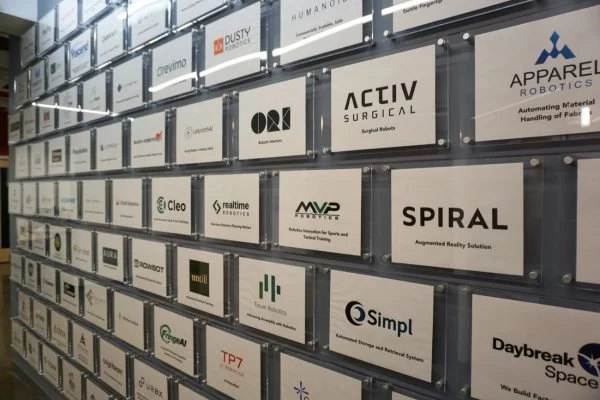
MassRobotics is an independent nonprofit hub in Boston. It provides workspace and laboratories, startup programs, workforce development, fellowships and corporate connections. The organization says it has supported more than 250 robotics startups. Its resident companies have collectively raised nearly $3 billion in venture funding and created more than 1,500 jobs, figures Sidopoulos offered as measures of the community’s reach.
A hub built around a hardware gap
The idea grew out of robotics community work at the Mass Tech Leadership Council. Sidopoulos joined the council in 2012 as Robotics Cluster Manager, working with Tom Ryden, now MassRobotics’ Executive Director, who was then co-chair of the cluster. Conversations with companies, researchers and educators revealed a strong concentration of robotics expertise in Massachusetts, alongside a lack of a central place to connect the people and organizations working in the field.
Hardware makes that gap especially difficult for early-stage companies. Building and testing a robot takes physical resources, and those can be expensive for a startup to secure on its own. The initial concept was to give multiple companies access to shared tools and facilities, while also creating a place for founders to meet potential collaborators and customers. MassRobotics was formally established as a nonprofit in 2015 and launched in 2017.
One early turning point, Sidopoulos recalls, was securing backing from the City of Boston for a physical home. That support made the proposed hub tangible. She also points to the progress of resident startups, from early concepts to companies that have raised substantial funding and hired employees, as a lasting source of satisfaction.

Shared facilities and founder support
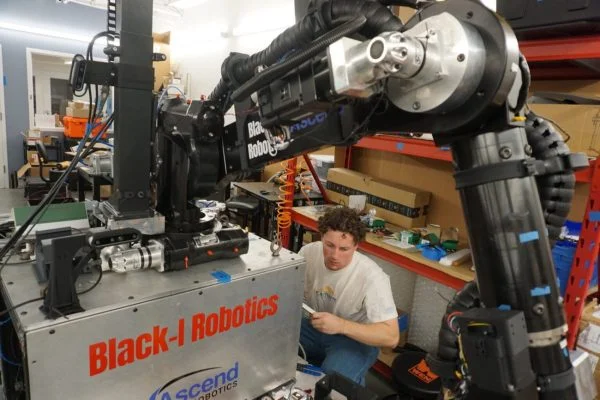
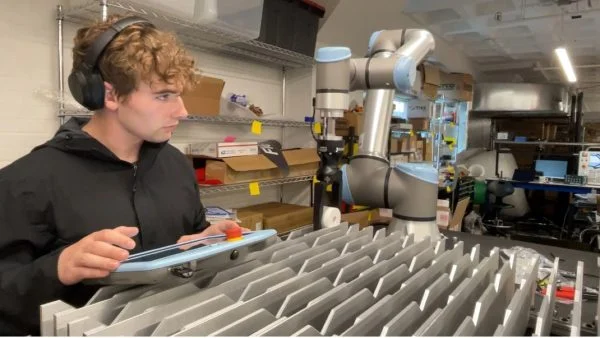
MassRobotics describes its work as a platform for robotics innovation rather than a product business. Startups can rent flexible workspace and lab space by the month, and take part in accelerators, workforce programs and fellowships. Corporate partnerships and international collaborations extend the network beyond the facility.
The model’s practical value lies in combining physical resources with access to people and organizations that can help a young company move toward commercial use. Sidopoulos characterizes the approach as founder-first: the organization aims to help companies develop connections, gain visibility and find opportunities to advance their technology.
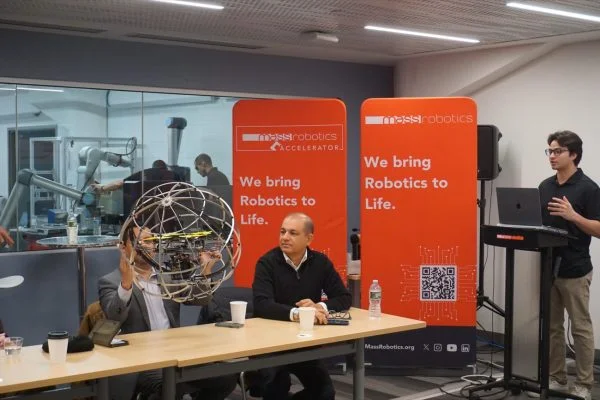
MassRobotics says it does not fund resident startups or take equity from companies sharing its space. That structure supports its stated aim of remaining an independent resource for startups and other participants across the robotics community. Its activities also include public events such as the Robot Block Party and the Women in Robotics annual Medal.
Connecting a fragmented field
Robotics spans different industries, technologies and types of organization, and that breadth can leave companies working in separate circles. MassRobotics has tried to reduce that fragmentation by bringing stakeholders together, including businesses that may compete. Its nonprofit status and focus on shared industry development are intended to make it a neutral meeting point.
That role has shifted as the technology has changed. Early activity in the hub’s network centered more heavily on core robotics systems and hardware. Sidopoulos now sees rapid advances in physical AI, autonomous systems and sensing. MassRobotics does not develop one technology itself; it adjusts its programs and partnerships to support companies working in these emerging areas and help them bring products to market.
The potential applications range across manufacturing, healthcare, logistics, mobility, construction, climate technology, marine work and agriculture. Rather than pursue one defined market, the organization supports companies serving this broad set of fields. Sidopoulos sees physical AI and automation expanding the opportunity, while the challenge for startups remains turning technical capability into systems that can be adopted in real settings.
What the ecosystem delivers
Startups in the network have used mentorship, partnerships and visibility to build commercial traction, secure funding and grow their teams, according to Sidopoulos. Some have expanded internationally, won contracts with large companies or been acquired. She describes a recurring pattern: founders join at an early stage, then use the surrounding network as they develop their businesses.
MassRobotics itself is supported through corporate partnerships, sponsorships and program funding. Sidopoulos points to the resident companies’ collective fundraising and job creation as evidence of the ecosystem’s impact, while the organization’s own milestones include the opening of its headquarters, the growth of accelerator programs and the development of international relationships.
Its distinguishing feature, in Sidopoulos’ view, is the combination of hands-on resources and a neutral, founder-centered community. The organization serves startups alongside companies, academic groups and researchers, aiming to make useful connections possible across those boundaries. Its next priorities are to extend its international reach, strengthen the robotics workforce and support development and commercialization of physical AI.
For robotics founders, the offer is not a single tool or technical shortcut. It is access to space, equipment, programs and a network that can help bridge the distance between building a system and deploying it. As robotics moves further into physical AI, that connective role will be tested by how effectively startups can turn shared resources and partnerships into working products.