Three Gorges Turbine Seal Rings Targeted for On-Site Additive Repair Development
- Published
- Author
- Ada Shaikhnag
- Reads
- 684
A 29-month project will develop equipment and procedures to repair 8.4–10.9 m turbine seal rings in place, with testing planned before use.
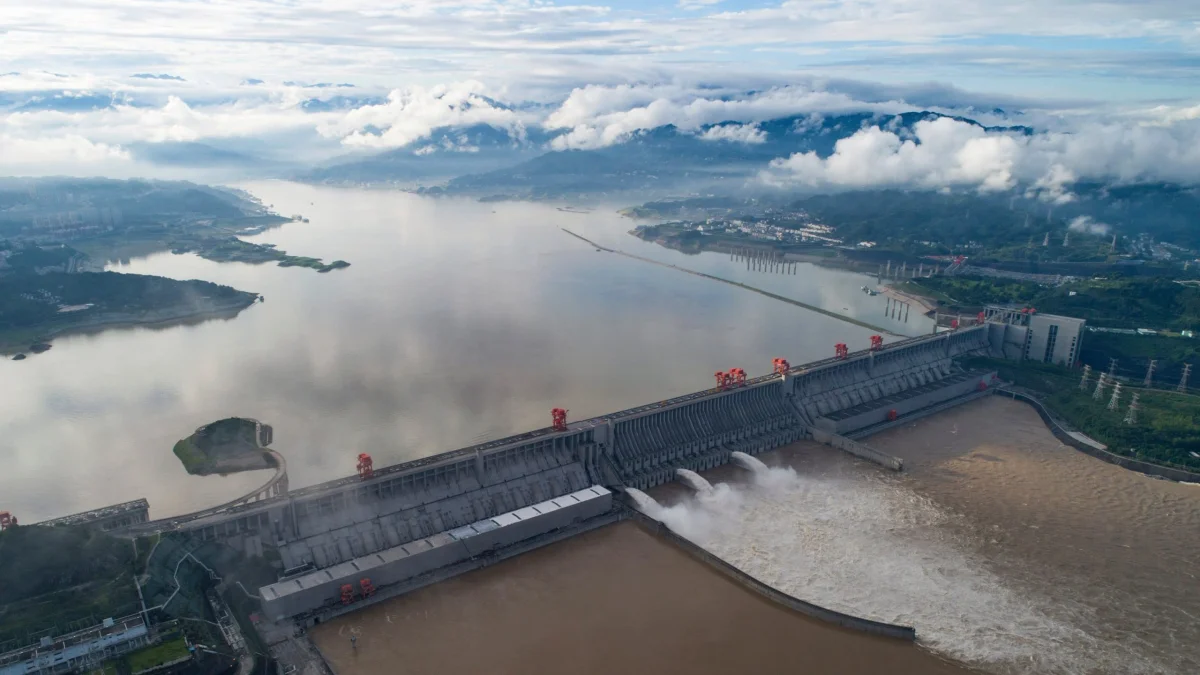
Repairing a turbine seal ring in place could avoid the transport, fitting and machining involved in replacing a component up to 10.9 meters across. China Yangtze Power has awarded Dongfang Electric Machinery a reported 15.8 million yuan (approximately $2.36 million) contract to develop and test that approach at the Three Gorges hydropower station.
The 29-month project covers rings from 8.4 to 10.9 meters in diameter and eight generator types. It is the second phase of a research program between the station operator and Dongfang Electric Machinery, a subsidiary of China Dongfang Electric Group based in Deyang, Sichuan. The tender is identified as T261100130982.
The work is focused on creating both a repair process and the equipment to carry out metal additive manufacturing on large circular components at their installed location. The tender, published in August 2026, sets out a development and validation program; it does not report that a full-scale repair has already been completed at the station.
Why replacement is difficult
Three Gorges has 22,500 megawatts of installed capacity, with its main turbine units rated at 700 MW each. The left-bank turbines entered service in 2003. Seal rings sit between rotating and stationary parts of a turbine, helping control water flow and limit leakage. When a ring fails, the current maintenance route described in the tender is to replace it.
That route starts with the equipment manufacturer producing a new ring to specification. The component must then be transported to the site, heat-fitted to the runner using an interference fit, and machined to achieve the required dimensions. For a ring close to 10 meters in diameter, transport and installation are substantial tasks. The tender also cites uncertain schedules and a large machining workload. Material removed during final machining cannot be restored, so excessive cutting can compromise the repair effort.

These steps can extend maintenance and keep a turbine unavailable while work proceeds. The project aims to build up material on a worn surface, potentially reducing the need to remove and replace the whole ring. Whether that can shorten outages will depend on the repair system’s ability to deposit material consistently, control distortion and meet the component’s dimensional and mechanical requirements.
A coordinated system for large rings
The proposed equipment is a collaborative system for rings in the 10-meter class. Its specified elements include modular load-bearing structures, multiple additive execution units, control software, online monitoring equipment, stress-relief equipment and dust purification. Working around a large circular surface creates a coordination problem: the deposition units must follow planned paths while maintaining control of the forming process across the component.
The technical scope includes numerical simulation of deformation during additive manufacturing, process and path planning, defect suppression, control of microstructure and mechanical performance, and residual-stress management. These topics are linked. Deposition conditions affect how material forms and cools; the resulting microstructure and residual stresses can affect the repaired region’s performance, while heat and material buildup can alter the ring’s shape. The project’s measurements and process controls will need to address those effects together.
The contract also calls for standardized procedures for repairing upper and lower sealing rings across all eight generator types. That requirement matters because a process developed for one component geometry may not transfer directly to another. Repeatable procedures can record how the equipment is configured and how the repair is assessed, giving future on-site work a defined technical basis.
Validation before routine use
An earlier phase assessed feasibility and concluded that in-place additive manufacturing of seal rings was technically feasible. The current phase is intended to develop key technologies and complete equipment sets. That moves the work from a feasibility finding toward an operational system, but the tender describes planned development rather than proven fleet-wide repair performance.
Validation is to include mechanical testing, non-destructive inspection, dimensional checks and residual-stress analysis. A third-party organization with valid CMA certification is specified for the verification work. Together, these checks address whether the deposited material and repaired geometry meet the project’s requirements, whether inspection can identify defects, and whether residual stresses are within acceptable bounds. The tender does not provide numerical acceptance limits or test results.
The program also requires at least 10 patent applications, including a minimum of six invention patents, and at least one paper accepted by a Chinese core, SCI or EI-indexed journal. Those deliverables indicate that the project is expected to produce documented technical work alongside its repair equipment and procedures.
The practical test is whether one validated system can serve components spanning 8.4 to 10.9 meters and eight generator types within the 29-month schedule. For turbine operators, the potential value lies in reducing the work required to replace a large ring. The next meaningful evidence will be verified repair results showing dimensional accuracy, material performance and residual-stress control under the project’s test conditions.


