Arm Under SoftBank: Pelion’s IoT Ambitions and the Push to Expand R&D
- Published
- Author
- Babbage
- Reads
- 882
SoftBank backed Arm’s IoT platform and expanded its engineering resources, but Pelion was later sold off as the company’s ambitions shifted.
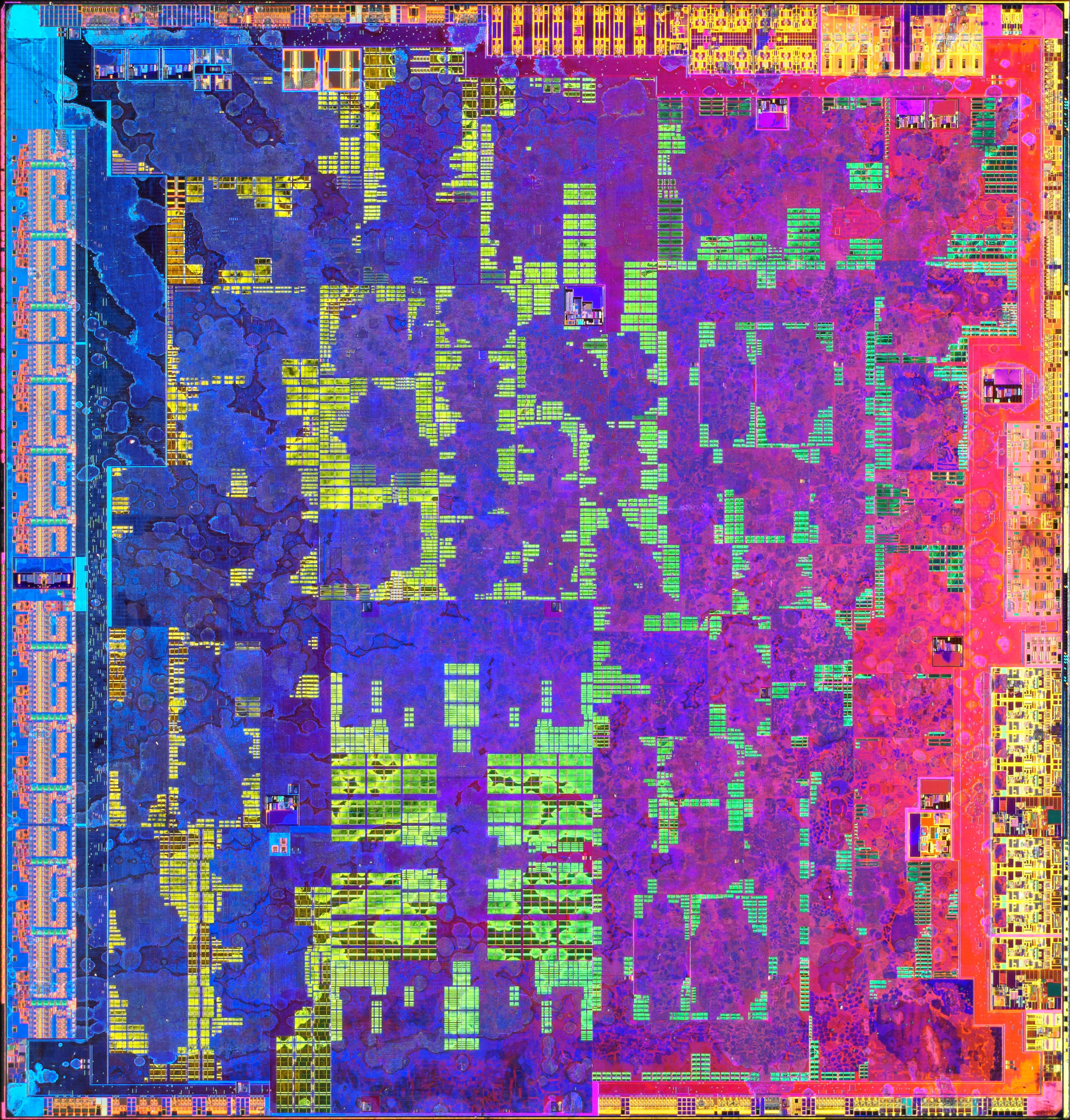
SoftBank gave Arm room to expand its engineering workforce and try a broader role in the Internet of Things (IoT). The clearest product expression of that ambition was Pelion, a platform intended to connect devices, manage their connectivity and handle the data they generated. Its later divestment shows the difficulty Arm faced when it moved beyond licensing processor designs into services that could overlap with customers’ own plans.
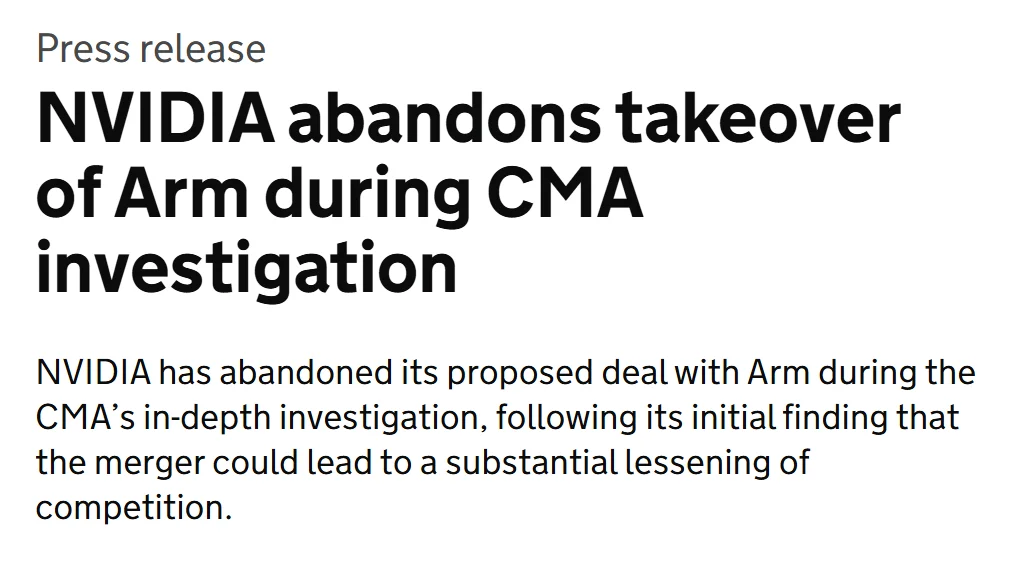
The other major question is what SoftBank’s backing changed inside Arm. The company added staff and research capacity after its 2016 acquisition, yet SoftBank was considering an exit by 2020. A proposed sale to NVIDIA did not proceed, leaving Arm to pursue server growth on its own. Together, these developments offer a mixed picture: more resources and a wider product range, but no lasting IoT platform and continuing questions about the scale of investment needed to compete in new markets.
Mobile edge computing offered a possible role for Arm
Before considering Pelion, it helps to revisit the opportunity Arm appeared to miss. In June 2016, just before SoftBank announced its offer for Arm, a panel on Mobile Edge Computing (MEC) brought together representatives from Intel, AT&T, Nokia, Ericsson and Midokura. The event, hosted by the Telecom Council of Silicon Valley, explored how computing closer to mobile users might support emerging network services.
The industry’s ideas for edge servers included workloads such as virtual and augmented reality, video analytics, data caching and IoT. Content delivery was another use: storing data nearer to users can reduce the distance it has to travel through a network. That approach might also serve industrial and enterprise applications, where connected equipment could benefit from access to nearby data. In the case of assisted driving, for instance, a vehicle drawing information from a mobile network would have a practical reason to access it locally.
Network operators were also considering whether edge computing could give them a greater role in cloud services, as large cloud providers gained ground. The proposed architecture raised a siting question: should computing resources sit at mobile network facilities, at regional data centres, or closer to customers? Panel participants envisaged roughly one MEC server for every 50 to 100 base stations. With network densification, that could mean a few hundred regional data centres.
Telecommunications infrastructure has several layers between a radio and the wider network. In 5G terminology, these include the Radio Unit (RU), Distributed Unit (DU) and Central Unit (CU). The source discussion gives a sense of the potential reach: US mobile operators had around 450,000 outdoor base stations, including small cells such as distributed antenna system (DAS) antennas, and another 830,000 indoor small cells as of 2025. That scale made nearby computing a substantial infrastructure question, not simply a matter of placing servers in a few central facilities.
Traditional telephone company central offices were one possible location. AT&T’s CORD initiative, short for Central Office Re-Architected as a Data Center, proposed transforming facilities built for older copper networks into regional data centres. Arm’s absence from the MEC effort stands out because its processor designs were already associated with low-power phones and embedded devices. Energy consumption matters in network equipment as well, and Arm’s experience could have been relevant to devices connecting to cellular infrastructure.
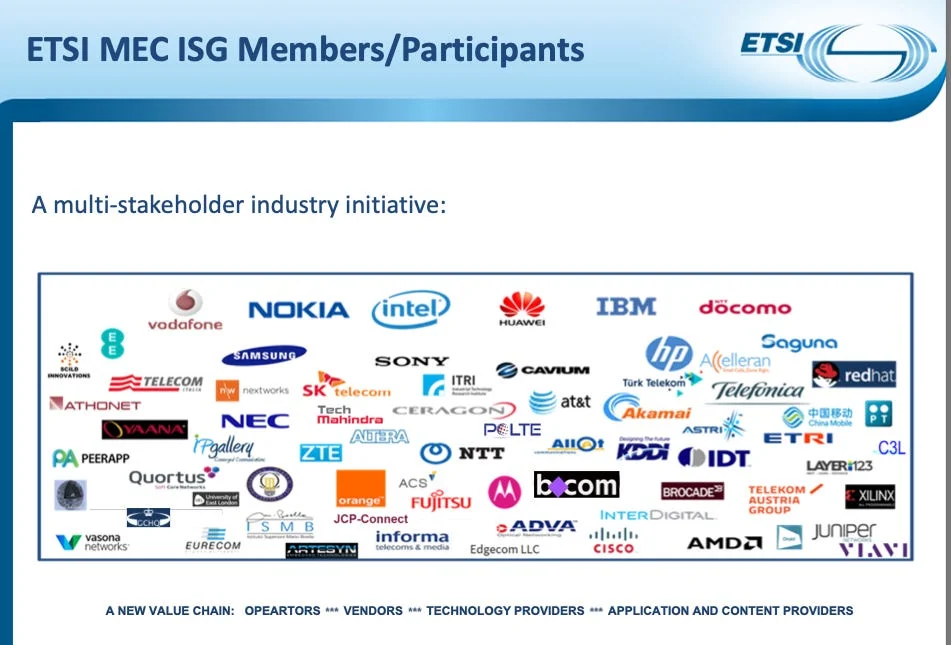
There are plausible reasons why Arm was not involved. Before 2016, its server activity was largely based on adapting existing smartphone cores or supporting customers that were doing the difficult work of developing server-class processors. Arm may have had limited resources to pursue several markets at once. Whatever the explanation, MEC was an adjacent opportunity: an area where Arm’s power-efficient designs and existing place in smartphone ecosystems might have supported a larger role.
Pelion extended Arm from processor designs to services
After SoftBank acquired Arm, the company assembled a set of IoT services and products under the Pelion name. Arm acquired Stream Technologies in June 2018 and Treasure Data in August 2018. It had also announced Mbed OS and Mbed Cloud capabilities that February. Together, these components were presented as a “device to data” stack: Stream handled connectivity management, Mbed supplied an operating system and cloud services, and Treasure Data provided tools for managing IoT data.
This combination widened Arm’s involvement across a device’s lifecycle. The company had traditionally supplied processor designs and related software libraries; Pelion aimed to cover connectivity, device management and data services as well. That could appeal to developers looking for connected-device infrastructure in one place. But it also brought Arm into closer competition with customers that wanted to choose their own operating systems, cloud providers and data platforms.
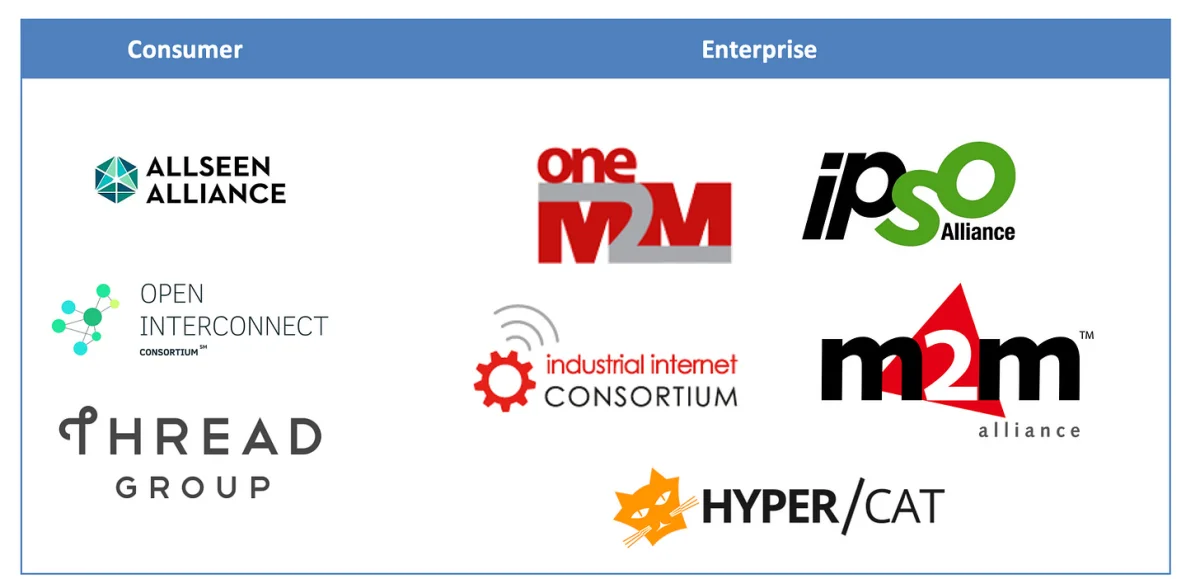
That tension was not unique to Arm. IoT has never been a single, uniform market. It comprises many applications, device types and connectivity standards, alongside competing industry groups and platforms. Samsung, for example, acquired SmartThings in 2014 as part of its connected-home effort. Intel also had its own IoT platform. In such a fragmented field, a broad device-to-data offer could be hard to make relevant across customers with different technical requirements and existing systems.
Arm spun Pelion out to SoftBank in August 2020. SoftBank later sold Pelion to Izuma Networks in October 2022 and invested in Izuma. The account places the purchase price for Pelion at $12 million, its book value when SoftBank acquired it from Arm. Some of Pelion’s assets ended up with Izuma; the company’s founders had previously sold WigWag to Arm. Mbed OS was scheduled to be discontinued in July 2026.
Those outcomes make the return from building the Pelion stack difficult to establish from the available figures. The acquisitions and product work created a broader platform, but the pieces did not remain together as a lasting Arm business. The episode illustrates a recurring challenge for Arm: expanding into products and services can open new sources of value, but it can also put the company in competition with firms that license its designs.
More resources, followed by an attempted sale
SoftBank had committed to doubling Arm’s headcount, a pledge that formed part of the case made for its 2016 acquisition. The figures for Arm’s private years, from 2016 to 2023, indicate a period of significant resourcing. The exact chart values are not reproduced here, but the stated direction is clear: SoftBank backed substantial expansion.
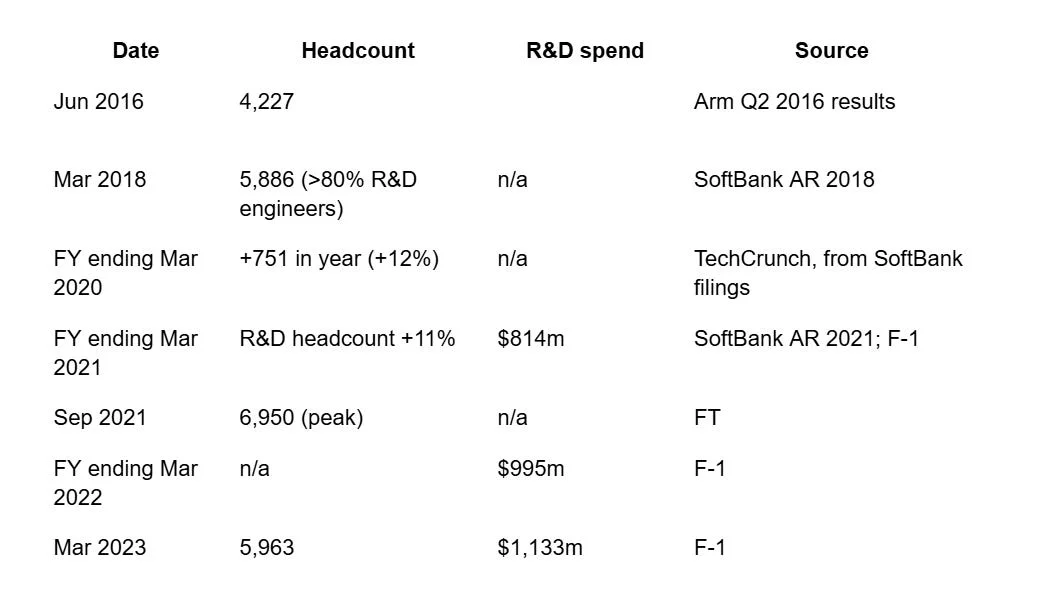
That support did not mean SoftBank planned to remain invested indefinitely. In 2020, before Arm’s headcount reached its peak, SoftBank agreed to sell Arm to NVIDIA for $40 billion. SoftBank had paid $32 billion for Arm in 2016, making the proposed price a comparatively modest increase against the scale of the commitment. A 2021 submission about the transaction argued that Arm lacked the systems expertise, software engineering scale and research resources to match established x86 companies such as Intel and AMD in servers.
The proposal also set out how NVIDIA might expand Arm’s work in data-centre and PC processors, add engineering teams in the UK and bring its systems, software and accelerator experience to Arm-based products. The emphasis marked a shift from the earlier focus on IoT. One possible reading is that SoftBank concluded that even a major expansion of Arm’s own resources would not be enough to compete across several demanding markets without a larger partner.
The NVIDIA transaction did not go ahead. Its proposed scale raised concerns about the combined company’s influence, even before NVIDIA became a dominant force in AI computing. Arm was left to develop its server business without the additional resources and technical assets described in the proposal.
SoftBank’s years of ownership therefore brought tangible expansion and a serious attempt to broaden Arm’s business, but the results were uneven. Pelion did not stay with Arm, while the proposed NVIDIA sale pointed to the continuing cost of building software, systems and server expertise. The next measure of SoftBank’s legacy is how far Arm can turn its processor designs and expanded capabilities into durable growth in servers and other markets.


