Independent Makers on Etsy Are Building Unusual Raspberry Pi Cases
- Published
- Author
- Thomas Dyan
- Reads
- 672
Independent makers on Etsy sell Raspberry Pi enclosures for KVM, ham radio, Bitcoin wallets and retro builds. Here's what to check before you buy.
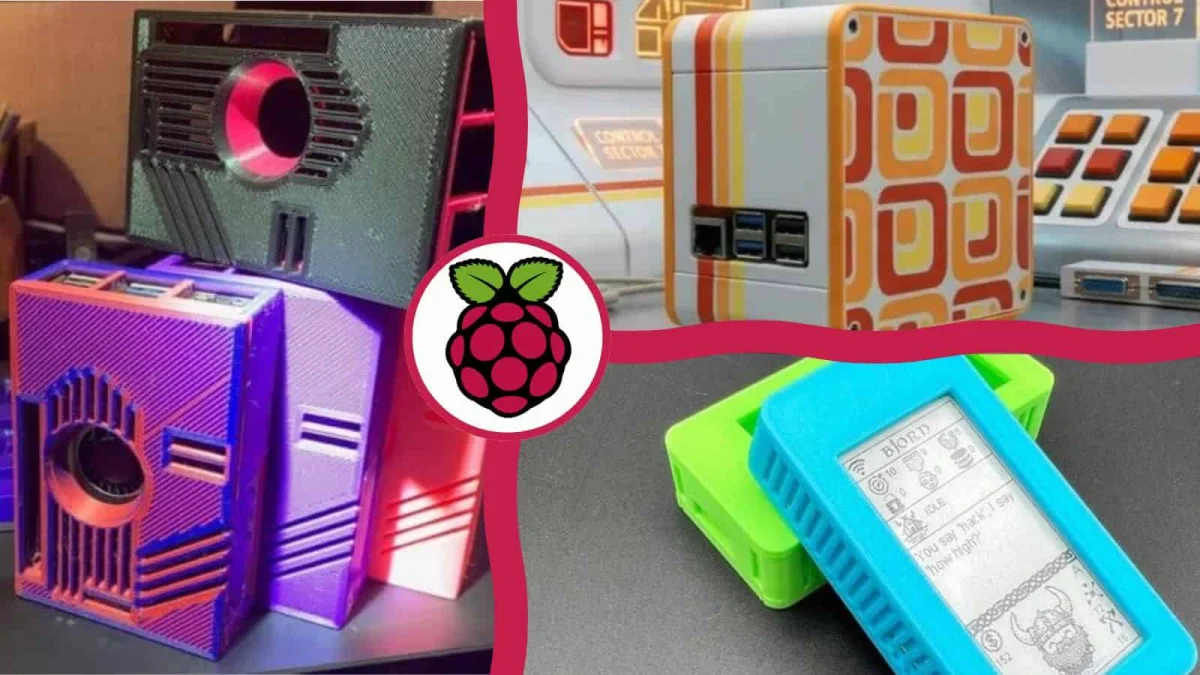
Most Raspberry Pi enclosure searches end up at the same few mainstream designs. Those are fine for a bare board, but they tend to run out of road once you add a HAT, a display or a cluster of boards. A growing set of independent designers sells enclosures on Etsy for exactly those awkward cases, and many of them are made for specific projects rather than general use. If you only look at the usual retail listings, you're probably missing a useful slice of the market.
Enclosures Built Around a Specific Job
The interesting thing about these designs is that they start from the project, not the board. Once you stack a HAT, add a display or wire in a few peripherals, the footprint and port layout change enough that a generic case stops fitting. That's where a purpose-built enclosure earns its place.
Take a mini KVM build on a Raspberry Pi Zero 2W. The case shown by LeapFab on Etsy is a low-profile enclosure for that setup, and it's aimed at letting you control another computer remotely even when that machine has no remote desktop software installed. That's a useful distinction. A KVM sits at the hardware level, so the target machine doesn't need an agent or a logged-in session to be reachable. The case's job is to hold the Zero 2W and its capture and HID hardware in a tidy package you can leave on a shelf next to the machine you're managing.
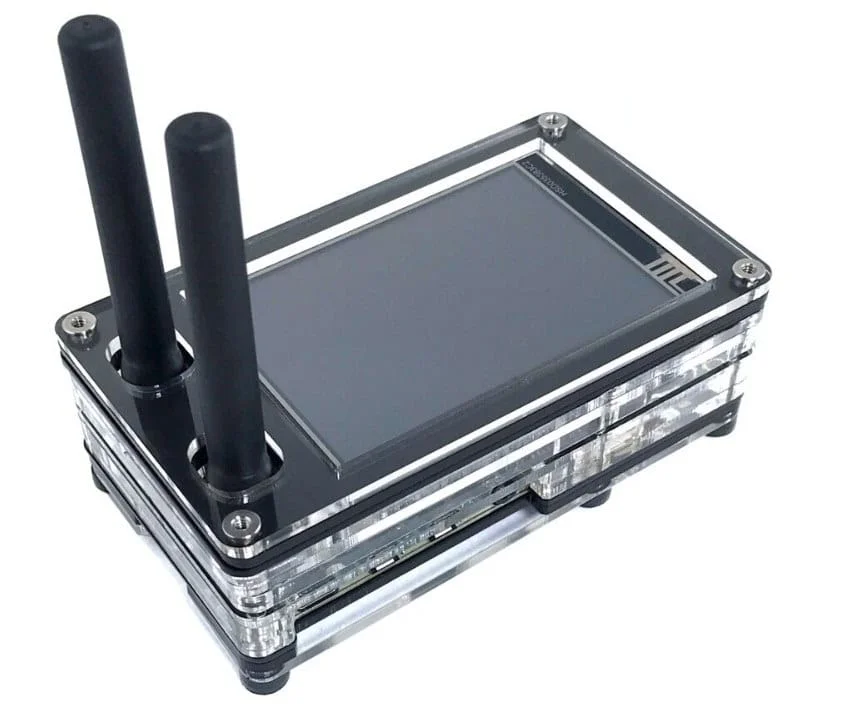
Ham radio builders have a similar problem. An MMDVM hotspot is a small board with its own connectors and antenna arrangement, and it's rarely sized for a standard Pi case. theC4Labs offers a portable case for an MMDVM hotspot on Etsy, which is the kind of enclosure that makes a field deployment practical rather than a bench-only setup.
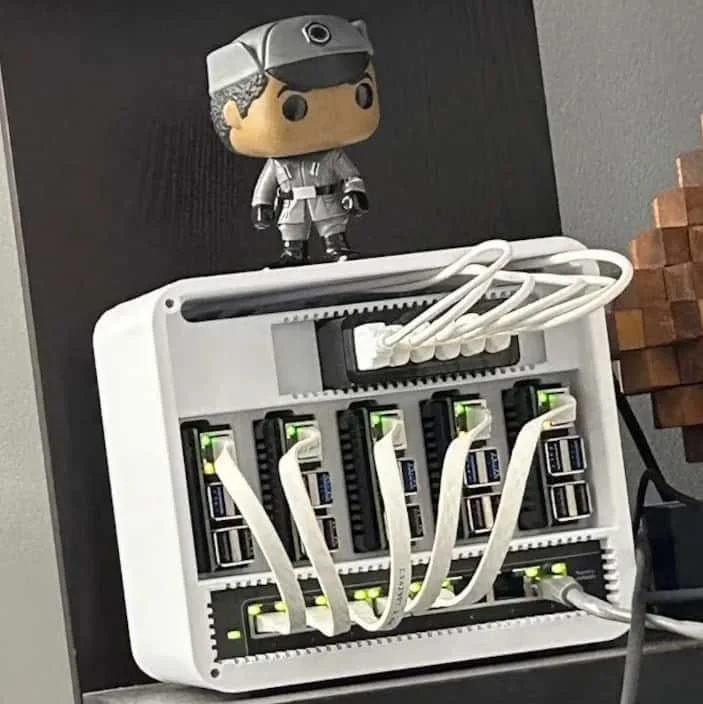
Home lab clusters are another case where generic cases fall short. Stacking several Pis with power and network cabling quickly becomes a tangle, and the wiring is often the most fragile part of the build. TZEInnovations lists a 5-node cluster case that looks aimed at that problem. The listing's title points to the Raspberry Pi 4 and 5, so check compatibility against your boards before ordering. If you're planning a small Kubernetes cluster, a compact enclosure that keeps cabling orderly is worth more than most people expect, because you'll reach into it constantly while you're debugging.

Cases Designed Around Small Screens and Single-Purpose Builds
A full-size touchscreen is overkill when the device only needs to show one thing. If your project is a status display, a wallet interface or a logging gadget, a small and inexpensive display is often the better choice, and the enclosure has to be designed around that display's dimensions and mounting. Several designers on Etsy have made exactly that kind of case.
Among the examples are a portable cyberdeck enclosure from Freedominus, a Pwnagotchi case from 3DCreationsLab1 that houses an e-ink display, and a SeedSigner enclosure from BTCecon. Each one reflects a different set of design priorities. The cyberdeck is about portability and a keyboard-and-screen form factor. The Pwnagotchi case has to protect the board while keeping the e-ink panel visible and accessible. The SeedSigner enclosure is built for a Bitcoin hardware wallet, where the physical design supports an air-gapped workflow, meaning the device never connects to a network. For that kind of build, the enclosure's shape and fastening matter as much as its appearance, because it has to keep the device in its intended configuration.
When you're choosing a case like this, look at what it leaves exposed. Display connectors, GPIO headers, microSD access and cooling airflow all depend on how the enclosure is cut and vented. A small e-ink panel doesn't generate much heat, but a Pi 5 running a cyberdeck workload is a different story, so check the case's ventilation against the load you plan to run.
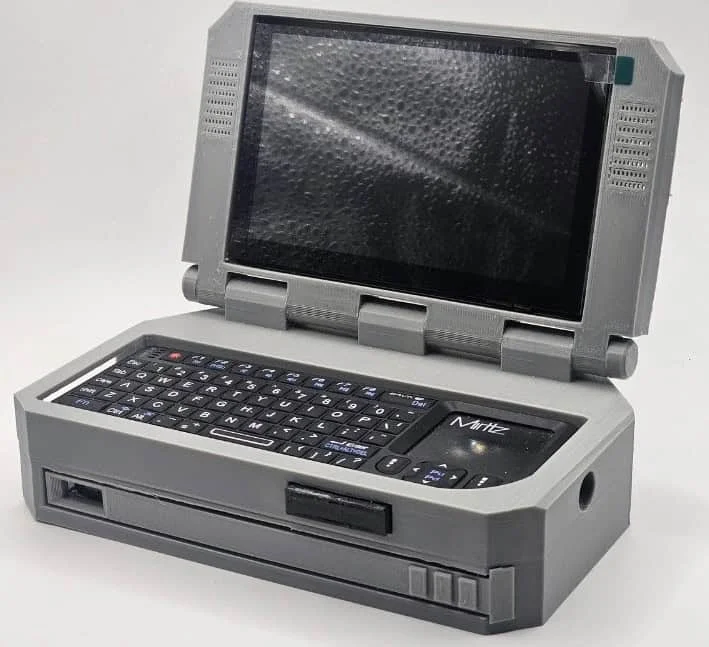
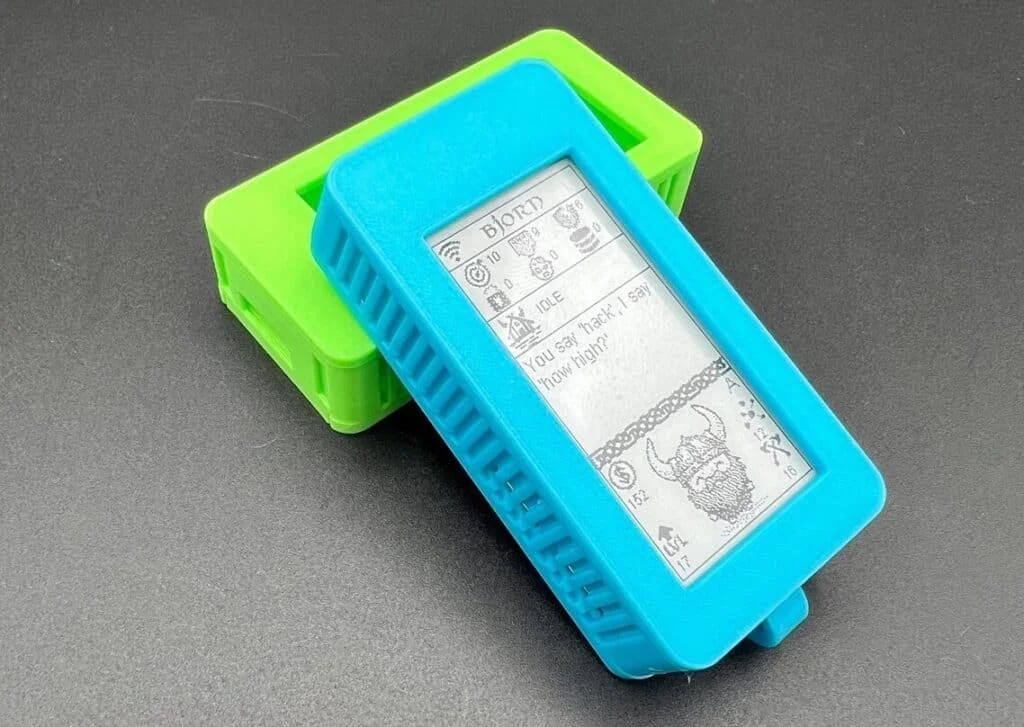

On Etsy, you'll find a case that turns a Raspberry Pi into a portable cyberdeck (Freedominus), a Pwnagotchi cybersecurity device with an e-ink display (3DCreationsLab1), and a secure, air-gapped Bitcoin hardware wallet (BTCecon).
Retro, Film and Gaming Themes
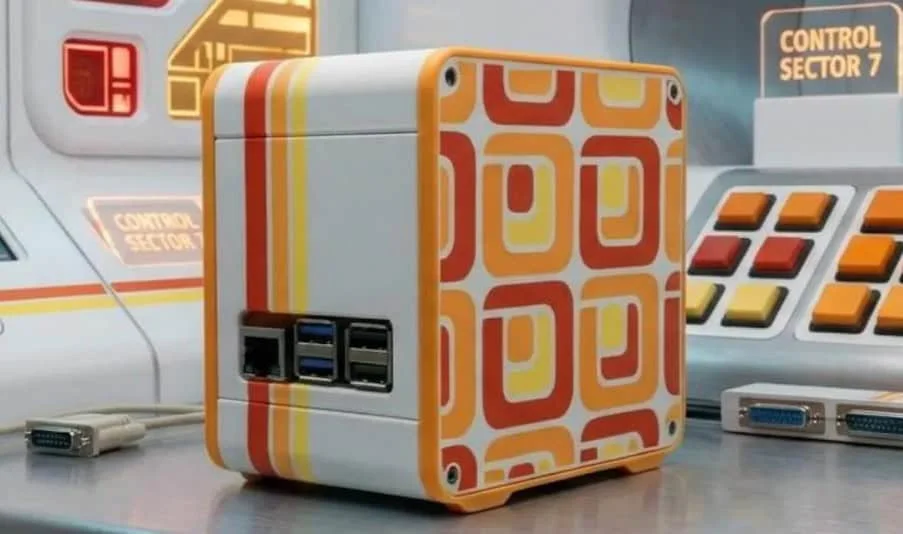
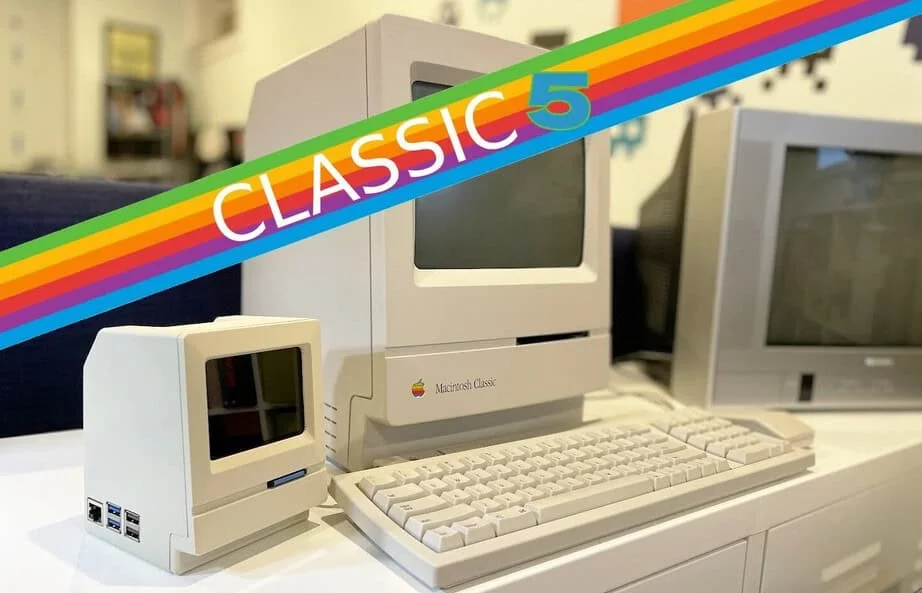
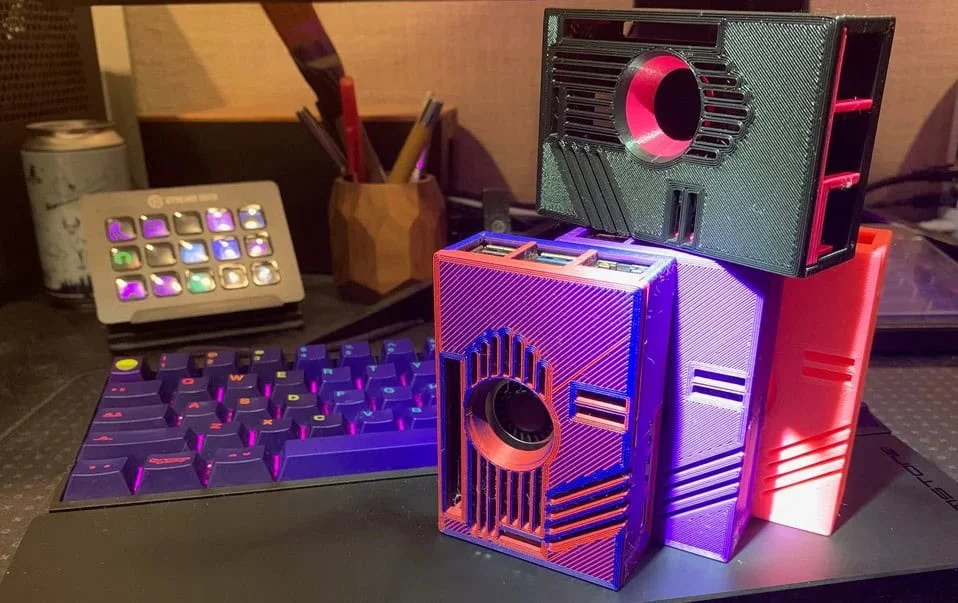
This is the category I find most fun, because it's where makers stop optimising for function and start designing for character. You won't find many of these in mainstream catalogues. A 70s sci-fi mini desktop tower from ZMG3D gives the board a groovy retro shell. BrentTechLLC's Macintosh-style case turns a Pi into a miniature classic Mac, and the3dprintedcow offers a neon vaporwave enclosure in the same spirit.
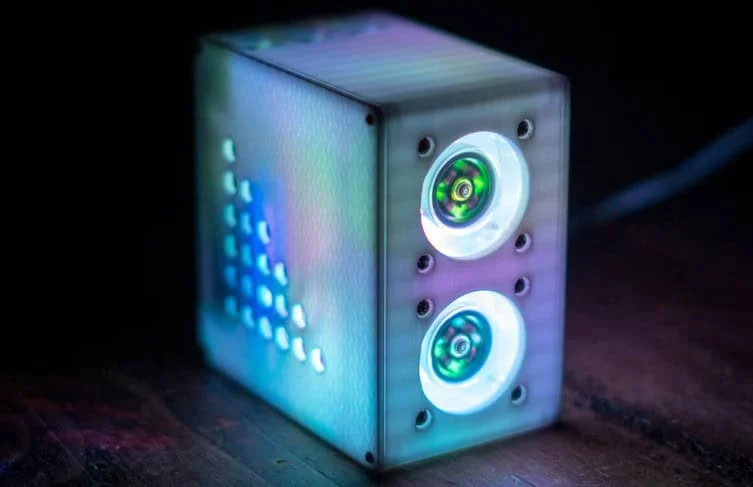
For gamers and streamers, ATribeCalledCars has a nano desktop tower with RGB LEDs, and the listing's title points to a Raspberry Pi 4 build. Lighting is one area where the trade-offs are worth a moment's thought. LEDs add a small amount of power draw and heat, and they're only useful if the case's internal layout keeps the wiring away from the board's connectors.
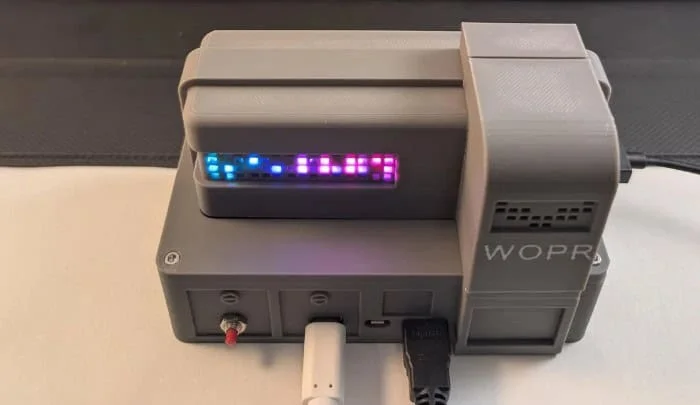
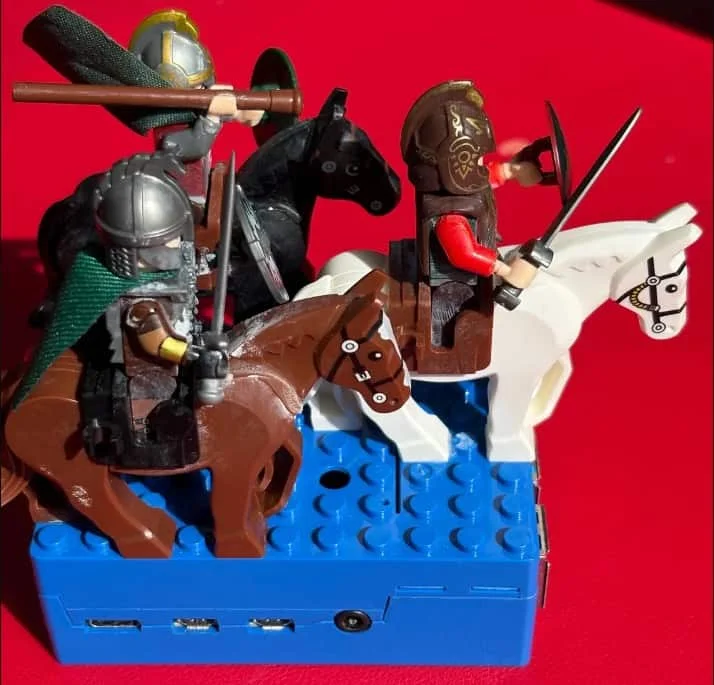
Film and fantasy fans have options too. LiveOaklandLakePrints sells a WOPR case inspired by the 1983 film WarGames, with a listing aimed at the Raspberry Pi 5. Lab95 offers a Lord of the Rings enclosure depicting the Charge of the Rohirrim. These are conversation pieces first, but a well-designed themed case still has to deliver usable port access and clearance, so treat the artwork as a bonus rather than the whole spec.
Before You Buy: Compatibility and Fit
Here's the thing: a unique case is only useful if it matches your board. Specialist enclosures are often tied to one model, sometimes one revision, so read the listing's stated compatibility before you order. The Pi Zero 2W, Pi 4 and Pi 5 have different mounting patterns and port layouts, and a case designed for one won't generally accept another. Check the stated model against your board, and check whether the listing includes mounting hardware and any HAT or display clearance you need.
Material and print method matter too. Many of these cases are 3D printed, which means the maker's choice of filament and wall thickness affects heat tolerance and rigidity. If your build runs hot or sits in a warm enclosure, ask about the material or look for a listing that describes its ventilation. For anything with a battery, a radio or a power supply, pay attention to how the case handles those components, because a shape that works for a bare board can crowd a battery or block a fan.
If you need a standard setup, the usual recommendations are still the simplest route. For a bare Pi 4 or Pi 5 running a conventional workload, a mainstream case will be cheaper and easier to source. But when your build has a HAT stack, a small display, a radio or a cluster arrangement, a maker-designed enclosure can save you from a cramped, cobbled-together box. My read is that the best use of Etsy is as a targeted search: start with the project, then look for a designer who has already solved the packaging problem you're facing.
And if these designs have given you ideas for your next build, the free list of 75+ Raspberry Pi project ideas includes difficulty ratings and links to tutorials, which makes it a good place to decide what to build before you decide what to put it in.