Moving Robotics Prototypes Into Production With ADI's Emerging Tech Hub
- Published
- Author
- Hannah Shapiro
- Reads
- 760
ADI's Emerging Tech Hub pairs robotics startups with engineers, prototyping labs and sourcing expertise as designs move from prototype to production.
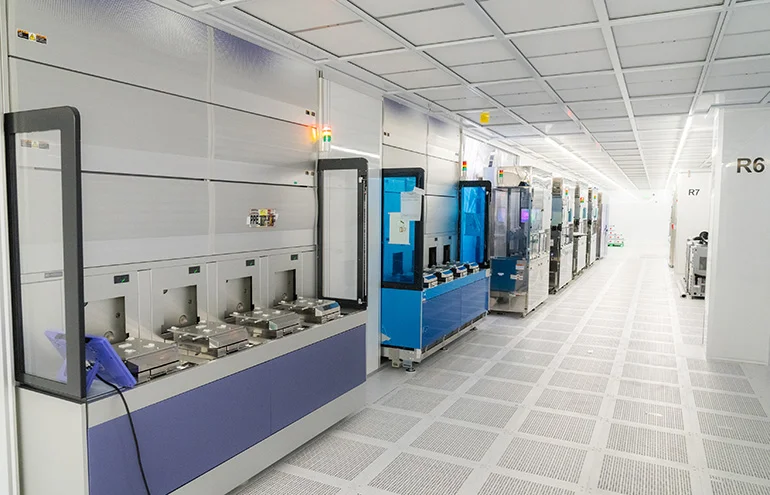
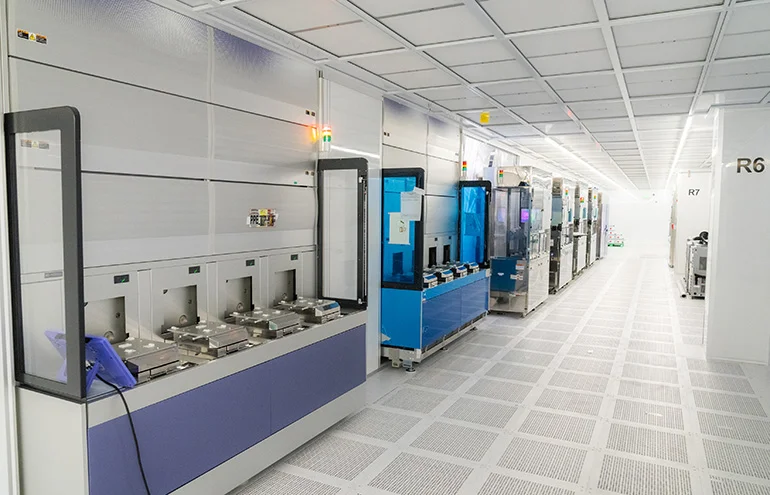
Building a robot that works on a bench is one problem. Building one that can be manufactured, shipped and maintained in volume is a different job entirely, and it's where many robotics startups run into trouble. Analog Devices Inc. (ADI) is positioning its Emerging Tech Hub, part of the Analog Garage, to help teams make that jump.

Where small teams get stretched
Robotics startups are usually strong in the areas that get the headlines: sensing, motion control and AI. Commercializing a machine, though, pulls in electronics design, system integration, validation and manufacturing, and those disciplines rarely sit inside a team of a handful of engineers. Cameron Villone, Senior Product Technology Manager at ADI, puts the core problem down to pace. "The biggest challenge I see robotics startups facing today is the speed at which the industry moves," he says.
That pace cuts two ways. A small team can adopt a new sensor or controller quickly, but the parts it adopts may still be in development, and the integration work around them can eat months. Here's the thing: the engineering questions don't stay fixed. A prototype only has to show that a technology can work. A product has to perform the same way across temperature, load, lighting and wear, built by a line that isn't the founders' own bench.
Physical AI needs the whole chain to hold
ADI recently pointed to its whitepaper The Race to Make AI Physical, which frames physical AI as a chain of functions: sensing, signal conversion, perception, reasoning, control, computing and validation. Each link has to work with the others. A robot can reach the right decision and still fail to act on it if the sensor data is noisy, the control signal arrives late, or the power delivery can't drive the actuators under load.
That framing matters for anyone who has debugged a field failure. A weak link in signal conversion or power distribution can look like a perception problem or a software bug, so the diagnosis takes longer than the fix. Teams that treat each subsystem as a separate sign-off often find the interactions only once the full machine is running.
Four stages, and where the work changes
ADI describes product development in four stages: Idea, Prototype, Validate and Scale. The first two focus on showing that a concept works. Validation is where the integrated system gets tested, problems surface and the design gets tuned before production. Scaling adds manufacturing and supply-chain requirements, including securing components, coordinating production runs and holding quality steady as volumes rise.
My read is that most startups underestimate the validation stage. It's easy to plan around a demo that runs well in one lab. It's much harder to plan for the environmental and operating conditions a deployed robot will face, and for the component lead times that show up once orders grow. Villone credits ADI's experience in sensor development and semiconductor manufacturing with helping teams work through that move from idea to production.
What the Emerging Tech Hub offers
The Emerging Tech Hub is a robotics-focused initiative that gives startups and established robotics companies closer access to ADI's technical teams, including engineers working on newly released or still-in-development technologies. ADI describes its approach as co-development. When a company gets in touch, the first step is to establish what it can already do, what it's trying to achieve, and how those goals line up with the hub's mission. From there, both sides decide what kind of collaboration makes sense.
The support scales with where the company is. A mature developer may need one specific semiconductor component, and the hub will find the ADI specialist who knows it. Another company may be stuck on a different engineering question entirely, and the hub will route it accordingly. An early-stage startup may need something broader: help clarifying its system architecture and deciding what further development actually requires.
ADI says the hub brings three kinds of support together. The first is technical expertise across robotics, control, edge AI, power and system integration. The second is development resources, which include laboratories, prototyping tools, reference designs, testing and validation capabilities and hands-on engineering help. The third, for companies preparing to increase production, is sourcing guidance and industry connections.
Villone also said ADI has brought in robotics experts from across the industry to keep pace with fast-moving development. He pointed to the company's GMSL™ technology as an example of the kind of know-how the hub can draw on for camera connectivity and integration. That help, as he framed it, goes beyond choosing a part. It covers how a technology fits into the wider robot.
The hub is still being prepared for wider external participation. ADI expects applications to open by the end of 2026.
Speed on one side, structure on the other
Startups need room to test ideas fast and to keep control of their technology. Large companies bring process, review cycles and legal structure, and that can create friction. Villone acknowledged that some startups hesitate to work with big corporations because they worry about what the relationship could mean for their business. He sees an opening when intentions are clear on both sides.
ADI's stated interest is in enabling robotics applications that use its semiconductors. Startups, in turn, get access to expertise and resources that would be hard to build alone. That exchange works best when each side is specific about its goals. ADI describes the hub's relationship as collaborative and flexible, and says startups keep their intellectual property. Those terms matter, because they let a company seek engineering help without giving up ownership of what it's building.
Those questions are on the agenda for RoboBusiness on October 20, in a session titled "Robotics Startup Boot Camp Part 2: Challenges & Best Practices for Working with Corporate Partners." Colm Prendergast, senior director and head of the Emerging Tech Hub at ADI, will join representatives from MassRobotics and WiBotic. The panel is set to cover how startups can run proofs of concept and pilots, how corporations evaluate potential partners, and how startup agility can coexist with corporate processes. For teams heading toward commercial launch, that last question is usually the one that decides whether a collaboration moves forward.
What to watch
A robotics company needs engineering depth, system validation, production planning, dependable component sourcing and the right industry relationships to get a product to market. ADI's Emerging Tech Hub is aimed at those gaps. Whether it changes outcomes will show up over the next few cycles of applications and projects, so the useful signal for engineering leads is how quickly the hub's co-development process turns a startup's open questions into a validated design.