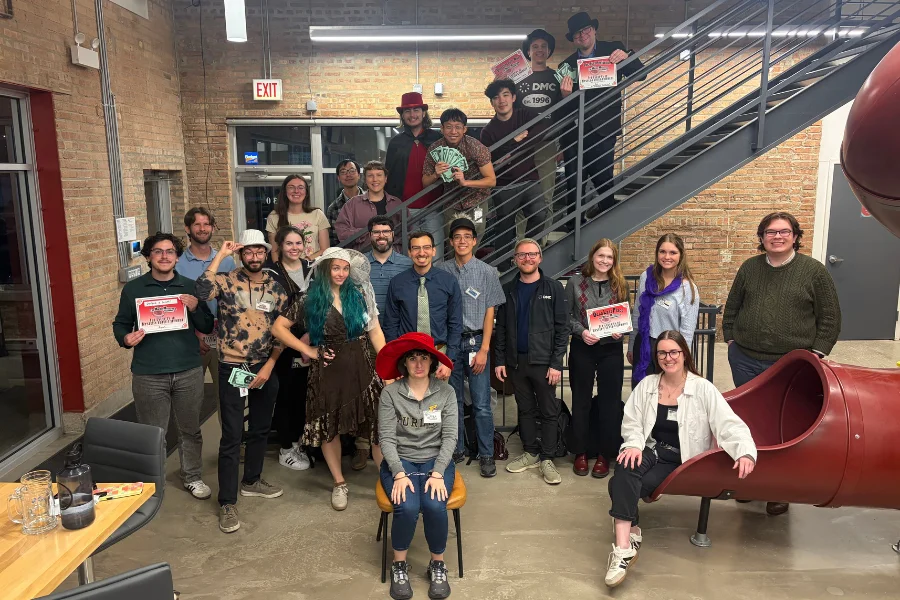
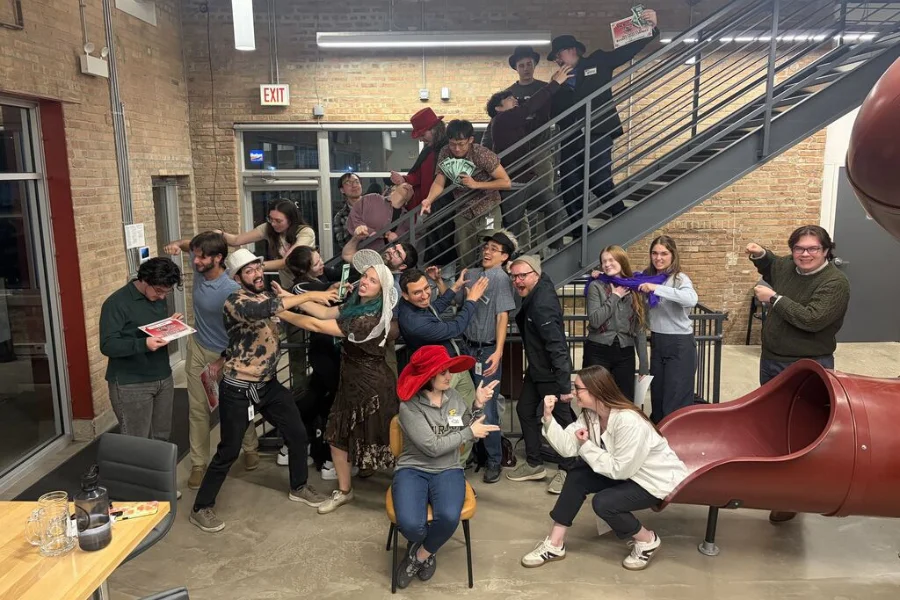
DMC Chicago Turns Detective at a Halloween Murder Mystery Night
- Published
- Author
- Hannah Overhiser
- Reads
- 442
DMC Chicago's team swapped engineering problems for suspects and clues at a Halloween murder mystery, where misdirection proved the hardest puzzle.
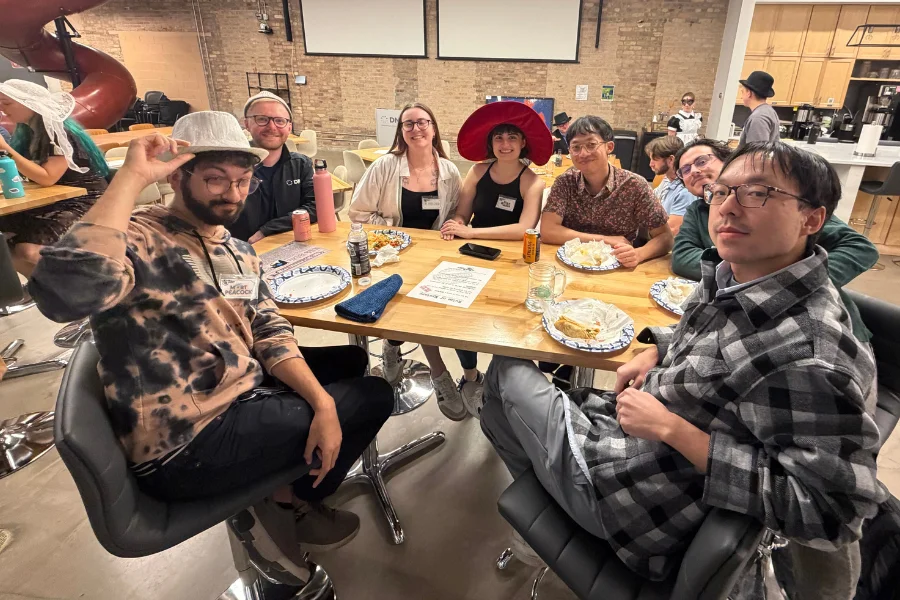
Most engineers can work through a failure analysis without much prompting. Give them a room full of suspects, a dead billionaire and an incentive to bluff, though, and the skills translate in odd ways. That's the premise DMC Chicago tested a few days before Halloween, when the team traded its usual technical problems for an after-work murder mystery hosted by The Murder Mystery Company.
The format is immersive by design. Attendees search for clues, question characters and try to name the culprit, with props, costumes and staged twists doing much of the work of keeping people in character. The interesting part, from where I sit, is less the whodunit itself and more what the format asks of a team: pooling partial information, judging which of it is credible and committing to a conclusion before you're sure.
How the Game Is Built
The structure is simple, and it's worth understanding because it shapes everything that follows. Attendees split into teams, and each team has one member who takes on a character. That person receives a script, a set of unique motives and information that gets revealed as the evening moves along. The rest of the team isn't a passive audience. Teammates can trade clues, question other characters and push suspicion toward or away from their own suspect.
That last part is where the engineering instincts come in. A team that treats every clue as equally reliable will drown in noise. A team that sorts clues by source, checks them against each other and drops the weak ones tends to converge faster. Trading also matters. Players exchanged money for information on other characters, which turned the investigation into a small market with its own pricing of trust. Once a team had enough information, it could make its call on who committed the murder.
Team composition shaped the night too. The mix of people from different parts of the Chicago office meant that a few of the more reserved colleagues were suddenly pitching theories in front of people they usually only see in meetings. The format appears to have rewarded that kind of cross-team confidence.
Midnight at the Masquerade
This year's mystery was Midnight at the Masquerade, set at the Billionaires' Club Annual Masquerade Ball. The party is interrupted by an unexpected murder, and guests have to work out which partygoer was responsible. Seven characters populated the story: an actress, a husband-and-wife pair, an eccentric billionaire, a handsome bachelor, a butler and a doctor.
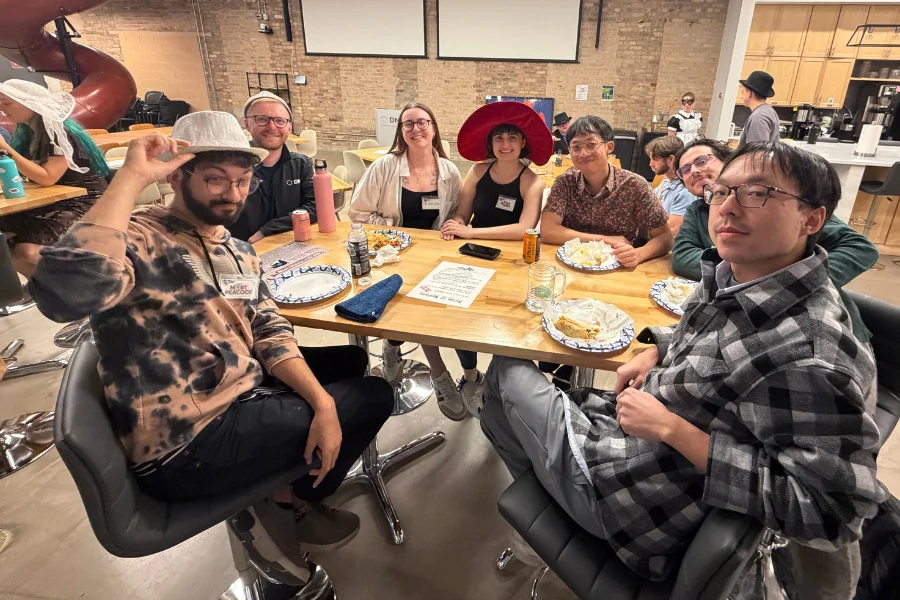
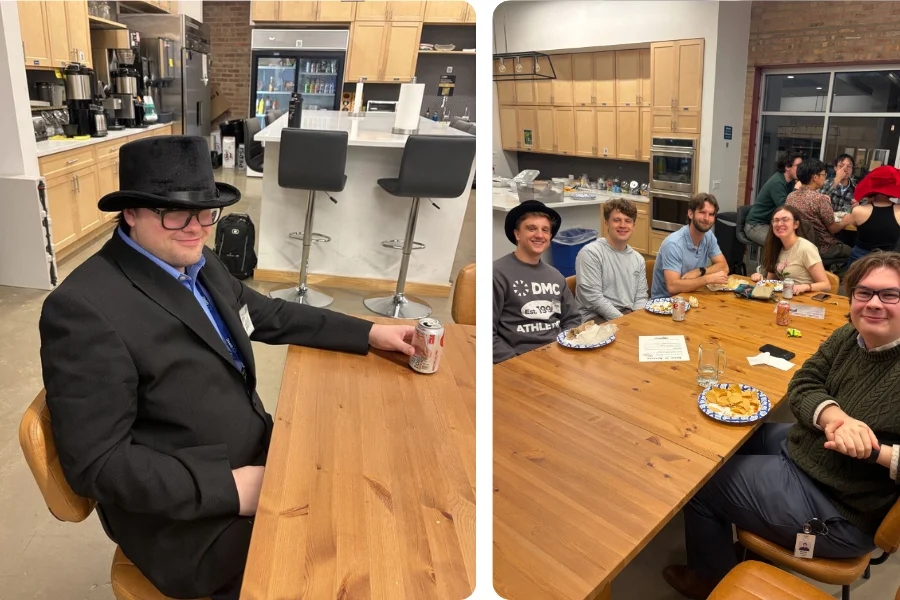
Costume pieces made the cast readable at a glance, which matters when a room is full of people trying to remember who said what an hour ago. The actress wore a bright red hat, and the eccentric billionaire was distinguished by a bowler hat. Visual tags like these are a simple solution to a real problem in group role-play: they cut down on the cognitive load of tracking identities while everyone is also tracking motives.
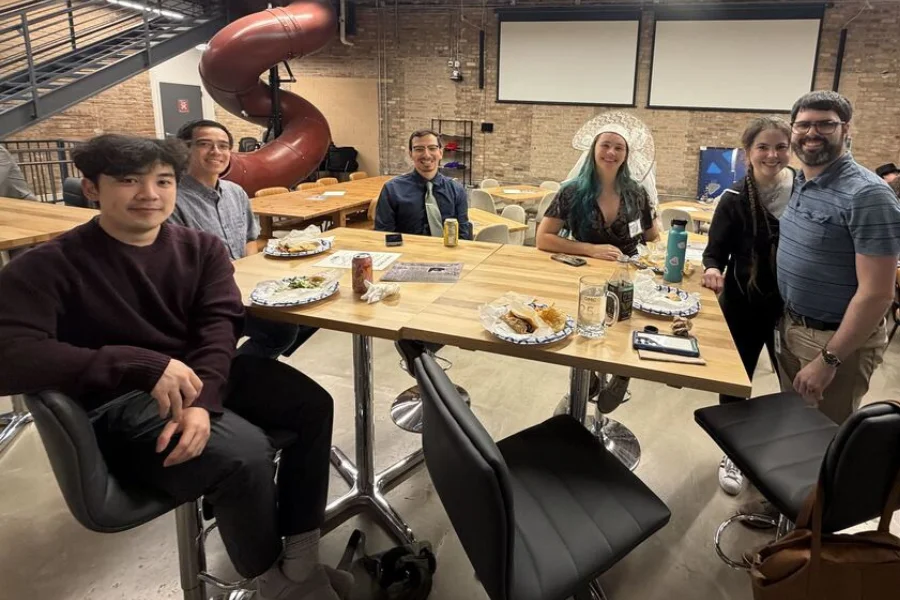
DMC IT Specialist RJ Hughes played the billionaire, hosting the masquerade for six guests. Once the suspects were assembled and dressed, the teams began comparing notes, forming theories and pointing fingers. The setup gave everyone a fixed set of variables to reason about, which is the same discipline engineers apply when they bound a problem before they start solving it.
Where the Logic Broke Down
Here's the thing about a mystery built on misdirection: the best-run team can still lose. William Chen, who was on Team Mort, described his group's approach. Mort was married to another character, and the team fully committed to the idea that the wife had done it. They were wrong, but they stuck to the theory and succeeded in casting suspicion on an innocent character. In a sense, that's a successful misdirection, even if it cost them the case.
Other teams took different routes. Some investigated the clues seriously. Others deliberately sent everyone else down the wrong path. William's team joined forces to spread suspicion about another character, and by the end of the night, nearly everyone had settled into their role. The result was a room where collaboration didn't always mean convergence on the truth, and that's probably the most realistic lesson in the whole evening.
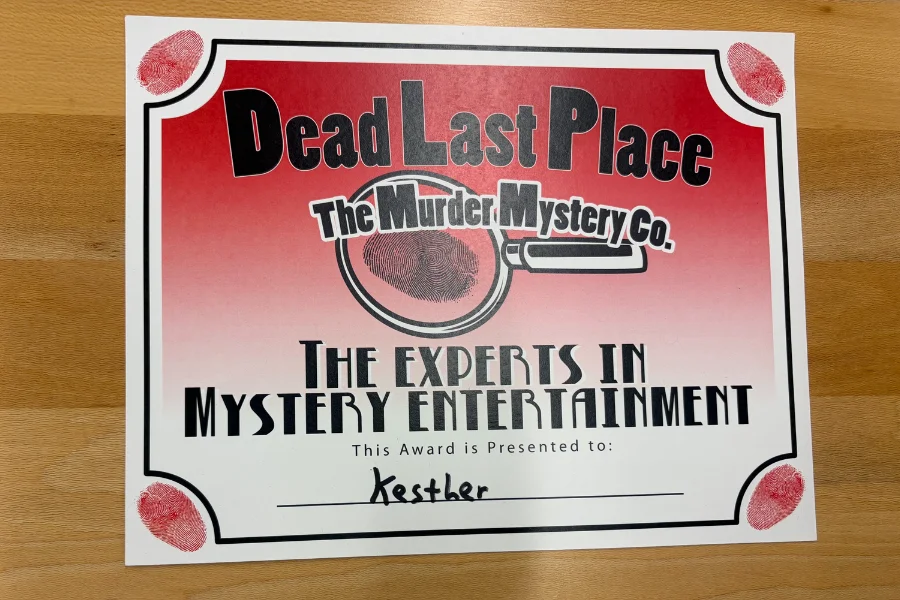
Only one team correctly identified the murderer. Another team earned a certificate for the "worst guess," which is a fitting prize for a group that spent so much effort on a story that was never going to hold up. Kaitlyn Heistand, a member of Chicago's Admin team, said getting the answer right was only part of the fun:
"I was really impressed by the actors and how engaging the whole experience was. It was especially fun to see people who are usually a little more reserved around the office really get into it. It took Esther and me a while to catch on, and we ended up spending more time creating a funny story to support our guess than actually trying to figure out who the killer was."
The Reveal
The real killer turned out to be someone most of the partygoers never suspected: the Actress, played by Gabrielle, who is the wife of Embedded Engineer John Nicholas. Whether a team cracked the case or built a convincing argument against the wrong suspect, every group had to communicate, share ideas and commit to a story under time pressure. Those are the same habits a design review or a field debugging session demands, just with fewer stakes and better costumes.
What stands out to me is how well the format maps onto day-to-day engineering work. Information rarely arrives complete or labelled. You get partial data from people with their own agendas, you have to weigh it, and sometimes you have to act before you're sure. A team that can argue its position clearly and still change its mind when the evidence shifts is in good shape, whether it's working on a murder mystery or a motor control board.
The evening also did something quieter. It gave colleagues a reason to interact outside their usual project roles, and that kind of contact tends to pay off in later work, when someone who has seen a teammate play a convincing villain finds it easier to ask them a hard question about a schematic. Watch for similar events to show up more often as teams look for low-pressure ways to build the connections that technical work depends on.