Generative AI in Education Reflects Whose Data and Cultural Norms?
- Published
- Author
- Ben Garside
- Reads
- 552
Research finds AI training data and model outputs skew toward Western perspectives, raising questions for teachers using generated examples and explanations.
Generative AI can help teachers draft lesson plans, adapt activities, write code examples and cut down on repetitive work. But there’s a less visible part of that workflow: the systems may carry assumptions about culture, identity and learning into the material students see. For educators, the practical question is how to use these tools while still asking whose perspectives their outputs reflect.
Training data has a geographic footprint
Teachers routinely consider how source selection shapes a lesson. A unit on empires or migration, for example, can tell different stories depending on which textbooks, historical accounts and cultural perspectives it draws on. AI models raise a similar issue at much greater scale, because their training data is assembled from many kinds of material found online, including websites, books, forums, social media and videos.
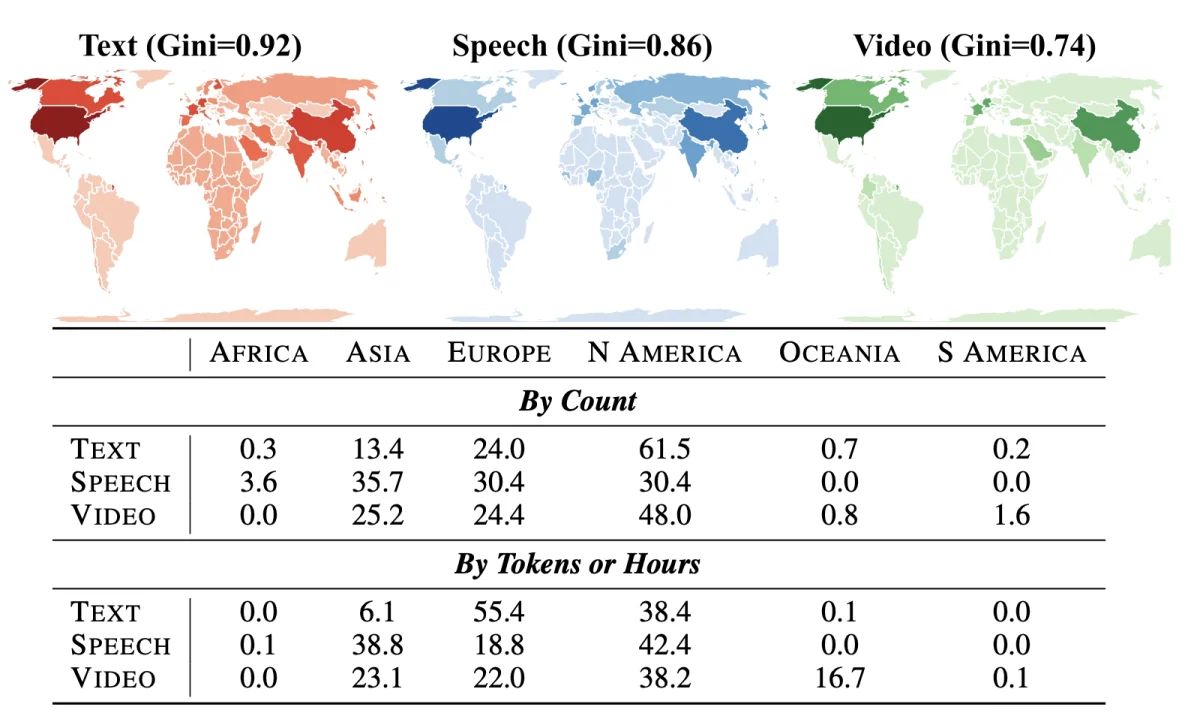
Researchers use the term “data provenance” for information about where data comes from and who created it. A research project auditing the provenance of more than 4,000 datasets used to train modern AI models found that dataset creators were concentrated in the US, China and Western Europe. The team reported little to no representation from South America or Africa across text, speech and video datasets. When some regions and communities are scarce in the material used for training, their experiences may also be less visible in model outputs.
Model outputs can reflect a narrow cultural reference point
Geographic imbalance is one part of the issue. Research published in a paper titled “Which humans?” compared large language model (LLM) responses on psychological tasks with cross-cultural data. The researchers found that the models’ responses most closely resembled solutions associated with WEIRD populations: Western, Educated, Industrialised, Rich and Democratic. The paper puts this group at around 12% of the world’s population.
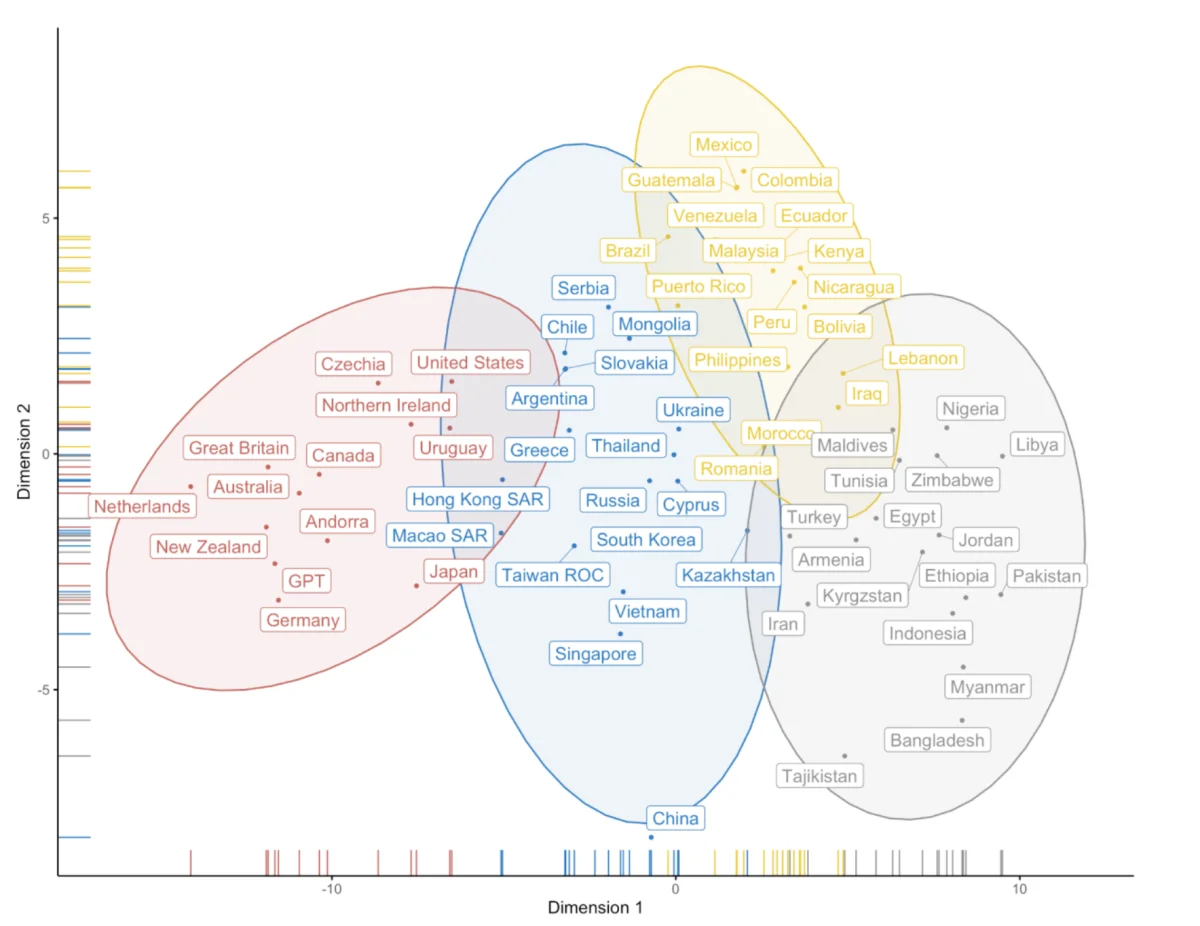
That pattern reaches beyond which languages a model handles. Cultures can differ in what they value, how they define success and how people are expected to relate to a group. In Cleverlands, Lucy Crehan describes how many Japanese schools place emphasis on group harmony and social cohesion, while many Western schools encourage students to stand out, challenge ideas and express themselves individually. These are broad examples, not rules for every school or student, but they show how different assumptions can shape ideas about learning.
Expectations around disagreement, professional conduct and what makes a “good” student can vary too. So can whether people describe themselves mainly through personal achievements or through family and community ties. The “Which humans?” study found that LLM outputs tended to reflect more individualistic Western styles of thinking. When those patterns appear in generated material without explanation, one cultural viewpoint can come across as the default.
That matters in classrooms because AI-generated examples and explanations can carry implicit ideas alongside their subject matter. A programming exercise, for instance, teaches its technical concept, but its characters, scenarios and language may also suggest who is expected to lead, succeed or belong. Students may take in those cues even when the lesson is focused on something else.
Unprompted stories can reproduce familiar roles
A study presented by Dr Thema Monroe-White at a research seminar examined how LLMs portray people in short, open-ended stories about classrooms, workplaces and relationships. The prompts didn’t specify race, gender or ethnicity. Even so, the generated stories showed recurring patterns in who became the “star student,” mentor or professional, and who was shown needing help or depending on others.
The prompts did not ask the models to stereotype anyone. The observed patterns therefore point to a concern with how models learn from human-created material: associations already present in training data can reappear in generated stories without an explicit cue from the user. That can make a bias harder to spot, since a prompt that seems neutral may still produce a response with a consistent pattern of roles and status.
Use AI while examining its assumptions
Many educators are exploring these tools with a mix of curiosity and caution. The aim is often to support learners, ease workload and leave more time for teaching, rather than automate the work of teaching itself. That use can be practical, but it calls for attention to what the system treats as ordinary, helpful or successful.
The evidence described here doesn’t settle whether teachers should use generative AI. It does show why generated material deserves the same scrutiny educators apply to other teaching resources: who is represented, whose experience is missing, and what assumptions shape the examples? As AI becomes part of the material students encounter, examining those assumptions can be part of teaching critical thinking.
For classroom resources that support critical thinking about AI, see Experience AI. More articles on critical thinking in the age of AI are available in issue 30 of Hello World.
===END===