Tutor Intelligence Raises $75 Million to Train and Deploy Its Sonny and Cassie Robots
- Published
- Author
- Hannah Shapiro
- Reads
- 563
Tutor’s $75 million Series B will fund robot model training, manufacturing and deployment, building a data loop from customer work.
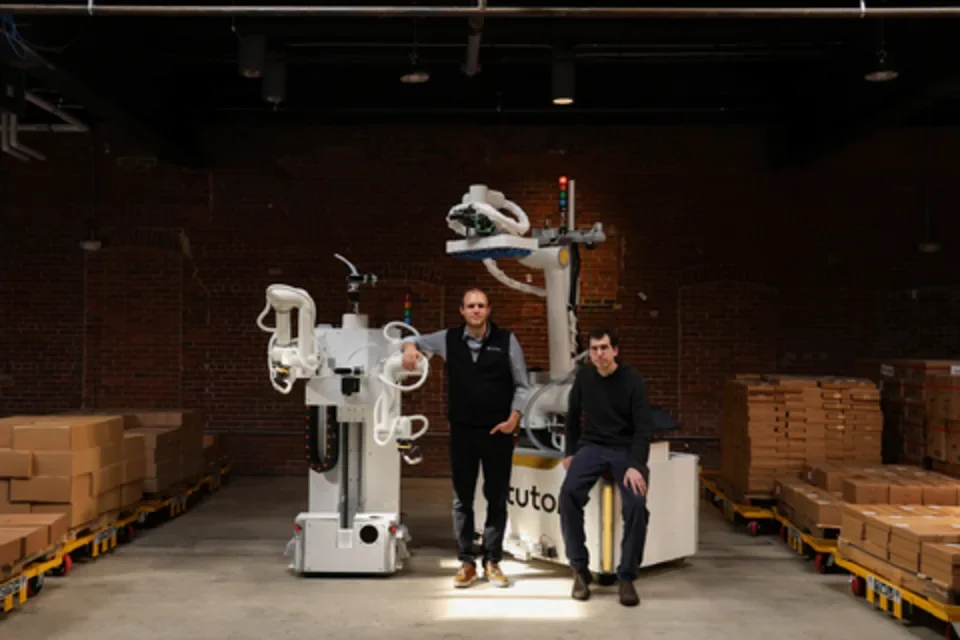
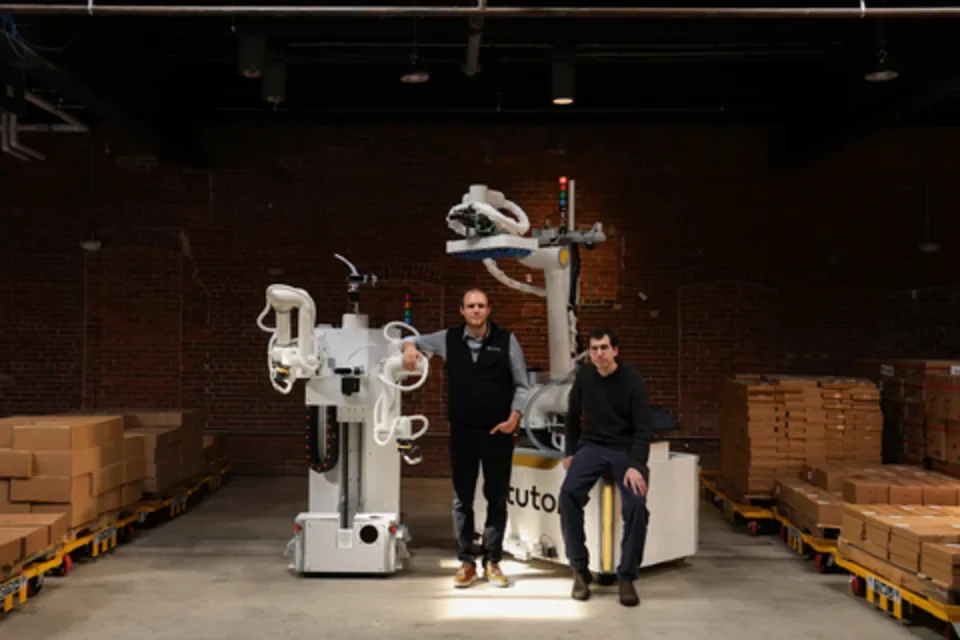

Tutor Intelligence is tying robot research to paid work on factory and logistics floors. The Watertown, Massachusetts, company announced a $75 million Series B on November 2, 2026, led by Andreessen Horowitz. The round brings its total capital raised to $117 million and is intended to fund foundation model training, along with the manufacture and deployment of its Sonny and Cassie robot workers.
The operating premise is that robots need experience in physical environments to improve at physical tasks. Digital AI systems can learn from large collections of text and images; comparable records of real-world robot work are scarce. Tutor is building that data through fleets of internet-connected robots deployed at customer sites. Remote operators, whom the company calls “tutors,” provide input as the robots work. Tasks completed in those settings generate experience data for training the models that control the fleet.
Customer work supplies training data
This creates a feedback loop between deployment and research. Robots perform jobs in production environments, their work contributes data, and updated models can expand the range of tasks the robots handle. If that cycle works as intended, each deployment can improve the system used across the fleet, rather than serving only as a single-site automation project.
That approach also puts practical constraints at the center of development. A robot working in a factory or warehouse has to operate within the tasks, layouts and workflows that customers already have. Tutor’s stated strategy is to begin with those deployment demands and work backward through distribution, hardware and research. Andreessen Horowitz general partner Raghu Raghuram, VMware’s former CEO, described this as a route from specialized capabilities toward more general-purpose robotics, built through continued learning across deployments.
Tutor presents the platform as a combination of robots, models and deployment services. The company’s ambition is for a growing fleet to make robots more capable and easier to deploy over time. That depends on whether data from varied customer jobs can improve performance across sites, and whether the hardware and service operation can keep pace as the fleet grows. The funding is meant to support both sides: model development and the physical production and placement of robots.
Co-founder and CEO Josh Gruenstein says improved robot intelligence can also lower the cost of automating work. Tutor’s commercial model is designed to avoid requiring customers to buy the machines outright: it charges by the hour or by the pick, with no upfront robot purchase and no long-term contract, according to the company. Tutor handles installation and maintenance and regularly provides software and intelligence upgrades.
Automation sold as a service
That arrangement shifts equipment ownership and much of the deployment work to Tutor. For a customer, the measure is whether the robots can reliably complete the contracted work within existing operations. For Tutor, recurring service means it must manufacture, deploy and maintain machines at enough scale to meet demand while continuing to improve their capabilities. The company says its robots take on lifting, moving and manipulation tasks in factories and warehouses.
Tutor reports that its robots are now operating in almost four times as many facilities as a year earlier. It also says it is on track to have more than 1,000 robots under contract by the end of 2027. The company plans for those systems to be built in and deployed from the United States. Its robots are working in manufacturing and logistics networks that handle consumer goods including breakfast cereals, snacks, candy, cosmetics, home goods and toys.
Repeat orders offer one indication that customers see a use for the service beyond an initial trial. Tutor says nearly one-third of organizations that received its robots in the previous 12 months were existing customers adding more machines. The company frames this growth as part of a wider shift toward AI systems expected to produce measurable output inside established operations. The reported expansion does not, by itself, show how much labor or cost each deployment saves; those results depend on the work performed and the conditions at each facility.
Union Square Ventures and Neo also participated in the Series B. Union Square Ventures led Tutor’s Series A, while Neo led its seed round. The new capital connects those earlier financing stages to a larger operational challenge: building enough robots to serve customers while generating the real-world experience needed to improve their models.
Tutor’s next milestone is therefore both a fleet target and a test of its learning loop. Reaching more than 1,000 robots under contract by the end of 2027 would expand the number of deployed systems; the engineering question is how consistently data and software updates translate into useful work across those varied sites.