Carbon Clean's Compact Capture Unit Wins Innovation Prize at International CCUS Awards
- Published
- Author
- Thomas Rodriguez
- Reads
- 934
Carbon Clean's CycloneCC, a centrifuge-based capture module about half the size of conventional amine plants, took the innovation award at the first international CCUS awards.
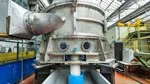
Carbon Clean has taken the innovation category at the first international carbon capture, utilisation and storage (CCUS) awards, and the reason it stood out is mechanical rather than chemical. The London-headquartered engineering firm's approach shrinks the hardware that usually makes amine capture so bulky, and that's the part of the story I'd want a process engineer to look at first.
Why the centrifuge matters
Conventional amine-based capture relies on large absorber columns, where flue gas rises through a packed or trayed tower while a solvent flows down and picks up CO2. Those columns set the footprint, and they're a big reason amine plants are expensive to site on crowded industrial land. Carbon Clean's CycloneCC replaces that tall gas-liquid contact zone with a centrifuge. Spinning the liquid spreads it into a thin, high-surface-area film, which speeds up mass transfer in a much smaller volume. That's the trade-off the design is built around: less height and plot area in exchange for rotating equipment that has to be run and maintained properly.
The chemistry is the other half. The CycloneCC uses proprietary amine-promoted buffer salts to do the capture work. The company hasn't published the formulation in the material it has released, so there's no basis for judging solvent loading, regeneration energy or degradation rates from what's public. Those are the numbers that will decide whether the module makes economic sense at scale, and they're worth asking about in any serious evaluation.
What the company says it has demonstrated
Carbon Clean says its set-up is around half the size of conventional amine-based plants that use large absorber columns. It also says the system reached commercial scale last year, capturing 285 t/d of CO2 in tests. Those are the company's figures, reported as its own claims, and they come with the usual caveats: test conditions, flue gas composition and the duration of the runs all matter when you compare capture rates across different technologies. Still, a module that has moved from pilot to a stated commercial-scale rate is a more useful signal than a lab result alone.
The company is also scaling down before it scales up. In the same week as the awards, Carbon Clean commissioned a new 2 t/d pilot plant at its global research centre in Navi Mumbai, India. The company was incorporated in India in 2009 and moved its headquarters to London three years later. Co-founder and CEO Aniruddha Sharma said the commissioning "demonstrates the two-way value of the UK-India relationship", and the company is targeting steel and fertiliser plants in India. Those are heavy, hard-to-decarbonise sources where flue gas streams are concentrated enough to make capture a realistic option, and where a compact unit could fit into existing sites more easily than a full-height column.
The wider set of winners
The CCSA also handed out a rising star prize to Aalborg University researcher Sulafa Abdalmageed Saadaldeen Mohammed, recognising her "commitment to advancing direct air capture, carbon utilisation and international collaboration". Direct air capture and utilisation are two areas where the engineering problems differ from point-source capture. Sorbent or solvent kinetics are slower when CO2 is dilute in air, so energy per tonne tends to be higher, and the value of a utilisation pathway depends heavily on what happens to the captured gas next.
Two joint ventures behind the UK's East Coast Cluster also received awards. The Northern Endurance Partnership, a project between BP, Equinor and TotalEnergies, is developing CO2 transport networks across the Humber and Teesside. Net Zero Teesside is a planned gas-fired power plant with integrated carbon capture, run by BP and Equinor. Transport infrastructure is often the least glamorous part of a CCUS chain, but pipelines and shared storage are what allow several capture sites to feed a single network, so recognising that work matters.
The results also show where the sector's activity is concentrated. Five of the ten categories went to UK-based companies or projects, four went to projects or individuals in mainland Europe, and one went to a North American project. For a first international edition, that split is a reasonable reflection of where the most advanced British projects currently sit, though it's a snapshot rather than a measure of global deployment.
Public funding and what it signals
Carbon Clean has received a series of six- and seven-figure grants from UK public funding bodies. The most notable was an almost £900,000 investment in 2018 for research and development. Early-stage support of this kind is common for capture technologies that have to prove they can work outside the lab before anyone will fund a full-scale plant. It also tells you something about the pace of commercialisation: a module that is only now being piloted in India and tested at commercial rates has taken years of staged development to get here.
Reynolds, the UK business secretary, who joined Carbon Clean on a trade visit to India, said the company is "a great example of the innovation and expertise we have here in the UK being put to work on some of the biggest challenges facing the world". He added that its work with Indian businesses shows how British ingenuity can help cut emissions and create opportunities at home and abroad. Those are the minister's words and they frame the company as an export story as much as a technology story.
What to watch next
CCSA chief executive Olivia Powis said the awards recognise "the people and projects turning ambition into action", and that the sector must now build on the momentum to deliver lasting economic and environmental benefits. The useful test for the CycloneCC will be data that's independent of the company's own framing: longer-duration runs, published solvent performance, energy penalties at the Navi Mumbai pilot and the first customer installations in steel or fertiliser. If those numbers hold up, a compact centrifuge-based capture unit could change where capture can realistically be installed. If they don't, the award will still have highlighted a design worth watching, but not yet a proven replacement for the column.