UK Weighs Wobbe Index Limits to Ease LNG Import Costs
- Published
- Author
- Robert Williams
- Reads
- 425
DESNZ, HSE and Ofgem are reviewing the UK's Wobbe index range to make LNG imports cheaper, with carbon intensity still a sticking point.
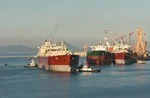
The UK is looking at whether one of its gas quality rules is holding back LNG imports. The Department of Energy Security and Net Zero (DESNZ) says it is reviewing the legal Wobbe index range to make the UK more attractive to LNG exporters, which it sees as a practical way to protect supply and keep import costs in check.
Why the timing matters
DESNZ's assessment of the UK's gas security points to a tighter global market. It says competition for LNG has increased because of conflicts in the Middle East and Ukraine, and that rising competition is exactly the pressure the UK wants to be ready for. A cargo that goes elsewhere is a cargo the UK can't buy, and buyers who are easier to deal with tend to win more of those cargoes.
The starting position is not weak. Imported LNG supplied 17% of UK gas demand in 2025, and more than three-quarters of that LNG came from the US. Norwegian pipeline gas and domestic production each met around 40%. DESNZ describes the UK's "diverse range" of sources as making supply interruptions "very low" in likelihood. Its caveat is that the UK's appeal as an LNG market could still affect both how much supply arrives and what it costs.
What the Wobbe index actually controls
The Wobbe index is a measure of gas energy density, roughly the heating value of a gas scaled by its relative density. It indicates how much energy a gas delivers through a fixed burner orifice at a given pressure, so it matters to anyone who needs appliances and burners to behave the same way on different gas blends. Gas supplied to UK consumers has to fall inside a permitted range, and that is where the friction with LNG comes in.
Gas industry bodies have argued that the permitted range is too narrow for the LNG being offered. LNG arriving at the UK can sit above the upper limit. When it does, the importer typically has to add nitrogen, an inert diluent, to bring the mix back under the ceiling. Nitrogen dilution doesn't add energy, so the cargo is effectively carrying less useful product per unit. The cost of that treatment, and the handling it requires, is the penalty the industry says it pays for a strict specification.
This is a common pattern in gas markets. Specifications built around one supply mix can become a barrier when the mix changes. Adjusting a range doesn't mean giving up on quality control; it means asking whether the range still reflects the safety and performance behaviour it was meant to protect, given the gas that's actually available.
The safety gate
The Health and Safety Executive (HSE) sets the Wobbe index range. In 2023 it lowered the lower limit. It did not raise the upper limit, saying there wasn't yet enough evidence that a higher upper limit would be safe. HSE has said it is "open" to a review, provided the evidence is supplied.
That's the real technical question. The upper limit is tied to how gas behaves in appliances, including the risk of flashback, lifting, yellow tipping or incomplete combustion when burners are fed richer gas. Any change needs data showing the appliance fleet and the wider network can handle the proposed range. Here's the thing: the economic case for LNG is clear enough, but the engineering case has to stand on test evidence, not on import-cost arithmetic.
DESNZ says it is now "working with HSE, Ofgem and industry to consider whether the current Wobbe index range remains appropriate." Ofgem's role is the network and market side, so the review will need to look at how any change would reach consumers and the grid, not just at burner performance.
The carbon trade-off
Cheaper LNG doesn't come without an emissions cost. DESNZ acknowledges that more LNG could draw environmental concern, because LNG carries a high embodied greenhouse gas footprint. The department puts the average at 85 kgCO2e per barrel of oil equivalent of LNG, more than ten times the emissions associated with Norwegian gas.
The government weighed that figure when it approved production at the Jackdaw gas field. Developer Adura framed that decision as a choice between low-carbon domestic gas and high-carbon LNG. The government's counter-argument is that without Jackdaw, lower-carbon Norwegian pipeline supply could increase. It also points out that the UK has far more spare LNG import capacity than pipeline capacity, which is why LNG ends up as the marginal source when domestic output falls.
That's the tension. A looser Wobbe range would make the LNG route cheaper and more attractive, which could reduce the risk of supply shortfalls. But it would also make it easier to lean on the most carbon-intensive option in the mix. Anyone following this will be watching whether the review addresses both sides in the same evidence base.
What to watch next
The immediate signals will be whether HSE receives the technical evidence it asked for, and whether the review sets out how it would test a change against appliance and network performance. The second signal is how DESNZ and Ofgem treat emissions in the decision, since the department has already said that the carbon footprint of LNG is part of the calculation.
For engineers working on gas appliances, burner design, or LNG terminal and blending operations, the practical message is simple. The Wobbe range is a live question, not a settled one. If it moves, the effects will show up first in how cargoes are blended and specified, and only later in the equipment that burns the gas.