BP Accelerates $350 Million Louisiana Payment as Profits Rise
- Published
- Author
- William Miller
- Reads
- 758
BP will pay Louisiana $350 million upfront, bringing forward part of its Deepwater Horizon obligations as refining and trading gains lift profits.
BP plans to pay Louisiana $350 million upfront under an agreement that brings forward money previously scheduled across seven years. The move comes as the energy company reports sharply higher profits and says it will direct excess cashflow toward its remaining Deepwater Horizon obligations.
The revised payment replaces a schedule totaling $373 million over the next seven years. BP chief executive Meg O’Neill signed the agreement last month with Louisiana’s governor and attorney general. The payment will account for more than 20% of BP’s outstanding payments to five coastal states under the broader settlement framework.
Earlier payment, smaller total
The change is a trade-off between timing and amount: Louisiana receives the money sooner, while the agreed total is $23 million lower than the sum previously scheduled. For the state, that brings forward funds associated with a long-running obligation. For BP, it closes a portion of its remaining commitments sooner and at a lower total than the earlier payment plan.
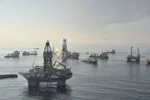
The commitment traces back to the 2010 Deepwater Horizon explosion in the Gulf of Mexico. Eleven workers died, and the resulting oil spill caused extensive harm across the Gulf Coast. In 2015, BP agreed to pay $18.7 billion over 18 years through a number of settlements, including $4.9 billion for five coastal states.
O’Neill described Deepwater Horizon as a tragedy, saying the loss of life and effects on communities and the environment remain part of BP’s history. She said the event changed the company and that safety now sits at the heart of its operations. Those comments connect the financial obligation to a wider question for a major energy operator: how a past industrial failure continues to shape current operating priorities.
Profit growth changes the cash calculus
BP’s latest quarterly results show profits up $2.7 billion from the previous quarter. The company attributed much of the increase to higher refining margins, alongside elevated oil and gas prices. Across the first nine months of the year, reported profit rose from $5.9 billion in 2025 to $17.4 billion in 2026.
Freetrade analyst Duncan Ferris pointed to stronger refining margins and gas trading as drivers of BP’s earnings. He also noted the choice facing the company as cashflow grows: shareholders may have expected larger dividends or share buybacks, while BP has chosen to put cash toward obligations from the Deepwater Horizon disaster. O’Neill said the company’s priority would be using excess cashflow to address its outstanding payments.
For engineers and operators, these figures offer context about the economics around refining and gas businesses, but they don’t provide a breakdown of performance by facility, product or operating cost. Higher refining margins can lift earnings when the spread between refined products and crude inputs improves; the reported results here don’t specify the margins or the individual assets responsible. BP’s stated explanation is therefore useful as a company-level account, rather than a detailed view of plant performance.
Shell also reports stronger earnings
Shell recorded higher earnings over the same period. Shell attributed its growth to higher refining margins, higher realized liquefied natural gas prices and greater volumes from integrated gas operations.
The company said LNG liquefaction volumes increased by 12%, mainly because LNG Canada ramped up production. Shell has also expanded its Canadian gas business as LNG capacity in Qatar has fallen. These details point to a mix of market pricing and production volume behind its results: stronger realized prices affect revenue per unit, while additional liquefaction volumes reflect more gas passing through export infrastructure.
The two companies’ reports show how refining spreads, gas trading and LNG output can affect large energy producers’ cash generation. BP’s Louisiana payment makes one consequence of that cash visible: higher earnings give the company more room to accelerate obligations tied to a major past industrial disaster. The practical measure to watch is whether BP follows through on its stated plan to use excess cashflow for the remaining Deepwater Horizon payments.