Engineering Jobs for 2076: The Roles That Don't Exist Yet
- Published
- Author
- Philippa Hanman
- Reads
- 596
For National Engineering Day 2026, the Royal Academy of Engineering asks what jobs will exist in 2076. Astro Pi's Geraint Ballinger imagines one.
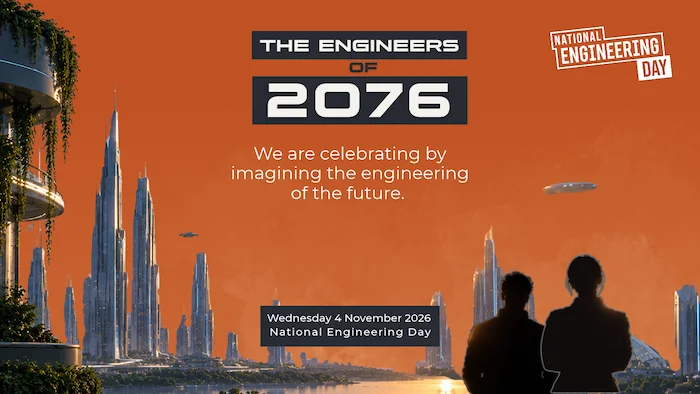
National Engineering Day in the UK is about making engineers and engineering easier to see. It's also a chance to show how the work changes everyday life and the world around us. This year the Royal Academy of Engineering is running the day with a twist: it's marking its 50th anniversary by looking 50 years ahead.
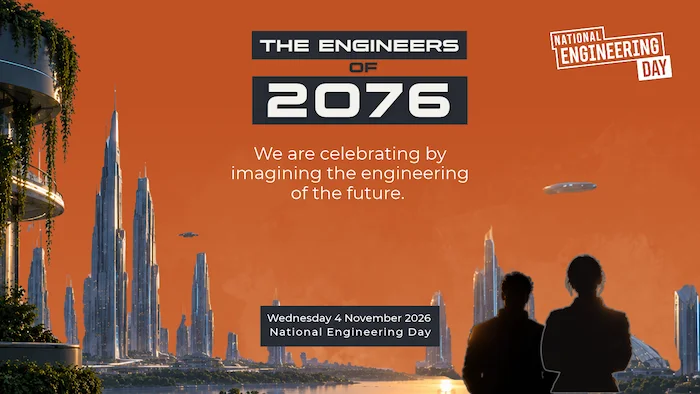
Hiring for 2076
The Academy's approach is to write job ads for roles that don't exist yet. The positions are aimed at the engineers who will build life on the Moon, on Mars and further out. It's a useful exercise because it forces you to ask which skills will still matter when today's tools are obsolete, and which problems will be waiting for people who know how to solve them.
Starting early with real hardware
Some of those future engineers may already be doing their first real work. The European Astro Pi Challenge is an ESA Education project run in collaboration with the Raspberry Pi Foundation. It lets young people carry out scientific investigations in space by writing programs that run on Raspberry Pi computers aboard the International Space Station. That's a rare setup: a student's code runs on actual flight hardware, not a simulator.
To find out which engineering roles might matter most in the future, we spoke to Geraint Ballinger, a Software Development and Deployment Engineer who works on the Astro Pi Challenge. The conversation also covered what the engineers of 2076 will need from the opportunities young people get today: room to experiment, to solve problems and to build confidence.
What the job actually involves
Ballinger describes his role as a blend of traditional software engineering and teaching. The aim is to help young people run code on the Astro Pi computers aboard the ISS. That means designing systems that hide unnecessary complexity so students can focus on learning, while keeping the software sent to orbit secure and compliant.
In practice, he builds applications and code libraries that handle routine tasks, leaving participants free to work on the interesting parts: photographing the Earth and investigating scientific questions. He also runs the pipeline that receives submissions. That includes reviewing work, moderating Mission Zero images and building internal tools to speed up review.
On the flight side, he shares responsibility for delivering the Astro Pi operating system on the ISS. That covers preparing and delivering system updates, coordinating security reviews and developing internal applications for astronauts, including the one they use to direct the Astro Pi cameras.
Engineering on physical machines
Ballinger says the variety is what he enjoys most. In a given week he might write a Python library, build a TypeScript web application or track down a low-level hardware fault on the ISS, such as corrupted SD cards. What stands out to him is maintaining a system on real hardware in orbit. A Raspberry Pi in space makes it impossible to forget the physical machine. Engineers have to design around solar radiation, tight power and bandwidth budgets, and hardware degradation across the length of a mission. He's also found it interesting to learn how software and hardware are actually delivered into orbit, with all the procedures that involves.
Lowering the barrier to entry
Much of Ballinger's work is about making orbital computing accessible. He developed the Astro Pi Replay tool, a browser-based emulator for Mission Space Lab. It lets anyone with a standard school laptop test code as though it were running on the ISS, with no physical hardware required. Submissions are easier to check before they go up, which matters when every upload has to be reviewed and every mistake costs time.
He also contributes to the educational materials that guide young people and mentors through Mission Space Lab's core concepts. The goal is to get participants up to speed quickly and producing working code within a few hours.
The skills that carry over
Ballinger points to problem-solving, patience, critical thinking and creativity as the skills future space engineers will need, and says the Astro Pi Challenge gives young people a way to practise them. In Mission Space Lab, the more advanced of the missions, participants learn to break complex tasks into manageable parts and coordinate independent pieces of work as a team.
Technical failures and software bugs are facts of life in orbit, so the programme also gives participants practical debugging experience. It builds resilience and a constructive approach to problem-solving, and it encourages curiosity about the underlying processes that make a system run. Those habits transfer well beyond space.
An invented job for 2076
When asked which space engineering role he would invent, Ballinger proposed Interplanetary Communications Manager. If people reach Mars by 2076, a reliable link back to Earth becomes critical infrastructure, and someone has to look after it. He expects the job to straddle software and hardware, with heavy involvement in radio transmission. He doesn't think a fundamentally new method of communicating across space will appear, so the role would more likely build on radio and optical technology already in use. The key knowledge would be the physics of how radio waves and light travel enormous distances, plus the network design needed to keep a link dependable.
He also expects AI to touch nearly every area of engineering. Even so, he doubts a system this important and this expensive would run without human oversight. Someone still has to understand how it works and judge whether it can be trusted, and that understanding is what he would want a candidate to bring.
That's a useful test for any future role, really. The tools will change, but the people trusted with the hardware will still need to know how it behaves when things go wrong.
Get involved
So what engineering role would you create for 2076? You can find out more about taking part in National Engineering Day on the Royal Academy of Engineering website.
If young people or future engineers you know want to enter the European Astro Pi Challenge 26/27, head to astro-pi.org to choose a mission. Submissions are open now.