Aurora Labs Raises $6 Million to Expand Metal Additive Manufacturing and Turbojet Production
- Published
- Author
- Sam Davies
- Reads
- 867
Aurora Labs plans to increase turbojet output, buy metal additive manufacturing equipment and prepare its production systems for larger scale delivery.
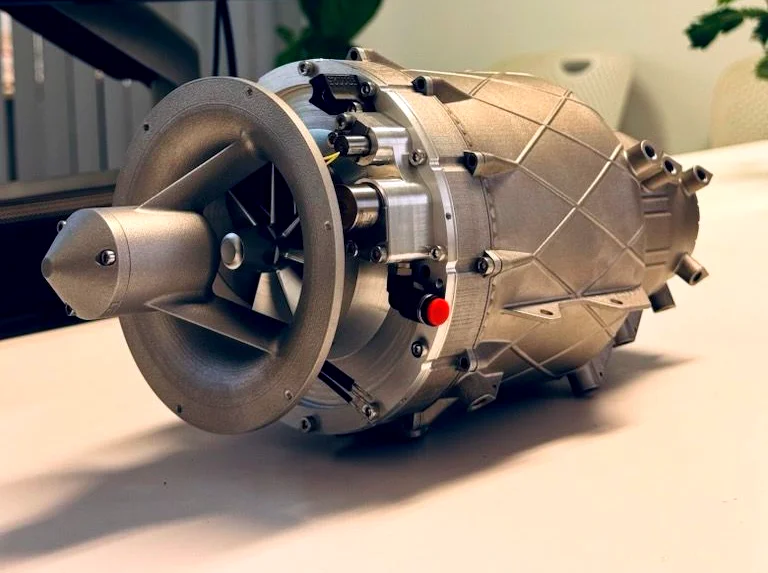
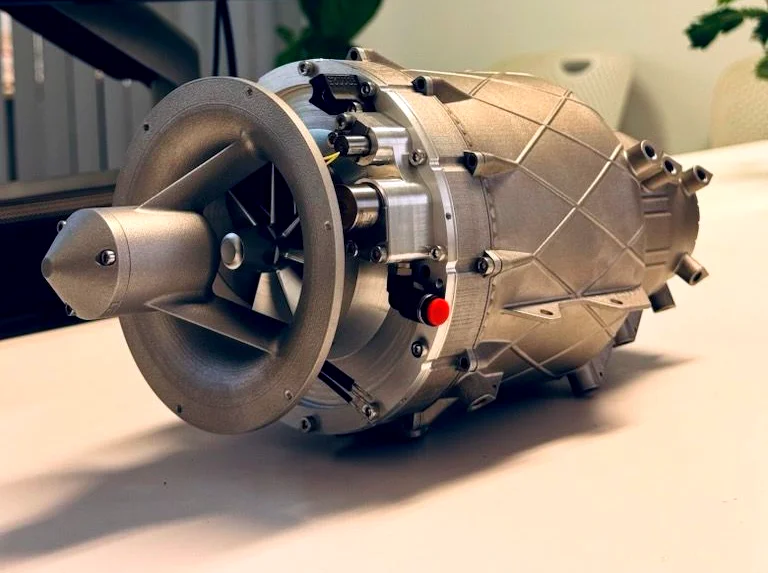
Aurora Labs has raised $6 million to increase production capacity for its additively manufactured turbojet propulsion systems. The funding is aimed at moving the company from technology development toward higher volume manufacturing and delivery, with spending planned across production equipment, manufacturing documentation, staffing and commercial development.
The raise comprises 109.1 million fully paid ordinary shares priced at $0.055 each. That price was reported as a 3.67% discount to the 10-day volume weighted average price, a 3.16% discount to the 5-day volume weighted average price and a 6.77% discount to the last trading price of $0.059 on 23 October 2026. The new shares represent about 20.8% of the company’s current shares on issue.
Production capacity and manufacturing readiness
Aurora plans to expand its existing turbojet engine production lines and acquire commercial off-the-shelf metal additive manufacturing equipment. The combination points to a practical scaling effort: more production capacity, alongside additional equipment that can support the manufacture of metal components. The company hasn’t disclosed the equipment models, process parameters or planned output rates, so the production increase can’t yet be quantified.
Another stated use of funds is to complete production data packs. These documents capture the technical and manufacturing information needed to produce and deliver a system consistently. Their completion matters as work shifts from development into repeat production, where teams need controlled specifications and process records to support manufacturing, inspection and delivery.
Aurora also intends to add key personnel to support the transition to full-scale production. Staffing needs typically grow as a manufacturer takes on more production work: engineering, operations and quality teams must coordinate production processes and keep technical records current. The company hasn’t specified the roles it plans to fill or the size of the planned workforce.
The funding will also support maintenance of AS9100D aerospace certification. That certification is part of Aurora’s quality framework for aerospace manufacturing. Keeping it current will be relevant as the company seeks to supply propulsion systems to customers with formal quality requirements.
Financing terms and strategic discussions
Non-Executive Chairman David Trimboli is set to contribute $550,000 of the funding. Walkinshaw Group Holdings Pty Ltd, part of the Australian-headquartered engineering group Walkinshaw, has also made a strategic investment. Aurora plans to discuss possible future production support and metal additive manufacturing work with Walkinshaw. Those discussions are an intended next step; the company has not announced a production arrangement.
The share issue is being completed in two tranches. The first raises $4,565,000 through 83,000,005 shares. Settlement was expected on 2 November 2026, with allotment scheduled for 4 November. The second tranche is for $1,435,000 through 26,090,914 shares, subject to shareholder approval at a general meeting planned for mid-January 2027.
Aurora conducted the placement through its management, without appointing a lead manager or adviser. Brokers who participated are to receive a total of 7.5 million options, as well as cash fees totalling $213,000. The company also plans to use funds for general working capital, business development and marketing, maintaining technical and commercial data rooms, and protecting its intellectual property.
From development to customer deliveries
Trimboli described the raise as a step in Aurora’s move toward scaled manufacturing and delivery. He said the company’s focus is now on increasing production volumes, winning further customer contracts and building sustainable commercial growth. The practical test will be whether the expanded lines, equipment and production documentation allow Aurora to deliver more systems while maintaining its quality requirements.
The company has cited several developments behind that shift: achieving AS9100D aerospace quality certification, beginning commercial deliveries of its AU4 propulsion system, receiving $1 million in grant funding, and signing a teaming agreement with MBDA. It has also secured its first US propulsion system order, giving it an initial customer foothold in that market. The company hasn’t provided details here on the order’s size, delivery schedule or expected production contribution.
The $6 million raise gives Aurora funding for manufacturing capacity and the operational work around it. The next useful indicators will be progress on the production lines, completion of the data packs, and whether the planned customer activity translates into further orders and sustained deliveries.