From a Forgotten Micro-PC to a Chicago Office Retro Game Night
- Published
- Author
- Hannah Overhiser
- Reads
- 346
A stray micro-PC running Batocera Linux and 2,750 retro games turned into a team game night at DMC's Chicago office.
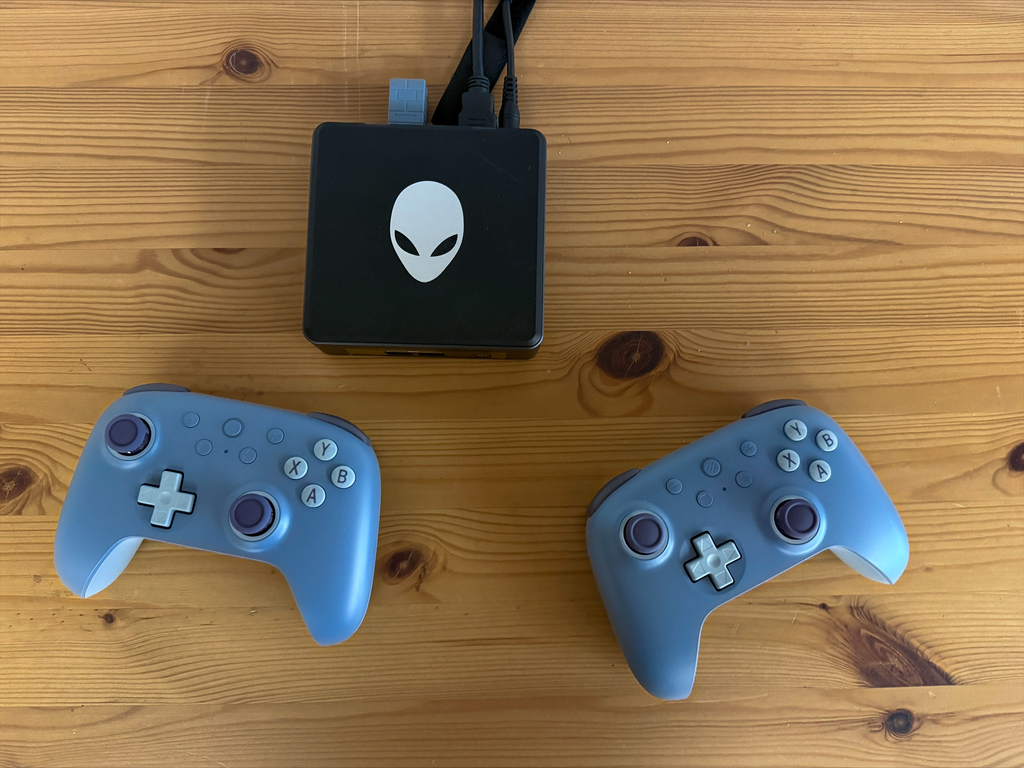
A good part of a retro gaming setup is the hardware, but the bigger question is whether anyone will bother to plug it in. At DMC's Chicago office, one neglected micro-PC answered that question. It became the centerpiece of a team evening built around the consoles and classics of the '80s and '90s, and it's a useful example of how little hardware you need to get people off their chairs and into a shared game.
The night drew on the kind of games most engineers grew up with: Super Smash Bros., Tecmo Bowl, Mario Kart, and a few titles that many attendees hadn't touched in years. It was an easy way to get coworkers talking about something other than project schedules.
A Closet Find With Some Life Left in It
The idea came from IT team member RJ Hughes. Plenty of engineers across DMC's offices are gamers, but RJ's push came from a different angle: he likes poking through the old IT equipment that accumulates in a building over time. In one of the Chicago office's many IT closets, he found a micro-PC that had been retired from whatever job it once did.
That's a common story in any facility. Hardware gets shelved, forgotten, and written off long before it's actually dead. RJ's read was that the machine still had power and a reasonable amount of capability left. The software was the real question.
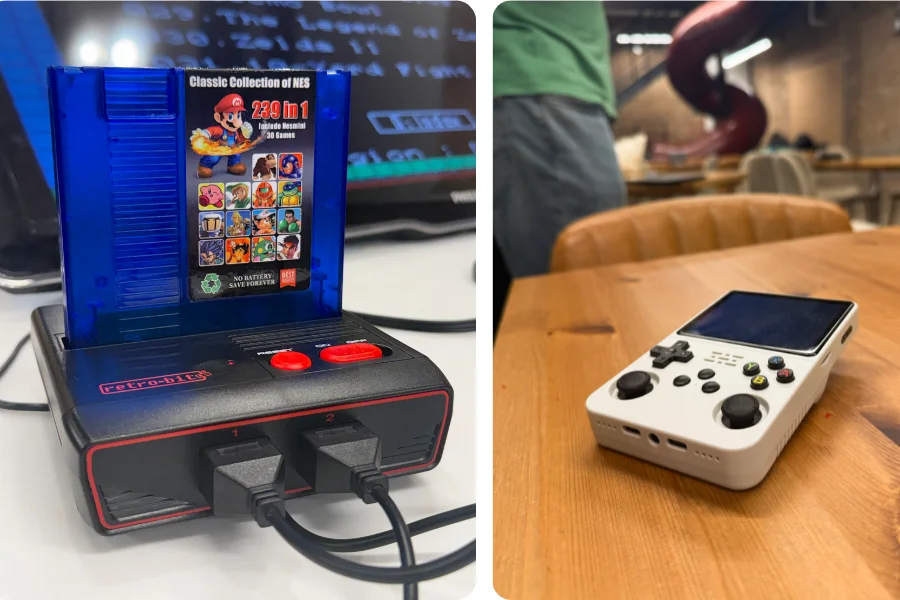
He installed Batocera Linux, a Linux distribution built for retro gaming. For anyone who hasn't used it, the short version is that it packages emulators and a front end so a general-purpose PC can run a large library of classic titles without much hand-tuning. That's what turns a box of obsolete parts into something that can run thousands of games. Here, the result was a library of 2,750 games.
RJ bought two controllers and set the micro-PC up in the Chicago kitchen. It's still there, and it's still used. Between meetings, a quick Super Smash Bros. match over lunch is apparently not unusual. What started as a salvage job turned into an idea for an Activity Fund event devoted to retro games.
Setting Up the Night
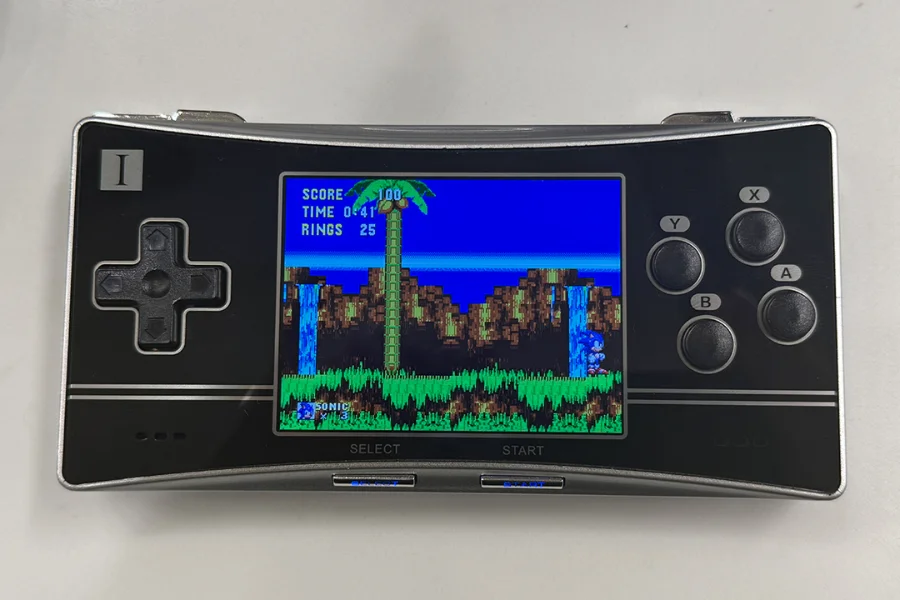
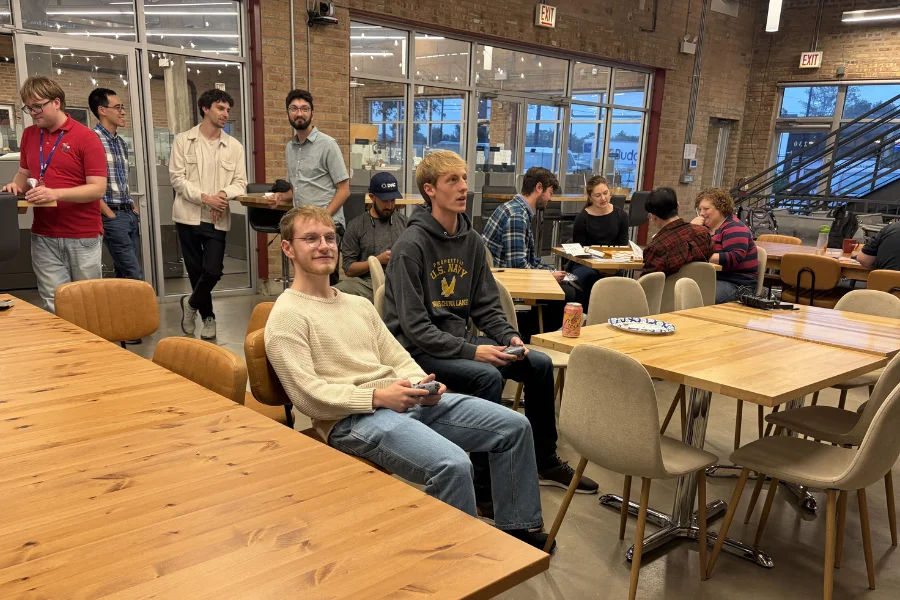
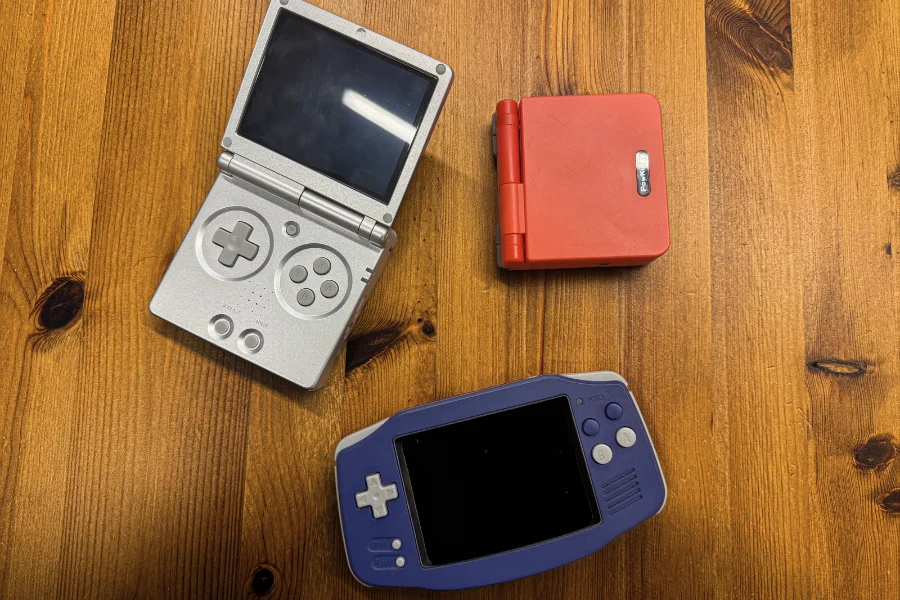
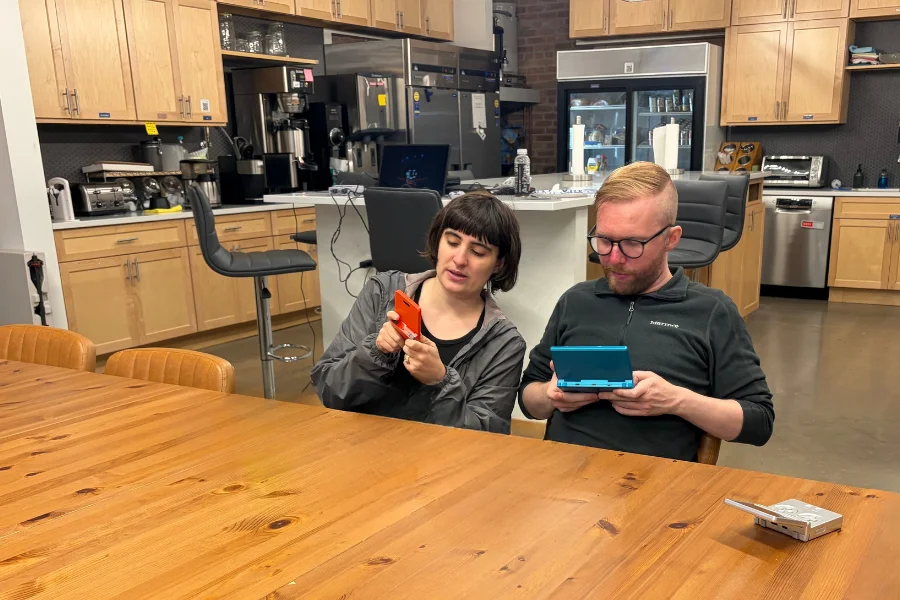
To turn the idea into an event, RJ brought some of his own handheld devices into the office. Attendees had two ways in. They could take a controller for the micro-PC, or pick up one of the handhelds. The software spanned arcade and Atari-era favorites through to titles from the Xbox and PlayStation generations, so the choice wasn't limited to one era or one kind of play.
That range is where the setup earns its keep. A single machine with a broad emulation library lets a room full of people with very different gaming histories find something they recognize. It also helps that the hardware was already sitting in the room.
Brandon, a DMC team member, summed up the appeal of the evening. "RJ put together so many cool systems and emulators that I had never even touched before," he said. "It was awesome getting to play with other DMCers." That mix of unfamiliar systems and familiar company is what made the night work for people who didn't consider themselves hardcore players.
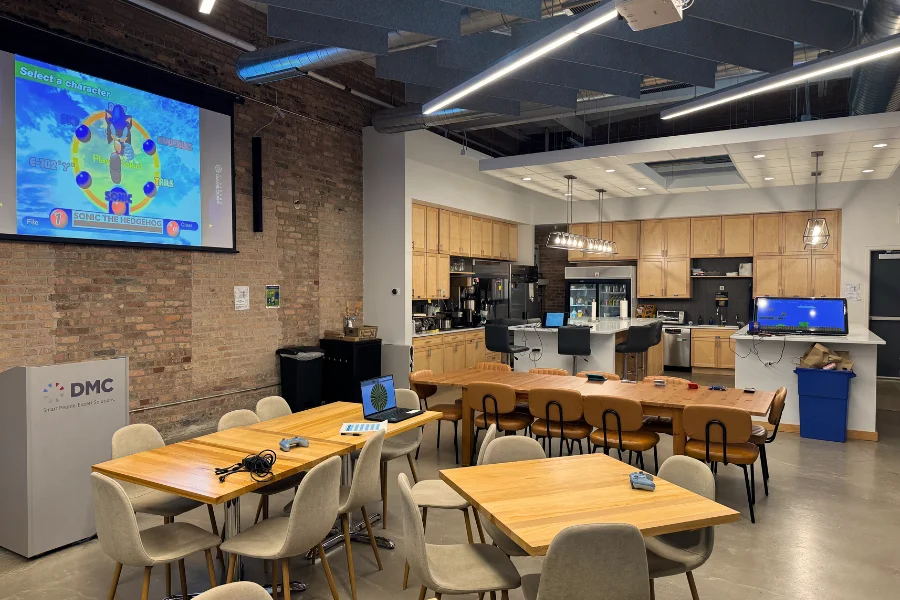
The micro-PC was connected to the large projection screens in the downstairs kitchen. Teammates took turns on 007: Nightfire and The Legend of Zelda, and rivalries built up quickly around Mario Kart, Super Smash Bros., and Tecmo Bowl. The scoreboard mattered, but the bigger draw was the chance to revisit old favorites and rediscover games people had nearly forgotten.
Not Everyone Wanted a Controller
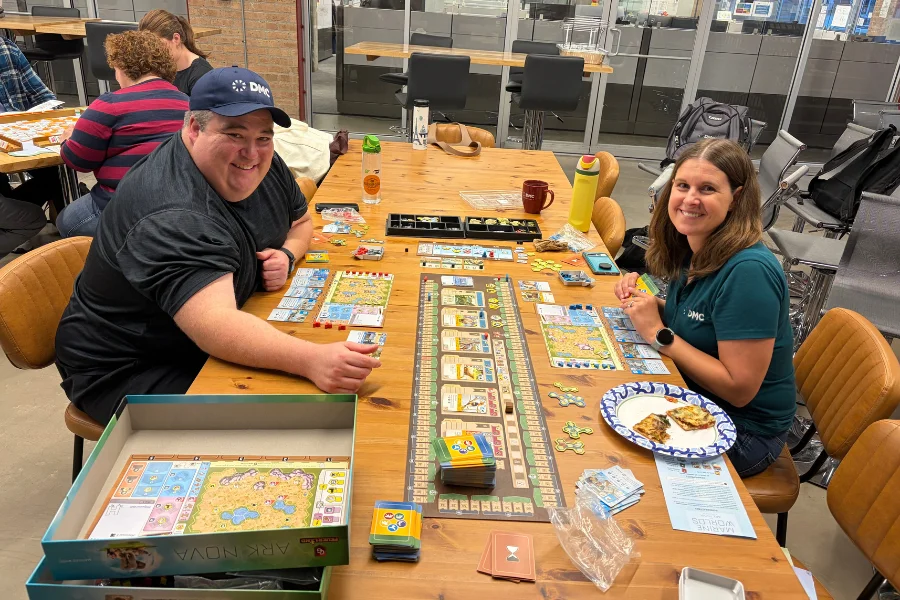
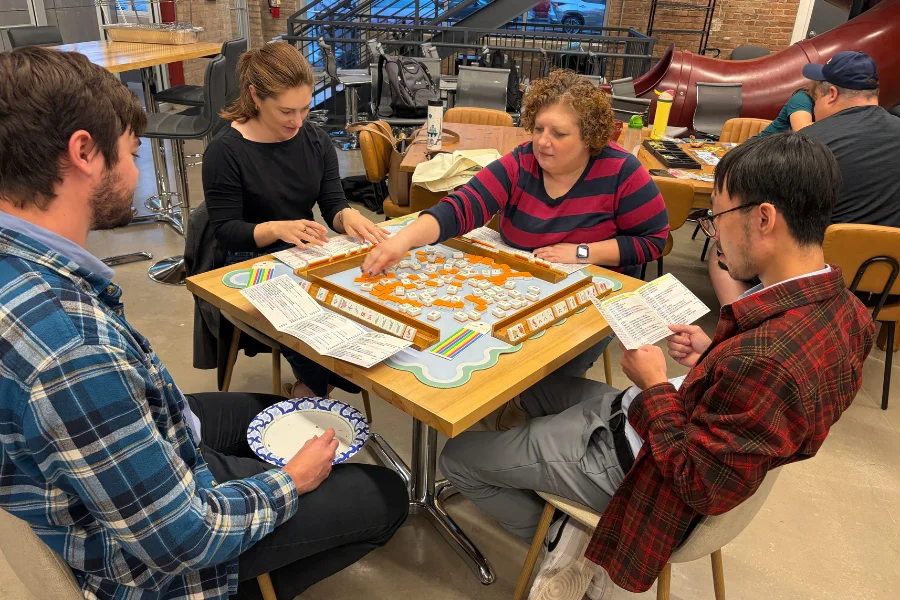
Plenty of people skipped the screens entirely. Between rounds of Mario Kart and Super Smash Bros., some teammates sat down for a game of American Mahjong, while others gathered around Ark Nova for tabletop strategy. A single event that offers digital racing, handheld play, a tile game, and a board game covers far more ground than a typical game night.
That's a useful design lesson for anyone organizing this kind of gathering. Different people switch on in different ways. Some want to chase a high score on a big screen, some want to sit with a handheld in a corner, and some want a slower game with a table and a few other people. Offering all three keeps the room moving without forcing anyone into a single format.
Why a Forgotten Box Still Matters
The most interesting part of this story isn't the nostalgia. It's the workflow. A machine that had been written off in a closet went back into service with an open-source operating system and a modest set of peripherals, and it ended up being used socially every week. That's a cheap way to get value from existing equipment, and it's a reminder that IT closets are often full of hardware that could still do something useful.
There's a practical caveat, though. Retro gaming setups depend on the legal status of the software and ROMs they run, and anyone trying to copy this model should look closely at what they're loading onto a machine before they start. The source doesn't go into that, but it's worth keeping in mind before anyone builds a library of their own.
For most teams, the takeaway is simpler. The office didn't need a new console or a budget line. It needed one person who noticed the box in the closet and was willing to spend an afternoon making it work. And with the micro-PC still sitting in the kitchen, the next round of Super Smash Bros. is probably already being planned.