Young Creators Build Games, Web Apps and an Arduino Robotic Arm at Coolest Projects Spain
- Published
- Author
- Helen Gardner
- Reads
- 854
Twenty-nine creators presented games, accessible web tools and hardware builds at Coolest Projects Spain in Gavà, including a 3D-printed Arduino arm.
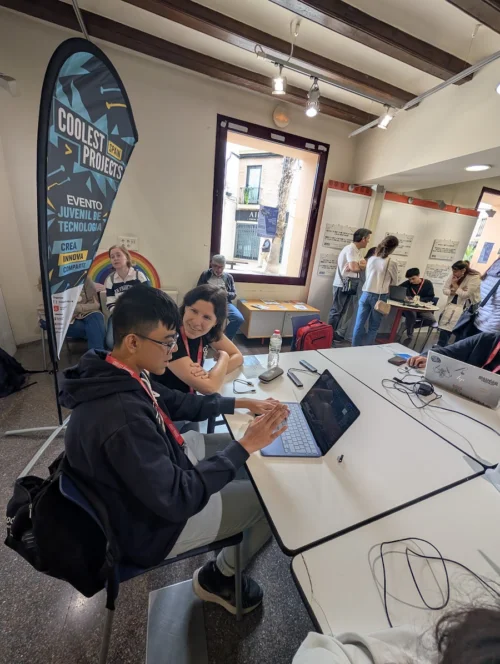
Games, a memory-support app and a 3D-printed robotic arm show how varied young people’s first engineering projects can be. At Coolest Projects Spain in Gavà, 29 creators presented work spanning software, hardware and web design, with projects built in tools such as Unity, Scratch, RPG Paper Maker and Arduino.
Organised by DEQ4Future, the event took place on Saturday 24 October at Espai Jove La Casa Gran. The projects connect technical choices to clear goals: tell a story, make a game accessible, explain sustainability, or build a physical mechanism. That combination of purpose and implementation gives a useful view of what young creators are learning to do.
Games built around stories and play
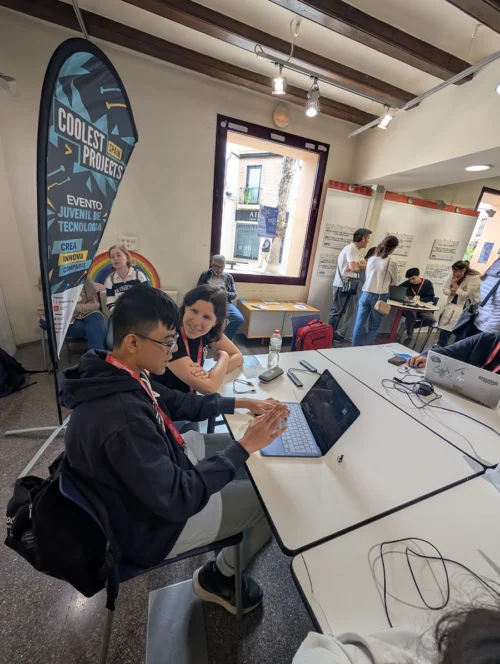
Nohan | Lost Abyss, Games
Nohan, 15, made Lost Abyss in Roblox, drawing inspiration from horror games. He describes game development as a way to combine several skills: coding, design, imagination and database management. In his account, finding the initial concept proved harder than working across those different areas. That’s a familiar challenge in creative software projects: the tools help bring an idea to life, but deciding what the experience should be comes first.
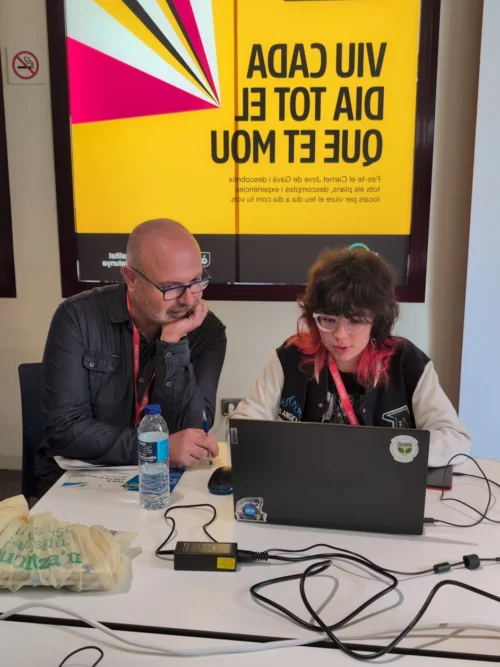
Isabel | A Box Full of Yesterday, Games
A Box Full of Yesterday is Isabel’s first video game. She built it in Unity over a month, learning through an online summer camp, YouTube tutorials and ChatGPT. The player takes the role of someone preparing to move house and has to pack a final box. Each object stands for a memory, such as a photograph with a childhood friend or a favourite game played with a parent.
“It’s like a history game, and you control a character who is going to move house, and you have to pack his last box of things. These things are objects that represent a memory from his life, for example, a photo with his best friend, or his favourite game that he played with his father when he was little.”
The central mechanic turns packing into a way to reveal a character’s past. For a first project, that gives the player a concrete task while tying each interaction to the story.
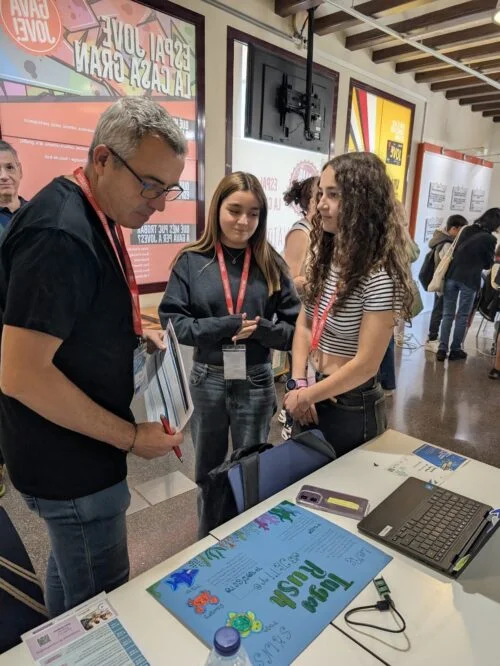
Iris and Abril | TugaRush, Scratch
Iris and Abril, both 15, made TugaRush in Scratch. Players guide Tuga, a turtle separated from her family by ocean currents, while avoiding rubbish such as plastic bags and rusty objects. Waste that reaches the edge of the screen adds a point to the score, and another counter records the player’s highest score. Coins can be spent in an in-game shop on character skins, including Tuga the turtle, Cangri the crab and Tibul the shark.
“We wanted to create something accessible, perfect for when you’re tired and don’t want to think too hard, yet still engaging enough to keep you hooked.”
The design pairs straightforward play with a story about ocean pollution. The creators’ focus on accessibility also shaped the intended pace: a player can pick it up without needing to study complex rules, while scoring and unlockable skins provide reasons to continue.
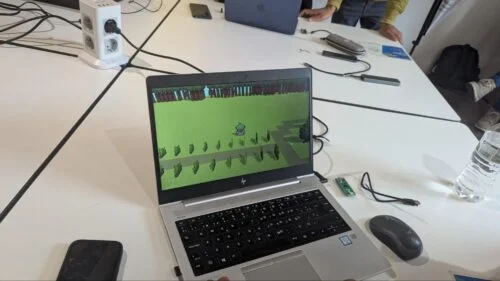
Arnau | Salvem el Planeta, Games
Arnau, 13, used RPG Paper Maker at school to create Salvem el Planeta in around 10 hours. The player collects waste from a riverbank, with the game explaining how the actions relate to sustainability goals. Arnau says the project includes plastic and other debris and describes which goals it addresses, linking the player’s task to wider environmental issues.
Here, the collection mechanic does more than set a score or finish a level: it gives the educational material a place inside the game. The project shows one way to make a topic part of the player’s actions rather than presenting it only as background information.
From accessible interfaces to physical hardware
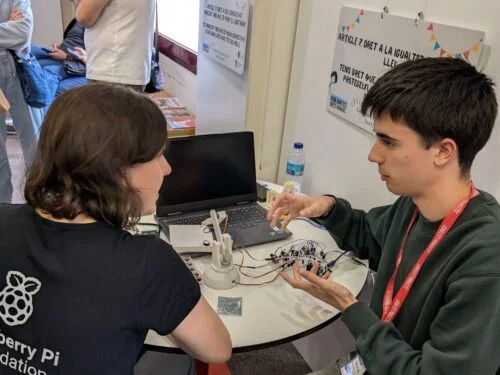
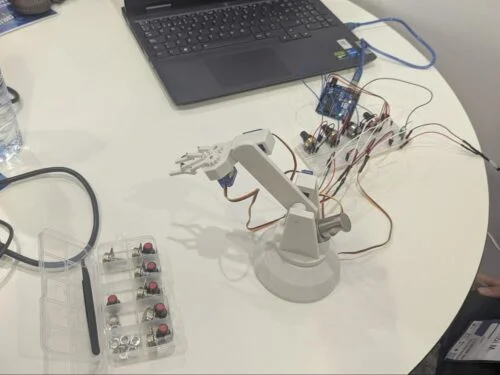
Oriol | Robotic Arm, Hardware
Oriol, 17, built an articulated robotic arm using 3D printing and Arduino for a high school science and technology project. He began work that summer, motivated by the challenge of making something ambitious. Seven years of coding experience gave him a base for the project, while the arm brought software into contact with a physical assembly.
The project spans two different kinds of engineering work. 3D printing provides a route to making the arm’s structural parts, while Arduino supports its electronic control. The event account doesn’t specify the arm’s actuators, number of joints, payload, accuracy or control method, so its performance can’t be compared with industrial equipment. Its significance here is the integration: a working mechanism requires physical parts and code to operate together.
Projects highlighted by the judges
Several other entries stood out across the event’s categories. In hardware, Guillem and Eloi from Igualada presented Signo, a Python video game controlled through sign-language gestures. The system recognises gestures that let players attack a monster, bringing gesture input into a game interaction.
Nil, from Girona, was highlighted in games for Animal Defense, a strategy game where players deploy animals to take an opponent’s base. In the web category, Alejandro from Gavà created Memvia, an app intended to help people with memory loss stay connected to family, routines and memories through a clear, accessible interface.
Together, these entries point to several ways a small project can address a practical design question: how to turn gestures into controls, organize strategy around a goal, or make information easier to reach. The event’s range also means that “digital project” can describe very different work, from a game built in a visual programming environment to an application with a specific accessibility purpose.
Taking part
Coolest Projects Spain gives young creators a place to show what they have made and learn from one another’s approaches. The next cycle’s entries are due to open in January 2027. Details about the event are available at Coolest Projects Spain.